x
ForhåndsvisningForhåndsvisning Se i ARSe i AR Kjøp håndlaget maleri Kjøp håndlaget maleriKjøp bilde Kjøp bilde SendSend
Vis detaljerVis detaljer Legg til i favoritter Legg til i favoritter Last ned bildetLast ned bildet Liknende objekterLiknende objekter RøntgenundersøkelseRøntgenundersøkelse LysbildefremvisningLysbildefremvisning

Ferdinand I

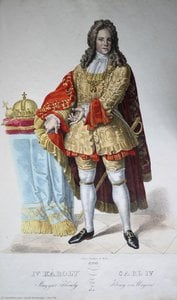
Discover the regal portrait of Ferdinand I by Josef Kriehuber, 1828. A detailed, realistic masterpiece showcasing royal authority, noble attire, and intricate symbolism. Perfect for art collectors and history enthusiasts.

Josef Kriehuber var en østerriksk litograf og maler kjent for sine omfattende portretter av Viennese samfunn under Biedermeier-perioden. Hans nøyaktige bilder gir et unikt perspektiv på 19. århundrets liv gjennom over 3000 fascinerende kunstverk – best visual art database.

Giclée / Kunsttrykk

Giclée- eller lerretsprint av museumskvalitet med rask produksjon og fleksible valgmuligheter for etterbehandling. (Kjøp håndlaget maleri Kjøp håndlaget maleriKjøp bilde Kjøp bilde)

P118B $10
P118H $10
P118W $10
P438Z $10
P508JH $12
P508YH $12
P805H $10
P805Z $10
P919BZ $10
P919G $10
P919XJ $10
P959ZH $10
P968JZ $12
W106C $8
W218G $10
W218JH $8
W218Y $10
W307PJ $10
W316G $10
W316PJ $8
W316Y $10
W398PJ $8
W4111J $10
W500HY $15
W500JH $15
W692G $12
W849H $8
W940BG $15
W953PJ $8

Standardformat
skreddersydd
CM
INCH

Velg mellom våre forhåndsdefinerte størrelser som bevarer kunstverkets opprinnelige proporsjoner.

bredde
høyde

Du kan oppgi egne mål for å tilpasse en spesifikk ramme eller et bestemt område. Dersom den valgte størrelsen ikke samsvarer med det originale bildets proporsjoner, vil vi enten beskjære kunstverket eller utvide bildet med en speilet eller ensfarget kant. En digital mockup vil bli sendt til din godkjenning før produksjonen starter.
Vennligst merk at forhåndsvisningen på skjermen ikke gjenspeiler den faktiske beskjæringen eller utvidelsen. Kun mockuppen vil vise den endelige komposisjonen nøyaktig.
Selv om tilpassede størrelser er tilgjengelige, anbefaler vi å velge et mål fra den forhåndsdefinerte listen for å bevare de originale proporsjonene.

Verdensomspennende levering () på 2 uker i stedet for standard 4/5 uker. (2 September)

why_choose_icon
Gratis ekspressfrakt over hele verden
why_choose_icon
Lerretsduk av høykvalitets lin
why_choose_icon
Full forsikring under transport
why_choose_icon
Garanti for refusjon av toll og importavgifter
why_choose_icon
Garantert korrekt fargegjengivelse
why_choose_icon
60 dagers returrett (kun ved feil)
why_choose_icon
100% pengene tilbake-garanti
why_choose_icon
Rabatt ved flere kjøp

Totalpris for bestilling

$ 68

reproduction

Ferdinand I

Giclée / Kunsttrykk

Størrelse på reproduksjon

-

Endelig pris

$ 68

Kort om verket

  • title: Ferdinand I
  • artist: Josef Kriehuber
  • notable_elements: Richly adorned armor, intricate embroidery, regal crown, scepter, formal pose
  • subject: Ferdinand I, a monarch depicted with regal attire, crown, scepter, and noble symbolism
  • style: Realistic, classical portraiture

Kunstighetsquiz

Det er kun ett riktig svar på hvert spørsmål.

Spørsmål 1:
Who is the artist of the portrait titled 'Ferdinand I' created in 1828?
Spørsmål 2:
What is the primary subject depicted in this artwork?
Spørsmål 3:
Which artistic style best describes this portrait?
Spørsmål 4:
Which symbolic elements are prominently featured in the portrait of Ferdinand I?
Spørsmål 5:
What technique is Josef Kriehuber most renowned for in his artworks?

Majestic Portrait of Ferdinand I: A Masterpiece of 19th-Century Regal Art

Step into the grandeur of the Austrian monarchy with this exquisite portrait of Ferdinand I, a distinguished ruler whose legacy is captured with meticulous detail and regal splendor. Created in 1828 by the renowned Austrian artist Josef Kriehuber, this artwork exemplifies the classical portraiture style that celebrates nobility, authority, and divine right. Its commanding presence makes it an ideal centerpiece for collectors, interior designers, and art enthusiasts seeking to elevate their space with a piece that embodies both historical significance and artistic excellence.

Subject and Symbolism: A Regal Sovereign

This portrait presents Ferdinand I in full regal attire, emphasizing his status as a sovereign and symbol of stability within the Habsburg Empire. Dressed in elaborate armor and richly embroidered garments, he wears a majestic crown and holds a scepter—traditional symbols of power and sovereignty. The regal cape, with its vibrant pink and gold accents, further accentuates his noble stature. The composition centers the figure prominently, conveying dominance and respect, while subtle details in his expression evoke a sense of dignity, responsibility, and contemplative leadership. This work not only honors the individual but also embodies the ideals of monarchy and divine authority that defined the era.

Artistic Style and Technique: Realism with Regal Grandeur

Josef Kriehuber’s masterful technique shines through in this highly detailed and realistic portrait. Employing lithography and fine brushwork, the artist captures the textures of metallic armor, soft fabrics, and intricate embroidery with exceptional precision. The use of light and shadow enhances the three-dimensionality of the figure, creating a lifelike presence that commands attention. The composition’s symmetry, combined with slight asymmetrical nuances in the pose, adds a dynamic yet balanced aesthetic. The neutral background ensures all focus remains on the subject, emphasizing his importance and the craftsmanship behind the work.

Historical Context and Cultural Significance

Painted during a period of political stability and imperial pride, this portrait reflects the ideals of 19th-century European monarchy. Ferdinand I, known for his diplomatic role and leadership, is immortalized here as a symbol of authority and continuity. The artwork serves as a visual testament to Austria’s rich history, capturing a moment when art and monarchy intertwined to reinforce legitimacy and national identity. As a collectible, it offers a glimpse into the grandeur of the Habsburg dynasty and the artistic traditions that celebrated royal figures with reverence and dignity.

Emotional Impact and Interior Inspiration

This portrait evokes a sense of awe and admiration, inspiring viewers with its regal elegance and historical gravitas. Its commanding presence makes it an ideal focal point in a sophisticated living room, office, or gallery space, adding a touch of aristocratic refinement. The detailed craftsmanship and noble symbolism invite contemplation and appreciation, making it a meaningful addition for those passionate about history, royalty, or fine art. Whether displayed as a standalone statement or part of a curated collection, this work promises to elevate any interior with its timeless beauty and emotional resonance.

A Timeless Investment for Art Lovers and Collectors

Owning a high-quality reproduction of this portrait allows art lovers and interior designers to bring a piece of 19th-century European history into their environment. Its artistic mastery, historical depth, and regal symbolism make it a valuable investment that combines aesthetic appeal with cultural significance. Perfect for framing in a classic or modern setting, this artwork offers a lasting impression of grandeur, craftsmanship, and historical storytelling—an enduring treasure for generations to come.

Om kunstneren

A Chronicler of Viennese Society: The Life and Art of Josef Kriehuber

Born in Vienna on December 14th, 1800, Josef Kriehuber occupies a unique position within Austrian art history. He wasn’t striving for grand historical narratives or mythological allegories; instead, his artistic vision focused intently on the intimate details of everyday life, making him an unparalleled chronicler of 19th-century Viennese society through the burgeoning medium of lithography. Kriehuber's journey began with formal training at the Vienna Academy under Hubert Maurer, but it was his embrace of lithography that truly defined his career and legacy. This innovative technique allowed for the relatively rapid and affordable reproduction of images, democratizing portraiture and making it accessible to a wider audience than ever before – an audience Kriehuber served with unwavering dedication. He wasn’t simply reproducing likenesses; he was crafting visual records of status, personality, and the very spirit of an era. His work stands as a remarkable testament to his ability to capture not just appearances but also the subtle nuances of human character.

The Biedermeier Portraitist: A Window into an Era

Kriehuber’s artistic development flourished within the context of the Biedermeier period (roughly 1815-1848). This era, born from the aftermath of Napoleonic upheaval, fostered a focus on domesticity, simplicity, and the everyday. These values resonated deeply with Kriehuber’s sensibilities. He sought to depict the world as he saw it – not through idealized romanticism or grand historical pronouncements, but through the quiet realities of daily life in Vienna. While he initially explored landscape lithography, it was portraiture where his talent truly shone. He became extraordinarily prolific, creating over 3000 lithographs throughout his career – an astonishing number that speaks to both his skill and the immense demand for his work. His clientele spanned the spectrum of Viennese society: nobility, government officials, prominent personalities, and those simply seeking a lasting image of themselves or their loved ones. Kriehuber’s portraits weren't idealized fantasies; they were remarkably accurate representations, imbued with a sense of character and social standing. He possessed an uncanny ability to capture not just physical likeness but also the inner life of his subjects, making each portrait a unique psychological study. His meticulous attention to detail, combined with a subtle understanding of human expression, allowed him to create portraits that felt both intimate and revealing.

Beyond Likeness: Documenting Vienna’s Cultural Landscape

While celebrated for his portraits, Kriehuber's artistic vision extended beyond individual representation. He recognized the importance of documenting the urban landscape itself, particularly the vibrant atmosphere of Vienna’s Prater park. His lithographs depicting scenes from the Prater offer invaluable insights into 19th-century Viennese life and culture. These weren’t simply picturesque views; they were snapshots of a society at leisure, revealing details about fashion, social interactions, and the recreational habits of the time. He captured the energy and excitement of the Prater, showcasing its diverse attractions and the people who flocked to enjoy them. This dedication to capturing the essence of Vienna cemented his place as an important observer of Austrian society. His work provides a vivid window into a world that is often overlooked in traditional historical accounts.

Technique and Style: The Master of Lithography

Kriehuber’s mastery of lithography was central to his success. He wasn't merely a portraitist; he was a skilled technician who understood the unique possibilities of this printing process. Lithography allowed for rapid reproduction, making portraits affordable for a wider audience than traditional painting. More importantly, it enabled Kriehuber to achieve remarkable detail and tonal range – qualities that were essential to his ability to capture the nuances of human expression. His portraits are characterized by meticulous draftsmanship, precise lines, and a subtle use of shading. He wasn’t interested in bold brushstrokes or dramatic contrasts; instead, he favored a more restrained approach, focusing on capturing the delicate details of clothing, hair, and facial features. This understated style, combined with his technical skill, made his portraits highly sought after by those seeking a flattering yet truthful representation of themselves. The process itself demanded patience and precision, reflecting Kriehuber’s meticulous nature as an artist.

Legacy and Recognition: A Lasting Impression

Kriehuber’s influence extended beyond his prolific output. He served as a teacher at the Theresianum Academy in Vienna, nurturing future generations of artists and passing on his technical expertise. In 1860, he received significant recognition with the Franz Joseph Order, acknowledging his contributions to Austrian art. However, the rise of photography towards the end of his life presented a challenge to his profession. As photographic portraiture became more accessible and affordable, demand for lithographic portraits declined, leading to financial hardship in his later years. Despite this, Kriehuber continued to work until his death on May 30th, 1876, leaving behind an extraordinary body of work that continues to captivate and inform us today. His legacy lies not only in the sheer number of portraits he created but also in their historical significance as a visual record of 19th-century Central European society. Collections of his works are held at the Albertina museum and the Austrian National Library, ensuring his art will continue to be appreciated for generations to come. His work remains a testament to the power of observation and the enduring appeal of capturing the human spirit.

Josef Kriehuber

Josef Kriehuber

1800 - 1876 , Østerrike

Kort om kunstneren

  • Artistic Movement Or Style: Biedermeier, Realisme
  • Artists Or Movements Influenced By This Artist: ['Friedrich Kriehuber']
  • Date Of Birth: 1800-12-14
  • Date Of Death: 1876-05-30
  • Full Name: Josef Kriehuber
  • Nationality: Østerriksk
  • Notable Artworks:
    • Selvportrett
    • Prater scener
    • Prinsesser Elise & Fanny
  • Place Of Birth: Vienna, Østerrike