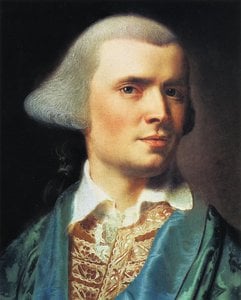
A Pioneer Bridging Worlds: The Life and Art of John Singleton Copley
John Singleton Copley, født i Boston i 1738, befinner seg i en unik og sentral posisjon i kunsthistorien – ikke bare som maler, men som en kulturell bro, som skapte en distinkt anglo-amerikansk estetikk under en periode med enorme politiske og sosiale omveltninger. Hans historie er en av selvlært briljans, utrettelig ambisjon og en bemerkelsesverdig evne til å fange ikke bare likheter, men essensen av sine motiver i konteksten av deres tid. Copleys tidlige liv var dypt forankret i den pulserende maritime verdenen i koloniboston, en by som strømmet av kjøpmenn, skipsbyggere og voksende velstand. Hans far, Richard Copley, fraværende kort tid etter John ble født, var tobakkhandler, mens hans mor, Mary Singleton Copley, drev en butikk på Long Wharf. Dette miljøet la grunnlaget for en skarp bevissthet om den materielle verden – teksturene av stoff, glansen av sølv, de subtile nyansene av sosial status – alle elementer som senere skulle definere hans kunstneriske stil. Hans stedfar, Peter Pelham, en graver og liminer (en kunstner som skapte portretter på vellum eller pergament), ga noen innledende veiledning, men Copleys talent var i stor grad selvutviklet gjennom grundig studier og øvelse. Han slukte enhver tilgjengelig grafikk, kopierte dem nøye for å mestre teknikken, og overgikk raskt sin stedfar sine evner.
The Rise of a Colonial Portraitist
Ved 1760-tallet hadde Copley etablert seg som Bostons førsteklassiske portrettmaler, og betjente byens elite. Hans suksess var ikke bare basert på teknisk dyktighet; det var hans evne til å gi sine portretter en psykologisk dybde som sjelden ble sett i kolonial amerikansk kunst. Han gikk utover enkel representasjon, og strevde etter å fange karakteren og den sosiale statusen til sine motiver. Dette innebar nøye oppmerksomhet på detaljer – presis gjengivelse av stoff, smykker og møbler – men også en dyp forståelse for holdning, uttrykk og gestikulering. Copleys portretter var ikke bare bilder; de var uttalelser om rikdom, makt og sosial ambisjon. Han integrerte subtilt symbolsk elementer i komposisjonene sine, som forsiktig antydet motivernes yrker eller interesser. En kjøpmann kunne bli avbildet med importerte varer i bakgrunnen, en advokat med juridiske tekster, eller en marineoffiser med nautiske instrumenter. Denne oppmerksomheten på detaljer og symbolikk hevet hans arbeid over det enkle portretture, og forvandlet det til en form for sosial kommentar. Hans portretter av fremtredende figurer som *Mrs. Ezekiel Gondthwait (Elizabeth Lewis)* illustrerer denne tilnærmingen – den elegante holdningen, de luksuriøse stoffene og de subtile detaljene formidler en følelse av raffinement og status.
Ambition and the Call of Europe
Til tross for sin suksess i Boston, hadde Copley ambisjoner som strekte seg utover den kolonial kunstverdenen. Han lengtet etter anerkjennelse fra de etablerte kunstmiljøene i London og Roma, og ønsket å teste sine ferdigheter mot europeiske mestere. I 1766 sendte han sitt *Boy with a Flying Squirrel* til Society of Artists i London, hvor det mottok betydelig ros fra Joshua Reynolds og Benjamin West – to ledende figurer i det britiske kunstmiljøet. Denne oppmuntringen drev Copleys ambisjoner om videre utdanning og eksponering. Likevel hindret familieforpliktelser og en blomstrende praksis ham i å bli værende i Boston i ytterligere ti år. Endelig, i 1774, med sin kone Susanna Farnsworth Clarke og deres barn, seilte han til Europa, med hensikten om å studere de gamle mesterne og etablere seg som en historisk maler. Den amerikanske revolusjonens utbrudd kort tid etter hans ankomst kompliserte forholdene, og tvang Copley til å navigere i et politisk ladet miljø mens han forfulgte sine kunstneriske mål.
Historical Narratives and Lasting Legacy
I London fant Copley både muligheter og utfordringer. Han fortsatte å male portretter, sikret seg bestillinger fra fremtredende britiske figurer, men han vendte også sin oppmerksomhet mot historiemaleri – en sjanger som ble ansett som mer prestisjefull enn portretture på den tiden. Hans mest ambisiøse arbeid i denne sjangeren var *The Death of Major Peirson*, som avbildet et øyeblikk fra slaget ved Jersey under den amerikanske revolusjonen. Selv om det teknisk sett var imponerende, mottok det blandede anmeldelser, med noen kritikere tvilte på dets komposisjon og dramatiske virkning. Copleys senere historiemalerier, som *The Colapse of the Earl of Chatham in the House of Lords*, var mer vellykkede, demonstrerte hans evne til å fange komplekse følelser og dramatiske øyeblikk. Selv om han aldri oppnådde den anerkjennelsen han søkte i Europa, etterlot John Singleton Copley et uutslettelig preg på både amerikansk og britisk kunsthistorie. Han banet vei for en unikt anglo-amerikansk stil, som blandet europeiske teknikker med en distinkt kolonial følelse. Hans portretter er verdifulle historiske dokumenter, som gir innblikk i livet og verdiene til en svunnen æra. *Han huskes ikke bare for sin kunstneriske dyktighet, men også for sin rolle i å forme en nasjonal identitet gjennom kunsten sin.* Han døde i London i 1815, og etterlot seg et arv som inspirerer kunstnere og fanger publikums oppmerksomhet fortsatt i dag.
Influences and Artistic Development
- Early Influences: Copleys tidlige kunstneriske utvikling ble sterkt påvirket av grafikkene han nøye kopierte, spesielt verk fra europeiske mestere som Rembrandt van Rijn og Antoine Watteau.
- Peter Pelham's Guidance: Hans stedfar, Peter Pelham, ga innledende veiledning i portrett- og graverteknikker, la grunnlaget for hans fremtidige suksess.
- Joshua Reynolds & Benjamin West: Oppmuntringen og tilbakemeldingen fra disse fremtredende britiske kunstnerne under Copleys tidlige innsendinger til London utstillinger var avgjørende for å forme hans ambisjoner og kunstneriske retning.
- Rococo Style: Copley omfavnet opprinnelig Rococo-stilen, som vist i hans bruk av delikate farger, elegante holdninger og utsmykede detaljer. Men han beveget seg gradvis mot en mer realistisk og dempet tilnærming.
- Historical Painting Inspiration: Hans eksponering for historiemalerier av kunstnere som Benjamin West inspirerte ham til å utforske denne sjangeren, selv om han ofte slitt med å fullt ut forene den med sin naturlige dyktighet i portretture.



 Se i rommet
 Bestill håndmalt reproduksjon
 Del som digitalt kort
 Del
Del
 Detaljer
 Studentguide

 Last ned
 Liknende objekter
 Røntgen
 Lysbildefremvisning
 Besøksstatistikk


 Les mer






































 Glassalternativet er kun tilgjengelig i størrelser under 110 cm