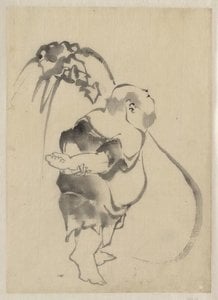
En Kyotos kjøpmanns visjon: Ito Jakuchus verden
Født i 1716 midt i det yrende Nishiki-markedet i Kyoto, trådte Ito Jakuchu frem som en av Japans mest originale og fengslende kunstnere. Til forskjell fra mange av sine samtidige, som fulgte etablerte kunstneriske slektslinjer, ble Jakuchus vei unikt formet av familiens velstående handelsbakgrunn og et dypt personlig engasjement for zen-buddhistisk filosofi. Hans far, Ito Genzaemon, var en vellykket grønnsakshandler som ga den unge Jakuchu en komfortabel oppvekst, noe som gjorde det mulig for ham å dyrke sitt voksende talent for maleri fra tidlig alder. Dette kommersielle miljøet ga ham imidlertid også en bevissthet om samfunnsendringer og den økende innflytelsen til Kyotos kjøpmannsklasse – et perspektiv som subtilt skulle prege hans kunstneriske visjon. Selv om det var forventet at han etter hvert skulle overta familiebedriften, lå Jakuchus lidenskap et annet sted: i en dragning mot å fange livets essens gjennom pensel og blekk. Etter farens død da han var 23 år, drev Jakuchu butikken en kort periode før han overlot den til sin bror, for endelig å vie seg fullt ut til kunsten.
Brudd med tradisjonen: Stil og motiv
Ito Jakuchus kunstneriske stil står som en fascinerende blanding av nitid realisme og leken eksperimentering. Selv om han var dypt forankret i tradisjonelle japanske motiver – særlig fugler, blomster og landskap – tilførte han verkene sine en innovativ ånd som skilte ham fra mange av hans samtidige. Han vant anerkjennelse side om side med Maruyama Okyo for sine realistiske fremstillinger, men Jakuchu beveget seg langt utover ren etterligning av naturen. Hans malerier kjennetegnes av levende farger, dynamiske komposisjoner og en vilje til å utfordre konvensjonelle perspektiver.
Høns ble i særdeleshet et tilbakevendende motiv i hans virke, der de ble løftet fra ydmyke gårdsdyr til motiver verdig dyp kunstnerisk utforskning. Han malte ikke bare *det* han så, men utforsket snarere den iboende vitaliteten og karakteren i hvert eneste vesen. Utover fuglene reflekterer Jakuchus arbeid ofte zen-buddhistiske temaer – en kontemplativ stillhet, en verdsettelse av forgjengelighet og en ærbødighet for naturen. Hans berømte
Bønneranke er for eksempel ikke bare en botanisk studie, men en meditasjon over vekst, forfall og altings sammenheng. Hans mesterlige polykrome fremstillinger – *doshoku sai-e* – er spesielt hyllet, da de viser en ekstraordinær detaljrikdom og en fargepalett som sjelden ble sett i japansk maleri i denne perioden.
Zen-innflytelse og kunstnerisk utvikling
Innflytelsen fra zen-buddhismen på Jakuchus kunst er ubestridelig. Han ble en lekbror (*koji*) ved Kyotos Shokoku-ji-tempel, hvor han fordypet seg i zen-prinsipper som vektla direkte erfaring, intuisjon og søken etter opplysning gjennom kontemplasjon. Dette åndelige fundamentet formet hans kunstneriske tilnærming dypt, og fremmet en følelse av løsrivelse fra verdslige bekymringer og et urokkelig fokus på å fange motivenes essens. Det sies at han til og med fikk spesialtillatelse til å studere klassiske kinesiske malerier i templets samling, slik at han kunne absorbere århundrer med kunstnerisk tradisjon samtidig som han skapte sin egen unike vei. Selv om Jakuchu i utgangspunktet kan ha studert under Ōoka Shunboku, en kunstner fra Kano-skolen spesialisert på blomster- og fuglemaleri, overgikk han raskt den konvensjonelle opplæringen og utviklet en særegen stil som unndro seg enkel kategorisering. Hans vilje til å bryte med etablerte normer plasserte ham i «Eksentrikernes slektslinje» – en bevegelse fremhevet i Nobuo Tsujis innflytelsesrike bok *Kisō no Keifu* (Eksentrikernes slektslinje). Dette verket hyllet kunstnere som utfordret etablerte konvensjoner, og sementerte Jakuchus plass som en sentral skikkelse i japansk kunsthistorie.
Arv og gjenoppdagelse
Til tross for sitt talent og sin dedikasjon, forble Ito Jakuchu relativt ukjent i sin egen levetid. Det var ikke før i det 20. århundre at verkene hans begynte å få bred anerkjennelse, i stor grad takket være Tsujis forskning som revolusjonerte oppfatningen av maleri fra Edo-perioden. Tsujis fremheving av Jakuchu som en nøkkelfigur innen «Eksentrikernes slektslinje» vekket fornyet interesse for hans kunst og etablerte ham som en av Japans viktigste og mest innovative malere. Hans innflytelse kan også ses i utviklingen av
Ukiyo-e, den populære sjangeren med tresnitt, noe som viser en bredere påvirkning på japansk kunstkultur. Jakuchus vilje til å eksperimentere med perspektiv, farge og motivvalg banet vei for fremtidige generasjoner av kunstnere til å utfordre konvensjoner og utforske nye kreative muligheter. En biografi skrevet av zen-munken Daiten Kenjo i 1766 gir verdifull innsikt i Jakuchus kunstfilosofi, og avslører hans bevisste unngåelse av menneskefigurer – et valg som understreker hans fokus på naturen og dens iboende skjønnhet. I dag feires Ito Jakuchu ikke bare for sin tekniske dyktighet, men også for sin unike visjon; et vitnesbyrd om den varige kraften til en kunstner som våget å stake ut sin egen vei og fange sin tids ånd med uovertruffen originalitet.
Merkverdige verk
- Fem hundre arhats: Et monumentalt verk som viser Jakuchus ekstraordinære ferdigheter og dedikasjon.
- Hanshan og Shide (Kanzan og Jittoku): Demonstrerer hans evne til å fange essensen av japansk kultur og folklore.
- Krabber og pioner: Et kroneksempel på hans karakteristiske stil, der nitid detaljrikdom forenes med levende farger.
- Bønneranke: Et sumi-e mesterverk som legemliggjør zen-filosofi og viser intrikate detaljer.
- To traner: Eksemplifiserer hans kunstneriske dyktighet i å fremstille fuglemotiver med eleganse og presisjon.
- Gammel furu: Et slående verk som demonstrerer hans mesterlige penselbruk (101 x 40 cm, silke).



 Se i rommet
 Bestill håndmalt reproduksjon
 Del som digitalt kort
 Del
Del
 Detaljer
 Studentguide

 Last ned
 Liknende objekter
 Røntgen
 Lysbildefremvisning
 Besøksstatistikk


 Les mer






































 Glassalternativet er kun tilgjengelig i størrelser under 110 cm