Hugh Carter: A Victorian Observer of Domestic Life
Hugh Carter (1837-1903) wasn’t a name that typically graces the halls of grand artistic history, yet his quietly observant paintings offer a remarkably intimate glimpse into 19th-century British life. Born in Birmingham and trained initially at the Heatherley School of Fine Art, Carter’s career unfolded with a deliberate focus on genre scenes – those everyday moments of domesticity, leisure, and social interaction that often went unrecorded by his more flamboyant contemporaries. His work isn't characterized by dramatic narratives or sweeping landscapes; instead, it’s found in the subtle details, the carefully rendered expressions, and the quiet dignity of ordinary people engaged in their routines.
Carter’s artistic journey took him to Düsseldorf for a period of study under Karl Franz Eduard von Gebhardt, an experience that profoundly shaped his approach. This exposure to German realism instilled in him a meticulous attention to detail and a preference for capturing the nuances of human emotion through subtle shifts in expression and gesture. Returning to London, he honed his skills with established masters like John William Bottomley and Alexander Johnson, absorbing their techniques while developing a distinctly personal style – one marked by a warm palette, soft lighting, and an almost empathetic understanding of his subjects.
The Palette of the Everyday
Carter’s paintings frequently depict scenes from rural and urban life, often centered around the hearth or the table. He wasn't interested in grand historical events or heroic figures; rather, he found beauty and significance in the commonplace – a family gathered for supper, children playing, laborers returning home after a day’s work. His subjects were typically working-class individuals, reflecting a growing social consciousness within the art world at the time. His depictions of Westphalian peasant life, such as “Music hath Charms” and “Card Players,” are particularly notable for their ability to convey both the hardships and the simple joys of rural existence.
A key element of Carter’s style was his masterful use of light and shadow. He employed a technique known as *chiaroscuro*, creating dramatic contrasts between illuminated areas and deep shadows, which not only added depth and realism to his paintings but also served to draw the viewer's attention to specific details within the composition. His watercolors, in particular, are celebrated for their delicate washes of color and their ability to capture the fleeting effects of light on surfaces – a skill he brought to works like “Buildings and Gondolas at Venice” and “Interior of the Capuchin Convent at Albano.”
Royal Recognition and Lasting Legacy
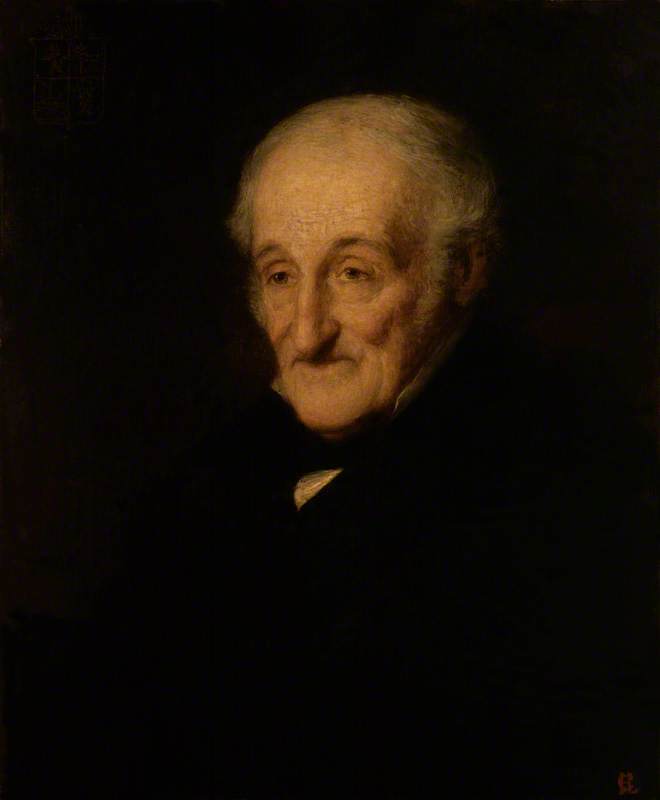
Carter’s talent was quickly recognized by the Royal Academy, where he exhibited twenty-four paintings throughout his career. His portraits, including those of Sir Joshua Staples and Mrs. Worsley Taylor, demonstrated a remarkable ability to capture the personality and character of his subjects. The National Portrait Gallery holds two of his most celebrated works: “The Last Ray” (1878) and a portrait of Sir Francis Ronalds, reflecting both the artist’s technical skill and his appreciation for the dignity of age.
Beyond his Royal Academy successes, Carter was an active member of several artistic organizations, including the New English Art Club. His work continued to be exhibited throughout his life, solidifying his position as a respected figure in the British art scene. Hugh Carter’s legacy lies not in grand pronouncements or revolutionary innovations, but in his quiet, perceptive portrayal of everyday life – a testament to the enduring power of observation and the beauty that can be found in the most unassuming subjects.
A Family Connection
Carter's personal life was intertwined with that of another prominent figure: his cousin, Jimmy Carter, who would later become President of the United States. Hugh Carter served as a special assistant to his cousin during the 1977-1981 administration, assisting with budget matters and offering insights into American culture. This familial connection adds an intriguing layer to Carter’s biography, highlighting the intersection of art and politics within a prominent American family.
The Painter's Final Years
Carter spent his final years in Americus, Georgia, continuing to paint and pursue his artistic interests. He passed away on September 27, 1903, leaving behind a body of work that offers a valuable window into the social and cultural landscape of Victorian Britain. His paintings remain cherished examples of genre painting, admired for their realism, sensitivity, and quiet beauty – a testament to the enduring appeal of capturing the essence of ordinary life.


 Forhåndsvisning
 Bytt til trykk
 Send
Send Del med andre
 Vis detaljer

 Last ned bildet
 Liknende objekter
 Røntgenundersøkelse
 Lysbildefremvisning
 Statistikk


 Vis hele teksten


![Legend Of St Francis - [24] - Canonization Of St Francis — Giotto Di Bondone, Gothic](/media/artworks/images-thumb/81/9b/819b5f0656848eb5cb3fcd40fd5756aa.jpg)

![Life Of Saint Francis - [04] - Death And Ascension Of St Francis — Giotto Di Bondone, Italian Renaissance](/media/artworks/images-thumb/08/8b/088b102b13c1a379233690905590f156.jpg)


