Se i rommet Se i AR Bestill håndmalt reproduksjon Gå til digitalt bilde Del som digitalt kort
Detaljer Studentguide Legg til i favoritter Last ned Liknende objekter Røntgen Lysbildefremvisning Besøksstatistikk

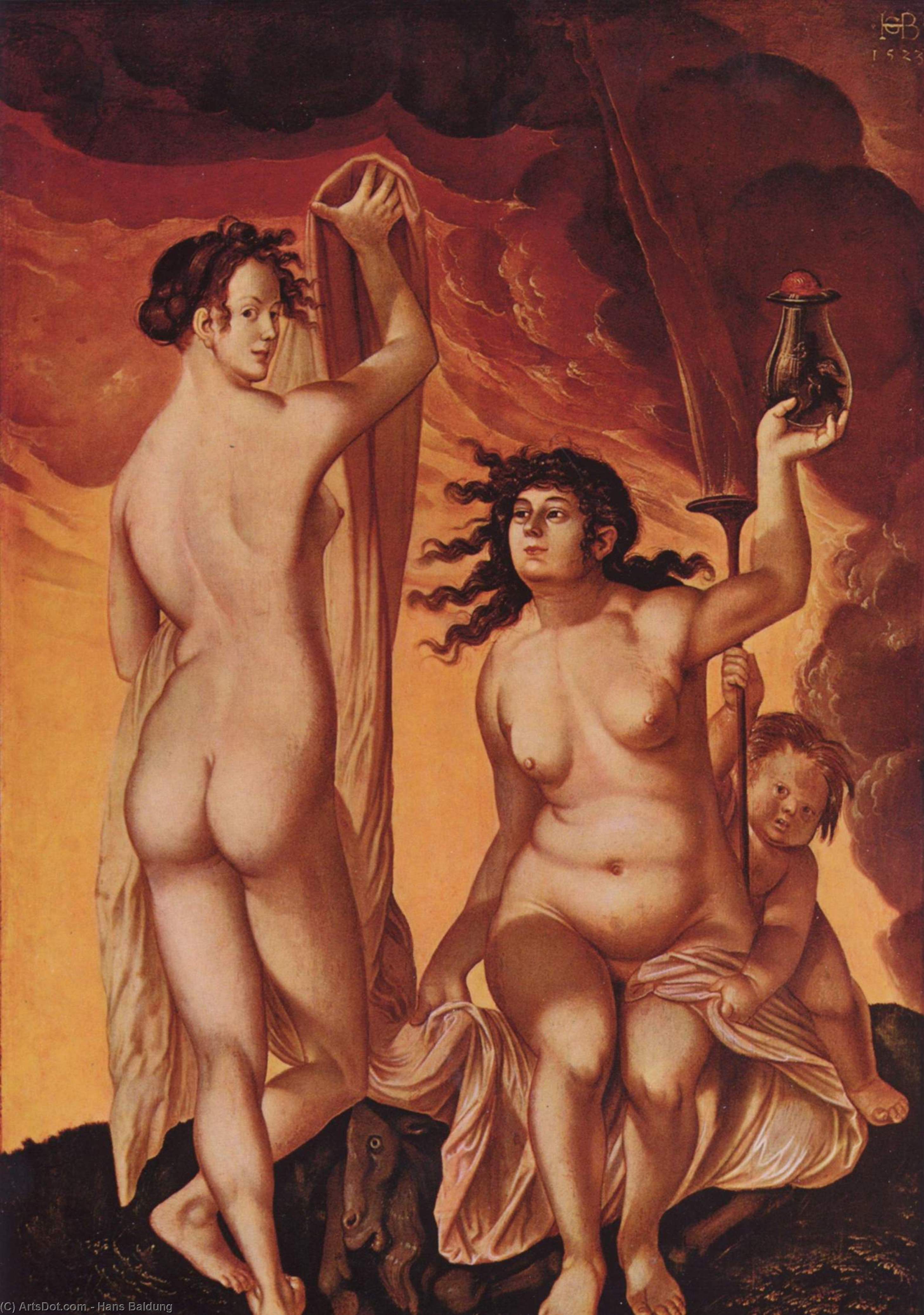
Two Witches

Discover the mystery of Hans Baldung's Two Witches, a vibrant Northern Renaissance scene featuring nude figures and ritualistic intrigue; bring this masterpiece home.

Oppdag Hans Baldung (1485-1545), tysk maler & trykker. Utforsk uttrykksfulle portretter, allegorier og unike skildringer av trolldom & mytologi – en fascinerende blanding av farge, fantasi & reformasjon.

Giclée / Kunsttrykk

Giclée- eller lerretsprint av museumskvalitet med rask produksjon og fleksible valgmuligheter for etterbehandling. ( Bestill håndmalt reproduksjon Gå til digitalt bilde)

Corner sample of the P118B picture frame: støpt polystyren, 5 cm wide and 3 cm thick
P118B Nkr10
Corner sample of the P118H picture frame: støpt polystyren, 5 cm wide and 3 cm thick
P118H Nkr10
Corner sample of the P118W picture frame: støpt polystyren, 5 cm wide and 3 cm thick
P118W Nkr10
Corner sample of the P438Z picture frame: støpt polystyren, 5.5 cm wide and 3.5 cm thick
P438Z Nkr10
Corner sample of the P508JH picture frame: støpt polystyren, 7 cm wide and 3.5 cm thick
P508JH Nkr12
Corner sample of the P508YH picture frame: støpt polystyren, 7 cm wide and 3.5 cm thick
P508YH Nkr12
Corner sample of the P805H picture frame: støpt polystyren, 5 cm wide and 3.5 cm thick
P805H Nkr10
Corner sample of the P805Z picture frame: støpt polystyren, 5 cm wide and 3.5 cm thick
P805Z Nkr10
Corner sample of the P919BZ picture frame: støpt polystyren, 7 cm wide and 3.5 cm thick
P919BZ Nkr10
Corner sample of the P919G picture frame: støpt polystyren, 7 cm wide and 3.5 cm thick
P919G Nkr10
Corner sample of the P919XJ picture frame: støpt polystyren, 7 cm wide and 3.5 cm thick
P919XJ Nkr10
Corner sample of the P959ZH picture frame: støpt polystyren, 5 cm wide and 3 cm thick
P959ZH Nkr10
Corner sample of the P968JZ picture frame: støpt polystyren, 6 cm wide and 4 cm thick
P968JZ Nkr12
Corner sample of the W106C picture frame: massivt tre, 5 cm wide and 3 cm thick
W106C Nkr8
Corner sample of the W218G picture frame: massivt tre, 5 cm wide and 3 cm thick
W218G Nkr10
Corner sample of the W218JH picture frame: massivt tre, 5 cm wide and 3 cm thick
W218JH Nkr8
Corner sample of the W218Y picture frame: massivt tre, 5 cm wide and 3 cm thick
W218Y Nkr10
Corner sample of the W307PJ picture frame: massivt tre, 6 cm wide and 3 cm thick
W307PJ Nkr10
Corner sample of the W316G picture frame: massivt tre, 6 cm wide and 3 cm thick
W316G Nkr10
Corner sample of the W316PJ picture frame: massivt tre, 6 cm wide and 3 cm thick
W316PJ Nkr8
Corner sample of the W316Y picture frame: massivt tre, 6 cm wide and 3 cm thick
W316Y Nkr10
Corner sample of the W398PJ picture frame: massivt tre, 5 cm wide and 3 cm thick
W398PJ Nkr8
Corner sample of the W4111J picture frame: massivt tre, 6.5 cm wide and 3.5 cm thick
W4111J Nkr10
Corner sample of the W500HY picture frame: massivt tre, 7 cm wide and 5 cm thick
W500HY Nkr15
Corner sample of the W500JH picture frame: massivt tre, 7 cm wide and 5 cm thick
W500JH Nkr15
Corner sample of the W692G picture frame: massivt tre, 8 cm wide and 4 cm thick
W692G Nkr12
Corner sample of the W849H picture frame: massivt tre, 5 cm wide and 3 cm thick
W849H Nkr8
Corner sample of the W940BG picture frame: massivt tre, 7.5 cm wide and 4.5 cm thick
W940BG Nkr15
Corner sample of the W953PJ picture frame: massivt tre, 6 cm wide and 3.5 cm thick
W953PJ Nkr8

Standardformat
tilpasset
CM
INCH

Velg mellom våre forhåndsdefinerte størrelser som bevarer kunstverkets opprinnelige proporsjoner.

bredde
høyde

Du kan oppgi egne mål for å tilpasse en spesifikk ramme eller et bestemt område. Dersom den valgte størrelsen ikke samsvarer med det originale bildets proporsjoner, vil vi enten beskjære kunstverket eller utvide bildet med en speilet eller ensfarget kant. En digital mockup vil bli sendt til din godkjenning før produksjonen starter.
Vennligst merk at forhåndsvisningen på skjermen ikke gjenspeiler den faktiske beskjæringen eller utvidelsen. Kun mockuppen vil vise den endelige komposisjonen nøyaktig.
Selv om tilpassede størrelser er tilgjengelige, anbefaler vi å velge et mål fra den forhåndsdefinerte listen for å bevare de originale proporsjonene.

Verdensomspennende levering () på 2 uker i stedet for standard 4/5 uker. (13 October)

Gratis ekspressfrakt over hele verden
Lerretsduk av høykvalitets lin
Full transportforsikring
Garanti for refusjon av toll og importavgifter
Garantert fargeekthet
100 dagers returrett ved fabrikasjonsfeil
100% pengene tilbake-garanti
Mengderabatt

Totalpris

Nkr 634

Two Witches

Giclée / Kunsttrykk

Format på reproduksjon

-

Totalpris

Nkr 634

The painting "Two Witches" by Hans Baldung is a captivating work of art that showcases the artist's unique style and technique. Created in 1523, this Northern Renaissance masterpiece is a testament to Baldung's skill as a painter and printmaker. As a leading online platform specializing in handmade oil paintings reproductions, https://WahooArt.com offers a wide range of artworks, including the "Two Witches" by Hans Baldung.

Artist's Style and Technique

Hans Baldung was a German artist who was considered one of the most gifted students of Albrecht Dürer. Throughout his lifetime, Baldung developed a distinctive style, full of color, expression, and imagination. His talents were varied, and he produced a great and extensive variety of work, including paintings, prints, and drawings. The "Two Witches" is a prime example of Baldung's skill as a painter, with its intricate details and vibrant colors.

Painting Description

The painting depicts two women in the nude, with one woman sitting on the ground while the other stands behind her. The standing woman appears to be holding a vase or pitcher, possibly as part of a ritual or ceremony. Both women are positioned near each other and seem to be interacting with each other. In addition to the two main figures, there is another person in the background who seems to be observing the scene. The painting also features an interesting detail: a bird can be seen perched on one of the women's shoulders.
  • For more information about Hans Baldung and his artworks, visit https://WahooArt.com/@/Hans-Baldung
  • To view other Northern Renaissance paintings, check out /art/list/?Filter=northern+renaissance,northern,renaissance
Handmade oil paintings reproductions of famous artworks like the "Two Witches" by Hans Baldung are available at https://WahooArt.com. These reproductions are created by skilled artists who use high-quality materials to ensure that the final product is identical to the original painting.
The Alte Pinakothek in Munich, Germany, is home to many famous artworks, including paintings by Rogier Van Der Weyden and Hans Holbein The Younger. For more information about these artists and their works, visit https://WahooArt.com.

Spørsmål og svar

Hvilken reproduksjonsstørrelse anbefales for "Two Witches" av Hans Baldung Grien?

"Two Witches" anbefales i en trykkstørrelse på Medium. Andre størrelser er tilgjengelige med de samme proporsjonene.

Er "Two Witches" av Hans Baldung Grien et maleri, en tegning eller et trykk?

I katalogen er "Two Witches" av Hans Baldung Grien klassifisert som WallArt. Kategorien bidrar til å finne lignende verk.

Hvordan kan jeg se "Two Witches" av Hans Baldung Grien som en lysbildefremvisning?

"Two Witches" av Hans Baldung Grien kan vises som et lysbildefremvisning på verkets Lysbildefremvisning-side.

I hvilket år og innen hvilken stilretning ble "Two Witches" laget?

"Two Witches" ble laget i 1523, innenfor Northern Renaissance-retningen.

Hvilken palett og hvilken følelse forener "Two Witches"?

I "Two Witches" ledsages en Mysterious følelse av Dark farger.

Hvilken fargepalett bruker "Two Witches"?

Fargepaletten i "Two Witches" av Hans Baldung Grien beskrives som Dark. Det er en kortfattet beskrivelse av verkets farger.

Fremstår fargene i "Two Witches" som sterke eller duse?

"Two Witches" av Hans Baldung Grien viser en Vivid fargeintensitet.

Hvilket rom i hjemmet passer en reproduksjon av "Two Witches" godt inn i?

En reproduksjon av "Two Witches" passer godt i et Lounge.


Kunstnerbiografi

A Swabian Enigma: The Life and Early Influences of Hans Baldung Grien

Hans Baldung, for all time distinguished as Hans Baldung Grien due to his penchant for wearing green attire, emerged from an unexpectedly scholarly lineage. Unlike many Renaissance artists who followed established family crafts, Baldung was the first male in generations not destined for university studies. His father, Johann Baldung, a respected jurist serving the Bishopric of Strasbourg, envisioned a similar path for his son. Yet, young Hans chose the brush and burin, embarking on an artistic journey that would set him apart as one of the most distinctive and enigmatic figures of the German Renaissance. This decision wasn’t a rejection of his upbringing, but rather a redirection of intellectual curiosity—a characteristic that permeated his entire oeuvre. His early training commenced around 1500 in the Upper Rhineland with an artist from Strasbourg, laying the groundwork for his technical skills before he sought out more prominent masters to hone his craft. This initial period instilled within him a foundation of draftsmanship and composition, preparing him for the rigorous artistic environment that awaited him in Nuremberg.

Under Dürer’s Wing and Forging an Individual Style

The pivotal moment in Baldung's development arrived in 1503 when he became a workshop apprentice to Albrecht Dürer in Nuremberg. This period proved profoundly formative, exposing him to the meticulous detail, intellectual rigor, and innovative printmaking techniques that defined Dürer’s style. The two artists developed a close relationship; Baldung even managed Dürer's workshop during his master’s sojourn to Venice. However, while deeply influenced by Dürer—evident in early works showcasing precise draftsmanship and Northern realism—Baldung quickly began to forge his own artistic identity. He absorbed the lessons of the Renaissance masters but infused them with a uniquely German sensibility, characterized by expressive color, imaginative compositions, and an increasingly unsettling psychological depth. This divergence from Dürer’s more classical approach would become a hallmark of Baldung's mature style. His time in Venice, overseeing Dürer’s affairs, also exposed him to the burgeoning Italian Renaissance art scene, broadening his artistic horizons and subtly influencing his palette and compositional choices. He returned from Italy with a heightened sense of color and a willingness to experiment with spatial arrangements that set him apart from his contemporaries.

A Master of Many Mediums: Themes and Techniques

Hans Baldung Grien was an artist of remarkable versatility, proficient in painting, printmaking—particularly woodcuts and engravings—drawing, tapestry design, and even stained glass work. His paintings often feature small-scale works brimming with puzzling allegories and mythological narratives, rendered with a vibrant palette and a distinctive sense of spatial ambiguity. He excelled at portraiture, capturing the likenesses of his patrons with both realism and psychological insight. However, it is perhaps for his woodcuts that Baldung is most widely recognized today. These prints are characterized by their dramatic compositions, intricate detail, and often macabre subject matter. A recurring theme throughout his work is a fascination with witchcraft, death, and the supernatural—a reflection of the anxieties and beliefs prevalent in 16th-century Germany. His depictions of witches are particularly striking, portraying them not as stereotypical hags but as complex, even alluring figures, embodying both fear and fascination. *The Bewitched Groom*, for example, is a chillingly evocative work that encapsulates this preoccupation with the darker side of human experience. Baldung’s technique in woodcut was masterful; he exploited the medium's capacity for stark contrasts and intricate detail to create images that were both visually arresting and psychologically unsettling.

Reformation Currents and Lasting Legacy

Baldung’s career unfolded during a period of immense religious and political upheaval, marked by the rise of the Protestant Reformation. While not overtly aligned with any particular faction, his work often reflects the changing spiritual landscape of Germany. His monumental high altar for the city of Münster, completed in 1531, is a testament to this engagement, showcasing support for the reformation movement through its iconography and stylistic choices. In 1545, Baldung died in Strasbourg, leaving behind a body of work that continues to captivate and intrigue viewers today. His influence can be seen in the works of later German artists, and his unique blend of Renaissance technique, Northern expressionism, and allegorical complexity secures his place as a significant figure in art history. He remains an artist whose work invites contemplation, challenging us to confront the darker aspects of human nature and the mysteries of the unseen world. His exploration of themes like witchcraft and mortality continues to resonate with contemporary audiences, making him a timeless and compelling figure in the pantheon of Renaissance masters.

Museums and Collections

Baldung’s works can be found in prominent museums across Europe and North America:
  • Gemäldegalerie Alte Meister, Dresden, Germany: This renowned museum houses a significant collection of European paintings from the 15th to the 18th centuries, providing valuable context for understanding Baldung’s artistic milieu.
  • National Gallery of Art, Washington D.C.: The NGA holds several important woodcuts and drawings by Baldung, offering insights into his printmaking techniques and artistic process.
  • The J. Paul Getty Museum, Los Angeles: Features works that showcase the breadth of Baldung’s talent.
  • Kunstmuseum Basel, Switzerland: A museum with a rich collection spanning various periods, offering a broader understanding of Renaissance art in Europe.
These institutions provide opportunities to experience firsthand the captivating artistry and enduring legacy of Hans Baldung Grien.

Hans Baldung Grien

Hans Baldung Grien

1485 - 1545 , Tyskland

Kort om kunstneren

  • Artistic Movement Or Style: Renaissance, Mannerisme
  • Artists Or Movements Influenced By This Artist: ['Senere tyske kunstnere']
  • Artists Who Influenced This Artist: ['Albrecht Dürer']
  • Date Of Birth: c. 1485
  • Date Of Death: 1545
  • Full Name: Hans Baldung Grien
  • Nationality: Tysk
  • Notable Artworks:
    • Bewitched Groom
    • Death & Beauty
  • Place Of Birth: Schwäbisch Gmünd, Tyskland
Utforsk kunstverk organisert etter temaer, stiler og kjennetegn.