Se i rommet Se i AR Bytt til trykkversjon Bestill håndmalt reproduksjon Del som digitalt kort
Detaljer Studentguide Legg til i favoritter Last ned Liknende objekter Røntgen Lysbildefremvisning Besøksstatistikk

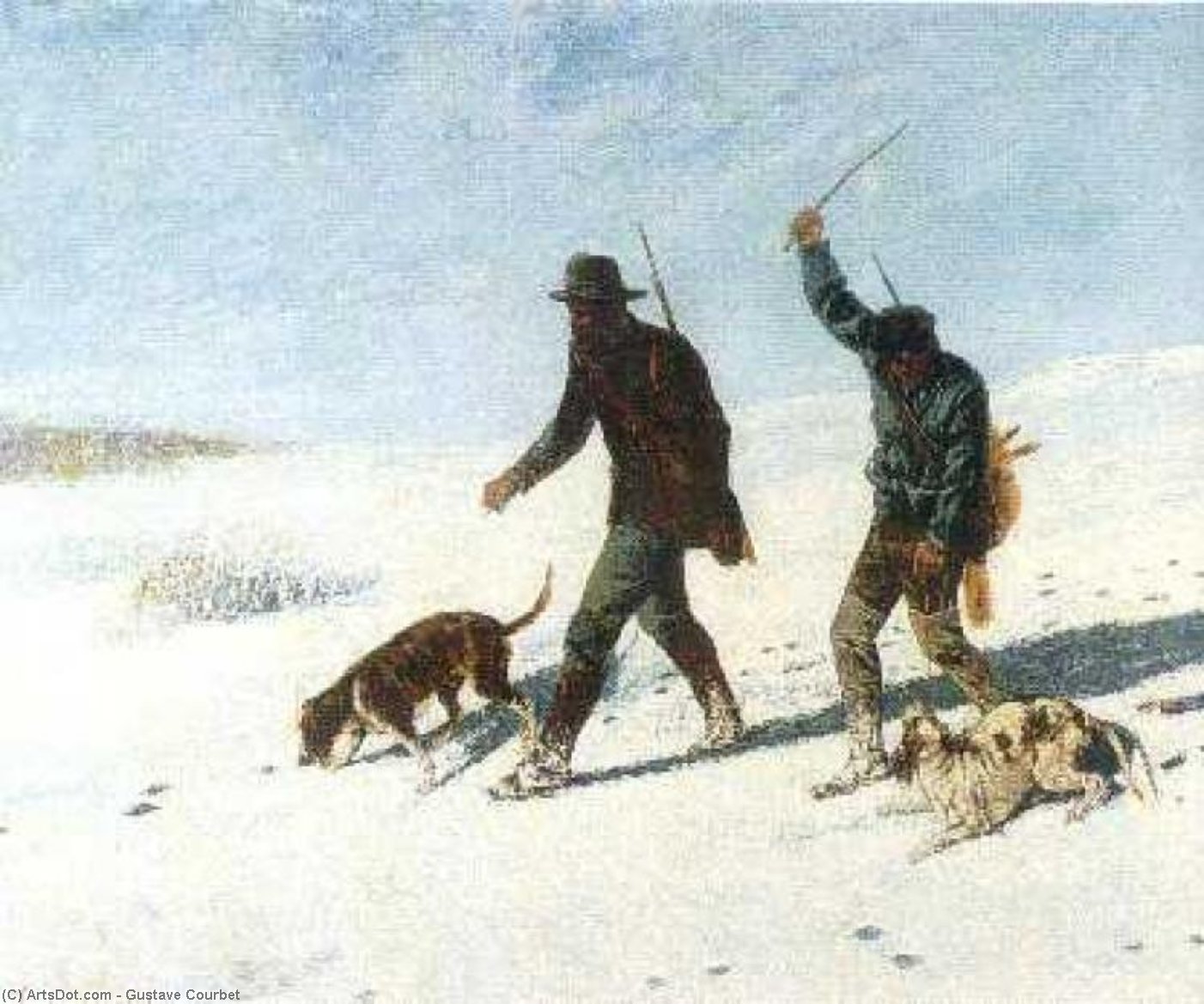
Bracconieri sulla neve

Delve into Gustave Courbet’s masterpiece ‘Bracconieri sulla neve,’ capturing rural life and hunting traditions with meticulous detail. Explore Realism's bold vision at WahooArt.

Gustave Courbets «Hvetesilter» er et ikonisk realistisk maleri som skildrer hverdagsarbeid og samfunnets realiteter. Opplev detaljrikdommen og den dype menneskelige fortellingen i dette mesterverket fra 1854.

Kjøp et høyoppløselig, forbedret digitalt bilde med langt høyere kvalitet enn forhåndsvisningen på nettet.

Hver fil er omhyggelig klargjort av våre egne spesialister ved hjelp av avanserte verktøy og profesjonell manuell retusjering. Vi sørger for at hvert bilde har eksepsjonell klarhet, presis fargegjengivelse og fine detaljer.

Den endelige filen leveres via e-post innen 72 timer, optimalisert for umiddelbar bruk i profesjonelle, redaksjonelle og trykte miljøer. Dette er den samme kvaliteten som benyttes av ledende designstudioer, utgivere og gallerier.

Digitalt bilde

Last ned en høyoppløselig fil til personlig bruk, utskrift og kreative prosjekter. ( Bytt til trykkversjon Bestill håndmalt reproduksjon)

Totalpris

$ 24.90

Inkludert i alle bestillinger av digitale bilder

Profesjonell digital levering, garantert

Når du velger WahooArt.com, får du ikke bare et bilde – du mottar et profesjonelt etterbehandlet digitalt kunstverk, skapt med presisjon og med en garantert tilfredshetsgaranti. Her er alt som automatisk følger med din bestilling:

shipping_icon
Rask levering på e-post

Din høyoppløselige digitale bildefil sendes til din e-post innen 72 timer etter bestilling – klar til umiddelbar bruk.

canvas_icon
KI-forbedret digital fil

Ditt kunstverk blir profesjonelt optimalisert ved hjelp av avanserte AI-verktøy og manuell redigering, noe som sikrer maksimal detaljrikdom, klarhet og fargegjengivelse.

insurance_icon
Gratis livslang nybestilling

Har du ved et uhell slettet eller mistet filen din? Ingen bekymring – vi sender den på nytt når som helst, helt gratis.

tax_icon
Ingen importavgifter – noen gang

Nyt ditt kunstverk umiddelbart uten toll, avgifter eller leveringskostnader – digitale nedlastinger er alltid avgiftsfrie.

color_icon
Garantert fargenøyaktighet

Vi sikrer at det digitale bildet gjenspeiler de originale fargene så nøyaktig som mulig ved hjelp av profesjonelle verktøy og fargehåndtering.

return_icon
100 dagers tilfredshetsgaranti

Hvis du ikke er fornøyd med ditt digitale bilde, vil vi revidere det eller refundere 100% innen 100 dager – uten spørsmål.

guarantee_icon
100% Penggaranti

Ikke fornøyd? Få full refusjon innen 100 dager etter at du har mottatt din digitale fil – uten spørsmål.

discount_icon
Rabatt ved storkjøp

Kjøp 3 bilder, spar 10% - Kjøp 5, spar 15% - Kjøp 10+, spar 20%. Ideelt for kreative prosjekter, gallerier og byråer.

Kort om verket

  • Artistic style: Realistic portrayal of everyday life.
  • Medium: Oil on canvas
  • Subject or theme: Hunting, rural life
  • Influences:
    • Eugène Delacroix
    • Théodore Géricault
  • Movement: Realism
  • Artist: Gustave Courbet

Kunstquiz

Det er kun ett riktig svar på hvert spørsmål.

Spørsmål 1:
What artistic movement is Gustave Courbet primarily associated with?
Spørsmål 2:
The painting depicts two men engaged in what activity?
Spørsmål 3:
How many dogs are featured in the artwork?
Spørsmål 4:
What is a notable characteristic of Courbet's artistic approach as reflected in this painting?
Spørsmål 5:
Where is the Musée Courbet located?

Bracconieri sulla neve – A Study in Rustic Realism

Gustave Courbet’s “Bracconieri sulla neve” (“Snow Hunters”) stands as a cornerstone of French Realism, capturing not merely a picturesque winter landscape but also a profound statement about the dignity and resilience of rural life. Painted in 1867, this monumental canvas—measuring approximately 240 x 330 cm—immediately confronts viewers with its uncompromising depiction of two men engaged in hunting dogs amidst a snow-covered expanse.

  • Subject Matter: The painting portrays two hunters – likely Jean Léon Gerbet and Frédéric Moulinet – accompanied by their canine companions. Their activity isn’t merely sport; it embodies the practical necessity of survival within the harsh conditions of the Alpine winter, reflecting Courbet's fascination with portraying everyday life without romantic embellishment.
  • Style & Technique: Courbet eschewed the idealized forms and dramatic narratives favored by Romantic painters. Instead, he employed a meticulous observation technique—a hallmark of Realism—applying thick impasto brushstrokes to build up textured surfaces that convincingly convey the physicality of snow and the ruggedness of the hunters’ clothing. The palette is muted, dominated by whites, browns, and greys, mirroring the bleak beauty of the environment.
  • Historical Context: “Bracconieri sulla neve” emerged during a period of significant social upheaval in France. Courbet's artistic endeavors were deliberately provocative, challenging the academic establishment’s obsession with mythological subjects and aristocratic grandeur. He sought to legitimize Realism as an art form by focusing on scenes from ordinary life—a deliberate rejection of prevailing artistic conventions.

Symbolism & Narrative Depth

Beyond its visual representation, the painting resonates with symbolic significance. The hunters’ posture exudes confidence and determination – a defiance against adversity. The dogs serve as integral components of their livelihood and represent loyalty and instinct. Courbet deliberately avoids narrative storytelling; instead, he invites contemplation on themes of labor, perseverance, and the relationship between man and nature.

  • Color Palette: The subdued color scheme contributes to the painting’s emotional impact, conveying a sense of bleakness tempered by the warmth of human presence. Courbet's masterful use of light enhances the realism of the scene, illuminating the snow-covered landscape and highlighting the textures of fabric and fur.
  • Composition: The horizontal orientation emphasizes the vastness of the snowy terrain, while the placement of the figures creates a dynamic interplay between man and animal. Courbet’s careful attention to detail—from the folds of the hunters' coats to the expressions on their faces—further reinforces his commitment to portraying reality with uncompromising accuracy.

Legacy & Artistic Influence

"Bracconieri sulla neve" cemented Courbet’s reputation as a revolutionary artist and profoundly impacted subsequent generations of painters. It championed Realism's ethos – depicting the world as it is, without embellishment or moral judgment—inspiring artists to confront social issues and explore the complexities of human experience. Its enduring appeal lies in its ability to capture not just a moment in time but also the spirit of an era defined by intellectual curiosity and artistic independence.

  • Influence on Impressionism: Courbet’s rejection of academic conventions paved the way for Impressionist artists like Monet and Renoir, who prioritized capturing fleeting impressions of light and color.
  • Continuing Relevance: Today, “Bracconieri sulla neve” continues to fascinate viewers with its masterful technique and its unflinching portrayal of rural life—a testament to Courbet’s enduring legacy as a champion of artistic truth.

Kunstnerbiografi

A Rebel’s Brush: The Life and Legacy of Gustave Courbet

Jean Désiré Gustave Courbet, born in Ornans, France, on June 10, 1819, stands as a monumental figure in the history of art – a defiant iconoclast who irrevocably altered the trajectory of painting during the mid-nineteenth century. More than simply capturing visual impressions; his artistic journey embodies a profound rejection of convention and an unwavering dedication to portraying reality with uncompromising honesty. His upbringing within a moderately prosperous bourgeois family fostered an early appreciation for artistic pursuits, nurtured by his mother’s encouragement – a formative influence that propelled him toward a revolutionary vision of artistic expression. Formal training commenced at the École des Beaux-Arts in Paris in 1839, yet Courbet swiftly recognized the limitations imposed by the prevailing academic doctrines and Romantic idealism. While acknowledging connections to artists like Eugène Delacroix and Théodore Géricault – figures who wrestled with grand narratives and emotional intensity – Courbet deliberately distanced himself from these approaches, prioritizing observation over imagination and truth above all else. He sought not to embellish or glorify but to confront viewers with the unvarnished face of existence.

The Birth of Realism: Challenging Artistic Conventions

Courbet’s artistic breakthrough arrived through a radical departure from established aesthetic standards. Unlike Romantic painters who favored mythological tales and heroic portrayals, he turned his gaze toward the everyday lives of ordinary individuals – laborers, peasants, and rural communities – subjects largely ignored by the art world of his time. This commitment to depicting reality without embellishment—a stance that would become synonymous with Realism—immediately provoked censure from critics accustomed to idealized representations steeped in beauty and grandeur. Early canvases explored landscapes and portraits, yet he soon gravitated toward scenes of working-class life, rendered on a scale traditionally reserved for monumental historical paintings. This deliberate decision wasn’t merely stylistic; it was an assertion of dignity and importance – recognizing the inherent value within these marginalized segments of society. The masterpiece *The Stone Breakers* (1849), tragically destroyed during World War II, exemplifies this ethos—a stark depiction of two laborers engaged in arduous toil, their faces obscured by exhaustion and grime. This painting challenged the very notion of what constituted “worthy” subject matter for artistic endeavor.

Major Works and Artistic Philosophy

Courbet’s artistic philosophy extended beyond mere subject matter; it encompassed a revolutionary technique – *impasto*. He applied paint thickly onto the canvas, creating textured surfaces that captured the physicality of the medium itself. This method mirrored his belief in portraying reality as accurately as possible, rejecting illusionistic techniques favored by earlier artists. Notable works like *A Burial at Ornans* (1850-51) and *The Painter’s Studio* (1855) solidified his reputation as a provocateur who championed artistic freedom and confronted societal prejudices. The latter painting served as an allegorical manifesto, reflecting Courbet's conviction that art should engage with pressing social issues—a stance that resonated powerfully with contemporaries and cemented his legacy as a champion of intellectual independence. His participation in the Salon des Refusés in 1863 – an exhibition showcasing rejected artworks deemed unsuitable by the official Salon – underscored his defiance against artistic orthodoxy and reaffirmed his commitment to challenging conventional norms. Landscapes like *View in the Forest of Fontainebleau* (1855) were imbued with a similar spirit of realism, capturing the natural beauty without romantic embellishment.

Legacy and Historical Significance

Gustave Courbet’s influence on subsequent art movements is undeniable. While he acknowledged influences from artists such as Caravaggio for their dramatic use of light and shadow—a stylistic homage to artistic predecessors—his impact transcended mere imitation. He fundamentally reshaped the landscape of painting by liberating Impressionists and Post-Impressionists from the constraints of academic tradition, encouraging them to explore new avenues of perception and representation. His unwavering advocacy for artistic liberty served as an inspiration to generations of artists who sought to express their convictions through creative endeavors. Courbet died in Paris on April 29, 1877, leaving behind a corpus of work that continues to captivate audiences worldwide—a testament to the enduring power of art to provoke thought and inspire transformative change. He remains an unparalleled figure in artistic history, forever remembered as the herald of Realism and a courageous voice for artistic integrity.
Gustave Courbet

Gustave Courbet

1819 - 1877 , Frankrike

Kort om kunstneren

  • Artistic Movement Or Style: Realisme
  • Artists Or Movements Influenced By This Artist:
    • Impressionisme
    • Postimpressionisme
  • Artists Who Influenced This Artist:
    • Eugène Delacroix
    • Théodore Géricault
    • Caravaggio
  • Date Of Birth: 10 Juni 1819
  • Date Of Death: 31 Desember 1877
  • Full Name: Gustave Courbet
  • Nationality: Fransk
  • Notable Artworks:
    • Steinknackare
    • Begravning i Ornans
    • Målarens Studio
  • Place Of Birth: Orléans, Frankrike