


Giclée- eller lerretsprint av museumskvalitet med rask produksjon og fleksible valgmuligheter for etterbehandling. ( Kjøp håndmalt maleri Bytt til digitalt bilde)





























Velg mellom våre forhåndsdefinerte størrelser som bevarer kunstverkets opprinnelige proporsjoner.

Skriv inn ønsket bredde og høyde for å tilpasse trykket til din ramme eller vegg. Et trykk kan kun beskjæres, aldri skaleres opp utover motivets opprinnelige størrelse, noe som betyr at et format med andre proporsjoner vil føre til tap av deler av bildet. Vi sender deg en digital mockup for godkjenning før vi starter trykkeprosessen. Bildet som vises på denne siden viser ikke den faktiske beskjæringen — det er kun mockuppen som viser dette.
Verdensomspennende levering () på 2 uker i stedet for standard 4/5 uker. (9 November)
Joseph Anthony Jr.
Størrelse på reproduksjon
Gilbert Stuart Newton's "Joseph Anthony Jr." is more than just a portrait; it’s a carefully constructed tableau of 18th-century prosperity and quiet self-assurance. Painted in 1795, the artwork captures Joseph Anthony Jr., a native of Newport, Rhode Island, and a direct descendant of Gilbert Stuart, the renowned American portrait painter. Newton, apprenticed to his celebrated uncle, skillfully blends elements of English formal portraiture with a distinctly New England sensibility, creating an image that speaks volumes about its subject’s status and character.
The composition immediately draws the eye to Anthony's figure – a man radiating confidence despite a subtle air of thoughtful contemplation. He is depicted in a richly detailed suit of dark blue velvet, accented with gold embroidery, indicative of his family’s wealth and standing within Newport society. His posture is upright, shoulders squared, conveying an impression of authority and self-possession. The carefully arranged bow tie and the precise cut of his jacket speak to meticulous attention to detail – a hallmark of Newton's artistic approach. The subtle hint of red in his waistcoat adds a touch of warmth and vitality to the otherwise formal attire.
To fully appreciate “Joseph Anthony Jr.”, it’s crucial to understand the context of 18th-century Newport. The city was a thriving center for trade, shipping, and finance, fueled by the lucrative transatlantic commerce with Britain and France. Families like the Anthony's amassed considerable fortunes through maritime ventures, establishing themselves as prominent figures in the community. Newton’s portrait isn’t merely a likeness; it’s a visual representation of this social hierarchy and the values associated with it – respectability, industry, and familial lineage.
The background subtly reinforces this setting. The red curtains, reminiscent of a gentleman's drawing room, suggest an environment of refinement and leisure. While not explicitly depicted, one can almost imagine the sounds of conversation and music emanating from within, creating a sense of domestic comfort and social engagement. Newton’s use of light is masterful, illuminating Anthony’s face while casting gentle shadows that add depth and dimension to the scene.
Newton's style leans heavily toward English portraiture, particularly the work of Thomas Gainsborough and Sir Godfrey Kneller. He employs a meticulous technique, evident in the incredibly detailed rendering of Anthony’s clothing, the subtle play of light and shadow, and the precise brushstrokes that define every feature. The artist skillfully utilizes chiaroscuro – the dramatic contrast between light and dark – to sculpt Anthony's form and create a sense of three-dimensionality.
The painting is executed in oil on canvas, a medium favored by Newton for its ability to capture subtle nuances of color and texture. Newton’s attention to detail extends beyond mere representation; he imbues the portrait with a palpable sense of personality. Anthony's gaze, direct and unwavering, invites the viewer into his world, suggesting an intelligence and quiet dignity.
Beyond its surface appearance, “Joseph Anthony Jr.” is rich in symbolism. The man’s confident posture and carefully chosen attire represent a desire for social acceptance and recognition within Newport society. The subtle smile hints at contentment and self-satisfaction – a reflection of his family's success and his own position within it. Newton masterfully captures not just a likeness, but the essence of a man defined by his heritage and accomplishments.
Ultimately, “Joseph Anthony Jr.” is a testament to Newton’s skill as an artist and his ability to capture the spirit of a bygone era. It offers a captivating glimpse into the world of 18th-century Newport, inviting viewers to contemplate the values, aspirations, and social dynamics that shaped this vibrant community.
Fargeanalysen av "Joseph Anthony Jr." av Gilbert Stuart Newton viser en Serene kontrast og en Discordant Palette harmoni.
Siden Lignende verk for "Joseph Anthony Jr." av Gilbert Stuart Newton viser relaterte kunstverk.
Den Nostalgic stemningen i "Joseph Anthony Jr." ledsager dens Romanticism-stil.


1795 - 1835

Discover the captivating world of John Graham Gilbert, a Victorian master! Explore his portraits, genre scenes & illustrations. Learn about his influences, legacy & find high-quality reproductions at WahooArt.
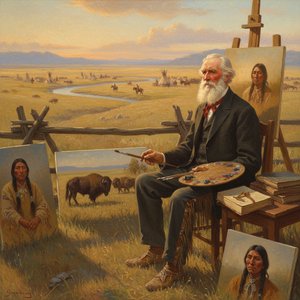
Explore the life & art of Joseph Henry Sharp, a founding member of the Taos Society of Artists renowned for his realistic depictions of Native American culture and Western landscapes. Discover his legacy with WahooArt.

Transform your home with the profound beauty of Saint Anthony artworks. Explore exquisite Baroque reproductions by Murillo and Zurbarán, hand-painted on 100% cotton canvas to bring divine serenity and timeless elegance to your interior design.
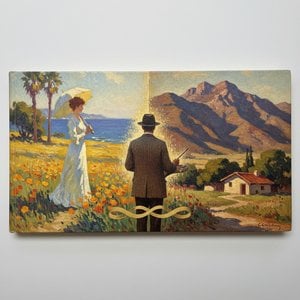
Explore the life & work of Joseph Kleitsch, a pivotal California Impressionist painter. Discover his vibrant landscapes, portraits, and legacy within the Laguna Beach art colony. A comprehensive study for collectors & enthusiasts.

Explore the life & art of John Gilbert, a prolific Victorian painter renowned for his captivating genre scenes and Venetian-inspired style. Discover his legacy with WahooArt.
 Forhåndsvisning
 Send
Send Del
Del
 Vis detaljer
 Utskriftsvennlig guide

 Last ned bilde
 Liknende objekter
 Røntgenundersøkelse
 Lysbildefremvisning
 Spørsmål og svar
 Statistikk


 Vis hele teksten









 Glassalternativet er kun tilgjengelig i størrelser under 110 cm


