Gratis kunstkonsultasjon

x
Bestill trykk Bestill trykkKjøp digitalt bilde Kjøp digitalt bilde SendSend
DetaljerDetaljer Legg til i favoritter Legg til i favoritter Last ned bildetLast ned bildet Liknende objekterLiknende objekter RøntgenRøntgen LysbildefremvisningLysbildefremvisning

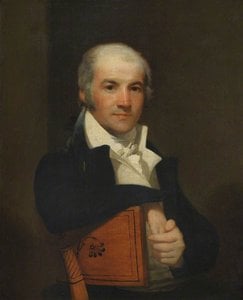
Horatio Gates

Admire Gilbert Stuart's masterful portrait of Horatio Gates, a distinguished military figure from 1793. This oil-on-canvas painting showcases Stuart’s skill and captures the essence of American history.

Gilbert Stuart (1755-1828): Amerikas mest kjente portrettkunstner! Utforsk hans neoklassiske stil, ikonisk Washington-portrett og arv i amerikansk kunst.

Håndlaget oljereproduksjon

Håndmalt olje på lerret i din valgte størrelse og ramme, laget på bestilling av våre kunstnere.

P118B $10
P118H $10
P118W $10
P438Z $10
P508JH $12
P508YH $12
P805H $10
P805Z $10
P919BZ $10
P919G $10
P919XJ $10
P959ZH $10
P968JZ $12
W106C $8
W218G $10
W218JH $8
W218Y $10
W307PJ $10
W316G $10
W316PJ $8
W316Y $10
W398PJ $8
W4111J $10
W500HY $15
W500JH $15
W692G $12
W849H $8
W940BG $15
W953PJ $8

Standard
custom
CM
INCH

Velg mellom våre forhåndsdefinerte størrelser som bevarer kunstverkets opprinnelige proporsjoner.

bredde
høyde

Du kan angi egne mål for å tilpasse en spesifikk ramme eller plass. Dersom den valgte størrelsen ikke samsvarer med originalbildets proporsjoner, vil vi enten beskjære kunstverket eller utvide maleriet med ytterligere håndmalte elementer. En digital mockup vil bli sendt til din godkjenning før produksjonen starter.
Vennligst merk at forhåndsvisningen på skjermen ikke gjenspeiler den faktiske beskjæringen eller utvidelsen. Kun mockuppen vil vise den endelige komposisjonen nøyaktig.
Selv om tilpassede størrelser er tilgjengelige, anbefaler vi å velge et mål fra den forhåndsdefinerte listen for å bevare de originale proporsjonene.

Eksempler på hva som kan endres: Erstatt ansikt med bilde av kunden; Legg til kjæledyr (f.eks. bytt ut katt med hund); Inkluder en skjult melding i bakgrunnen; Endre bakgrunnslandskap eller elementer.
Etter bestilling vil WahooArt.com-teamet sende e-post til kunden for instruksjoner og sende et utkast (mockup) som forhåndsvisning.

Verdensomspennende levering () på 3–4 uker i stedet for standard 5 uker. (2 July). Ingen kompromisser med kvaliteten.

why_choose_icon
Gratis ekspressfrakt over hele verden
why_choose_icon
Lerretsduk av høykvalitets lin
why_choose_icon
Full forsikring under transport
why_choose_icon
Garanti for refusjon av toll og importavgifter
why_choose_icon
Garantert korrekt fargegjengivelse
why_choose_icon
60 dagers returrett (kun ved feil)
why_choose_icon
100% pengene tilbake-garanti
why_choose_icon
Rabatt ved flere kjøp

Totalpris for bestilling

-

reproduction

Horatio Gates

Teknikk for reproduksjon

Størrelse på reproduksjon

-

Endelig pris

-

Kort om verket

  • Movement: Neoclassicism
  • Artist: Gilbert Stuart
  • Subject or theme: Military portrait
  • Year: 1793
  • Medium: Oil on canvas
  • Notable elements: Gold medal, sash

Kunstighetsquiz

Det er kun ett riktig svar på hvert spørsmål.

Spørsmål 1:
What is the primary subject of Gilbert Stuart’s portrait, ‘Horatio Gates’?
Spørsmål 2:
The painting 'Horatio Gates' is believed to have been created around which year?
Spørsmål 3:
What artistic movement is Gilbert Stuart most associated with?
Spørsmål 4:
The dark background in ‘Horatio Gates’ serves what purpose?
Spørsmål 5:
Which of the following best describes Gilbert Stuart’s style?

Beskrivelse av kunstverket

A Portrait of Statesmanship: Gilbert Stuart’s Horatio Gates

Gilbert Stuart's "Horatio Gates," painted in 1793, is more than just a likeness; it’s a carefully constructed embodiment of the ideals and anxieties of early American republicanism. This portrait, rendered in oil on canvas with the meticulous detail characteristic of Stuart’s mature style, offers a glimpse into the life of a man deeply intertwined with the nation's nascent identity – Horatio Gates, a distinguished general who played a pivotal role in the Revolutionary War.

The painting immediately draws the eye to Gates himself. He is depicted in a commanding three-quarter pose, his gaze direct and resolute. The lighting, expertly employed by Stuart, sculpts his features, highlighting the strength of his jawline and the intelligence in his eyes. His attire – a dark military coat adorned with the subtle embellishments of rank, a crisp white shirt beneath, and a vibrant blue sash – speaks volumes about his service and status within the newly formed United States Army. Crucially, a gold medal rests prominently around his neck, a tangible symbol of recognition for his bravery and leadership during the war, particularly at Saratoga – an event that secured crucial French support for the American cause.

Neoclassical Precision and Stuart’s Signature Style

Stylistically, “Horatio Gates” firmly places itself within the Neoclassical tradition, a movement deeply influenced by classical Greek and Roman art. This is evident in the carefully balanced composition, the restrained palette dominated by deep browns, blues, and whites, and the emphasis on idealized form. However, Stuart’s genius lies not simply in replicating classical ideals but in imbuing them with an distinctly American sensibility. He avoids overt theatricality, opting instead for a dignified and understated elegance that reflects the values of republican virtue.

The brushwork itself is remarkably refined – a hallmark of Stuart's later career. Notice the subtle gradations of tone, particularly in the rendering of Gates’ clothing and the folds of his coat. This meticulous attention to detail speaks to Stuart’s dedication to capturing not just the outward appearance but also the very essence of his subject. The background, deliberately dark and indistinct, serves to further emphasize Gates as the focal point, creating a sense of importance and gravitas.

Symbolism and the Ideals of Republican Virtue

Beyond its technical brilliance, “Horatio Gates” is rich in symbolic meaning. The military attire, naturally, represents his service and sacrifice for the nation. However, it’s the medal that carries the most potent message – a testament to his commitment to republican virtue and the ideals upon which America was founded. The choice of a gold medal, a symbol of honor and distinction, underscores the importance Stuart placed on recognizing those who upheld these values during a critical period in American history.

Furthermore, Gates’ posture and gaze convey a sense of quiet authority and unwavering resolve. He embodies the stoic ideal of the republican citizen – a man dedicated to public service and committed to upholding the principles of liberty and self-governance. The painting, therefore, functions as a visual manifesto for the nascent American republic, projecting an image of strength, integrity, and patriotic devotion.

A Legacy of Portraiture and American Identity

Gilbert Stuart’s “Horatio Gates” remains a significant work in the history of American portraiture. It exemplifies his mastery of technique, his ability to capture both physical likeness and psychological depth, and his profound understanding of the symbolic power of art. Reproductions of this iconic painting continue to resonate with viewers today, offering a tangible connection to a pivotal moment in American history – a time when the ideals of republicanism were being forged and enshrined.

Whether displayed as a centerpiece in a grand hall or incorporated into a carefully curated interior design scheme, “Horatio Gates” serves as a powerful reminder of the enduring legacy of Gilbert Stuart and his profound contribution to the visual representation of American identity.


Om kunstneren

Gilbert Stuart (1755–1828): America’s Foremost Portraitist

Gilbert Stuart, born December 3rd, 1755, in Saunderstown, Rhode Island—a village nestled within North Kingstown—was undeniably one of the most celebrated portrait painters of his era and remains an icon of American artistic heritage. His legacy isn't merely about capturing likenesses; it’s about distilling the essence of individuals into enduring images that speak volumes about their character and place in history. He was a Scottish immigrant whose father established Rhode Island’s first snuff mill, shaping Stuart’s early life with entrepreneurial spirit and exposure to artistic pursuits from a young age. ### Early Life and Artistic Beginnings From his formative years onward, Stuart demonstrated an exceptional talent for drawing—a skill that blossomed even as a child. By fourteen, he produced “Dr. Hunter’s Spaniels,” showcasing remarkable promise and establishing him as a prodigious artist within his community. His travels to Scotland around 1771 under the tutelage of Cosmo Alexander provided crucial foundational training in technique and composition, though his studies were interrupted by Alexander's untimely death in 1775. Further artistic refinement occurred in London with Benjamin West—a prominent American painter residing there—between 1775 and 1780. This period solidified Stuart’s stylistic development and secured recognition within the Royal Academy, a pivotal step toward establishing his reputation as a professional artist. ### Artistic Career and Major Works Stuart's career faced considerable challenges during the American Revolution, prompting him to relocate to England in 1775. Despite these difficulties, he swiftly achieved success with “The Skater” (1782), an artwork that cemented his position as a rising star within the artistic landscape. However, Stuart’s magnum opus—the unfinished portrait of George Washington—stands apart from all others. Begun in 1796 and never completed to Stuart's satisfaction, this image has become arguably the most recognizable depiction of America’s first president, appearing on U.S. currency and postage stamps for over a century. Stuart produced numerous copies of this portrait for patrons across America and Europe—a testament to its enduring appeal and his masterful execution. Beyond Washington, he painted portraits of luminaries such as John Adams, Thomas Jefferson, James Madison, and many influential figures from the Federalist elite, capturing their personalities with unparalleled sensitivity. ### Artistic Style and Influences Stuart’s artistic style was characterized by a Neoclassical approach—a movement that championed classical forms and ideals—emphasizing realism and meticulously portraying the likeness and character of his subjects. He skillfully employed dramatic use of light and shadow to heighten the impact of his paintings, creating compositions that were both aesthetically pleasing and psychologically profound. Cosmo Alexander’s early instruction instilled in Stuart a disciplined technique and compositional understanding, while Benjamin West’s influence profoundly shaped Stuart's artistic sensibilities—particularly his grasp of portraiture and its expressive potential. Crucially, Stuart’s own observations and interactions with his subjects fueled the psychological depth and realism that define his celebrated works. ### Historical Significance and Legacy Gilbert Stuart is rightfully regarded as America’s foremost portraitist, playing an indispensable role in documenting the formative years of the United States. The Athenaeum Portrait of George Washington—a symbol of American identity and leadership—continues to captivate audiences worldwide. His portraits offer invaluable insights into the lives and appearances of influential figures from the late 18th and early 19th centuries, preserving their memories for posterity. Stuart established a distinctive American style of portraiture that blended European artistic traditions with uniquely American sensibilities—a contribution that ensures his legacy endures as one of the greatest artists in American history. His paintings reside in major museums across the United States and Europe, guaranteeing that future generations will appreciate the brilliance of this remarkable artist.
Gilbert Stuart

Gilbert Stuart

1755 - 1828 , Storbritannia

Kort om kunstneren

  • Artistic Movement Or Style: Neoklassisisme
  • Artists Or Movements Influenced By This Artist: ['George Washington']
  • Artists Who Influenced This Artist:
    • Cosmo Alexander
    • Benjamin West
  • Date Of Birth: December 3, 1755
  • Date Of Death: July 9, 1828
  • Full Name: Gilbert Charles Stuart
  • Nationality: Amerikaner
  • Notable Artworks:
    • George Washington (The Athenaeum Portrait)
    • John Adams
  • Place Of Birth: North Kingstown, Rhode Island
Utforsk kunstverk organisert etter temaer, stiler og kjennetegn.