

Få en utskriftsklar fil som går langt utover forhåndsvisningen på nett. Hvert digitale bilde vi selger er hentet fra en høyoppløselig master i vår database – vanligvis mellom 5 000 og 15 000 piksler bred – slik at du kan trykke stort, beskjære tett eller gjenskape fine detaljer med full trygghet.
Ingen filer forlater studioet vårt uten å bli bearbeidet. En digital ekspert kontrollerer fargene mot det originale maleriet og korrigerer dem ved behov, for deretter å forbedre klarhet og detaljrikdom med profesjonelle retusjeringsverktøy — alltid tro mot kunstnerens penselstrøk og stil. Resultatet er et bilde som fremstår som selve maleriet, ikke som en skann med filter.
Du godkjenner før ferdigstilling: vår ekspert sender bildet på e-post til din vurdering innen 72 timer. Ikke fornøyd? Be om forbedringer eller korrigeringer, eller be om refusjon dersom kvaliteten ikke svarer til forventningene.
Dette er kvaliteten forlag, designstudioer, gallerier og trykkerier stoler på.
Last ned en høyoppløselig fil til personlig bruk, utskrift og kreative prosjekter. ( Bytt til trykk Kjøp håndmalt maleri)
Når du velger WahooArt.com, får du ikke bare et bilde – du mottar et profesjonelt etterbehandlet digitalt kunstverk, skapt med presisjon og med en garantert tilfredshetsgaranti. Her er alt som automatisk følger med din bestilling:
Din høyoppløselige digitale bildefil sendes til din e-post innen 72 timer etter bestilling – klar til umiddelbar bruk.
Ditt kunstverk blir profesjonelt optimalisert ved hjelp av avanserte AI-verktøy og manuell redigering, noe som sikrer maksimal detaljrikdom, klarhet og fargegjengivelse.
Har du ved et uhell slettet eller mistet filen din? Ingen bekymring – vi sender den på nytt når som helst, helt gratis.
Nyt ditt kunstverk umiddelbart uten toll, avgifter eller leveringskostnader – digitale nedlastinger er alltid avgiftsfrie.
Vi sikrer at det digitale bildet gjenspeiler de originale fargene så nøyaktig som mulig ved hjelp av profesjonelle verktøy og fargehåndtering.
Hvis du ikke er fornøyd med ditt digitale bilde, vil vi revidere det eller refundere 100% innen 100 dager – uten spørsmål.
Ikke fornøyd? Få full refusjon innen 100 dager etter at du har mottatt din digitale fil – uten spørsmål.
Kjøp 3 bilder, spar 10% - Kjøp 5, spar 15% - Kjøp 10+, spar 20%. Ideelt for kreative prosjekter, gallerier og byråer.
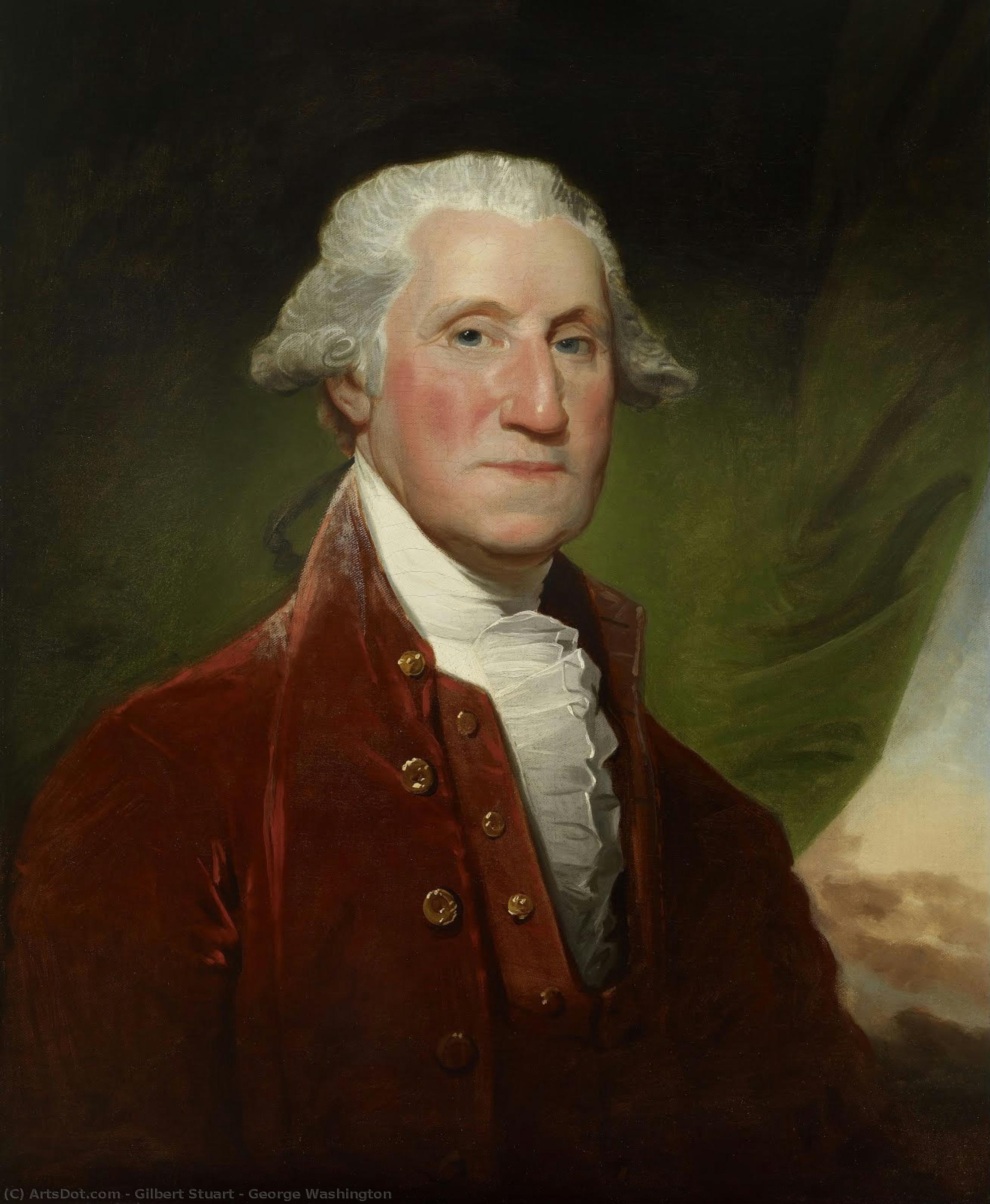
Gilbert Stuart's "George Washington," painted in 1796, isn’t merely a portrait; it’s a carefully constructed embodiment of the nascent American republic. This remarkable work, now housed within the Frick Collection in New York City, transcends the simple act of representation and delves into the very essence of leadership, virtue, and the weighty responsibility of guiding a new nation. Stuart, a master of his craft, skillfully captures Washington’s dignified presence, imbuing him with an aura of both strength and quiet contemplation – qualities desperately needed in the years following the Revolutionary War.
The painting itself is a testament to Stuart's Neoclassical training, evident in its balanced composition and restrained palette. The muted tones of brown, gray, and green create a sense of gravitas, drawing the viewer’s eye directly to Washington’s face – a study in subtle expressions that convey both resolve and humility. The artist meticulously rendered every detail, from the texture of the fabric of his coat to the delicate lines etched by time around his eyes, revealing an almost obsessive attention to realism. Yet, it's not a literal depiction; Stuart employs chiaroscuro—the dramatic contrast between light and shadow—to sculpt Washington’s form and emphasize his importance within the scene.
The historical context surrounding “George Washington” is crucial to understanding its significance. Painted just a few years after the end of the Revolutionary War, the portrait coincided with a fervent desire to establish a stable and virtuous government. Stuart’s decision to portray Washington in a formal, three-quarter pose – a departure from earlier, more informal depictions – immediately elevates him to the status of an ideal statesman. The red coat, a symbol of military honor, subtly references his role as commander-in-chief, while the white collar and cravat speak to his adherence to social decorum and respect for tradition.
Interestingly, this particular version – often referred to as the “Vaughan type” – differs slightly from other known portraits of Washington. The subtle shift in the color of the coat is a key distinguishing feature, suggesting that Stuart may have been experimenting with his technique or responding to specific requests from John Vaughan, one of the painting’s patrons. The background, a simple yet evocative landscape, reinforces the idea of Washington as a man deeply connected to the land and its future.
Beyond the obvious symbolism of military rank and civic virtue, “George Washington” is rich with subtle visual cues. The careful arrangement of his hands – one resting on a book, a symbol of knowledge and wisdom, and the other holding a quill pen, representing his role as a writer and communicator – speaks to his commitment to education and informed governance. The slight furrow in his brow suggests a thoughtful consideration of the challenges facing the new nation, while his steady gaze conveys an unwavering determination to uphold its ideals.
Furthermore, the painting’s scale—measuring 74 x 61 cm—contributes to its impact. It's large enough to command attention and invite prolonged contemplation, reflecting the monumental task of building a new nation. The portrait wasn’t simply intended as a likeness; it was designed to inspire confidence and instill a sense of shared purpose within the American populace.
Gilbert Stuart's “George Washington” remains an enduring masterpiece, admired for its technical brilliance, historical significance, and profound emotional resonance. It’s a painting that speaks to the ideals upon which America was founded – liberty, justice, and self-governance – and continues to captivate viewers centuries later. Today, high-quality reproductions of this iconic portrait offer art enthusiasts and interior designers alike an opportunity to bring a touch of American history and enduring artistic excellence into their homes or offices. The painting’s dignified presence and subtle complexities make it a truly timeless addition to any collection.
"George Washington" av Gilbert Stuart tilhører Neoclassical Portraiture-retningen. Denne retningen gir det stilistiske kontekstet til verket.
Opphavsrettslig status for "George Washington" av Gilbert Stuart: verket er fritt tilgjengelig – opphavsretten har utløpt. Dette avgjør om det er tillatt å lage frie reproduksjoner av bildet.
Det anbefalte rommet for "George Washington" av Gilbert Stuart er en Living Room. Forslaget kan selvfølgelig tilpasses ditt interiør.


1755 - 1828 , Storbritannia
 Forhåndsvisning
 Send
Send Del
Del
 Vis detaljer
 Utskriftsvennlig guide

 Last ned bilde
 Liknende objekter
 Røntgenundersøkelse
 Lysbildefremvisning
 Spørsmål og svar
 Statistikk


 Vis hele teksten


