Kunstnerbiografi
En pioner for lysets presisjon: Georges Seurats liv og kunst
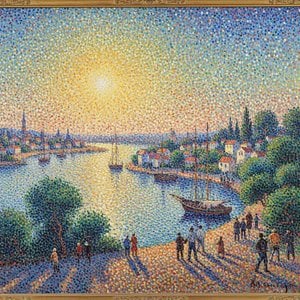
Georges Pierre Seurat, født i Paris den 2. desember 1859, dukket opp som en sentral skikkelse i overgangen fra impresjonismen til moderne kunst. Hans korte, men intense karriere revolusjonerte maleriet gjennom utviklingen av punktillisme, en teknikk forankret i vitenskapelige prinsipper og et urokkelig søk etter optisk sannhet. Seurats historie er en fortelling om nøye observasjon, intellektuell stringens og en dyp følsomhet for lysets og fargens nyanser – kvaliteter som skilte ham fra hans samtidige og som fortsatt fengsler publikum i dag. Hans tidlige liv, selv om det virket konvensjonelt, la grunnlaget for hans fremtidige kunstneriske utforsninger. Familien flyttet til Boulevard de Magenta kort tid etter fødselen hans, og hans far, Antoine Chrysostome Seurat, en tidligere juridisk embetsmann som ble eiendomsspesulant, sørget for en komfortabel oppvekst som ga unge Georges tilgang til kunstutdanning. Han begynte formell trening ved École Municipale de Sculpture et Dessin under billedhuggeren Justin Lequien, etterfulgt av innskrivning på det prestisjetunge École des Beaux-Arts i 1878, hvor han studerte under Henri Lehmann. Disse formative årene ga ham et solid grunnlag i tradisjonelle teknikker, men selv da begynte en unik kunstnerisk personlighet å ta form – en blanding av delikat følsomhet og en voksende fascinasjon for systematisk analyse.
Fra akademiske røtter til kromoluminarisme
Seurats kunstneriske utvikling var ikke et plutselig sprang inn i innovasjon, men snarere en gradvis evolusjon drevet av intellektuell nysgjerrighet og streng eksperimentering. I utgangspunktet speilet arbeidet hans de akademiske standardene for tiden, og demonstrerte dyktighet i tegning og respekt for etablerte komposisjonsprinsipper. Han begynte imidlertid snart å stille spørsmål ved disse konvensjonene og søkte en mer vitenskapelig tilnærming til maleriet. Han fordypet seg i det voksende feltet fargeteori, studerte skriftene til forskere som Michel Eugène Chevreul og Ogden Rood, som utforsket de optiske effektene av sammenlignede farger. Denne forskningen ble hjørnesteinen i hans revolusjonerende teknikk, kromoluminarisme – vitenskapen om farge – og dens praktiske anvendelse, punktillisme. Kjernen i ideen var enkelt sagt: å påføre små, distinkte prikker med ren farge på et lerret, stole på betrakterens øye for å optisk blande dem og skape en levende, lysende effekt. Dette handlet ikke bare om å oppnå klarere farger; det handlet om å forstå hvordan det menneskelige synssystem oppfattet lys og farge, og utnytte den kunnskapen til å skape en mer dynamisk og engasjerende maleopplevelse. Han forberedte nøye sine store komposisjoner med Conté kritttegninger på grovt papir, kartla plasseringen av hver prikk, og demonstrerte nesten matematisk presisjon i sin kunstneriske prosess.
Landemerker av innovasjon: Viktige verk og kunstnerisk visjon
Kulminasjonen av Seurats forskning og eksperimentering kommer kanskje best til uttrykk i A Sunday Afternoon on the Island of La Grande Jatte (1884-1886), et monumentalt verk som markerte starten på neoimpresjonismen. Dette ikoniske maleriet, som skildrer parisere som nyter en avslappet ettermiddag ved Seinen, viser hans punktillistiske teknikk i sin fulle prakt. Figurene, gjengitt som nøye plasserte fargesprik, ser ut til å skimre og vibrere med lys, og skaper en atmosfære av rolig stillhet. Alfalfa, Saint-Denis (1886-1887) demonstrerer hans anvendelse av fargeteori i et landskap, mens tidligere verk som Landscape at Saint-Ouen (1882-1883) avslører hans utviklende stil og voksende interesse for å fange effektene av lys og atmosfære. Selv skildringer av moderne parisisk liv, som The Eiffel Tower (1889), ble transformert gjennom sin unike teknikk, og viste en harmonisk blanding av industriell modernitet og kunstnerisk innovasjon. Bathers at Asnières (1884), et annet viktig verk, utforsket temaer som fritid og moderne liv med sin særegne stil, og varslet den mer raffinerte tilnærmingen man ser i *La Grande Jatte*. Disse maleriene var ikke bare representasjoner av scener; de var nøye konstruerte visuelle eksperimenter designet for å utforske mulighetene for farge og persepsjon.
En varig arv: Innflytelse og historisk betydning
Til tross for et tragisk kort liv – Seurat døde i en alder av 31 år i 1891 – var hans innvirkning på kunstverdenen dyp og vidtrekkende. Hans arbeid utfordret tradisjonelle kunstneriske konvensjoner, banet vei for mange etterfølgende bevegelser. Vekten på subjektivt uttrykk og utforskning av nye teknikker resonerte med kunstnere som søkte å bryte seg løs fra akademiske begrensninger. Seurats innflytelse kan sees i verkene til fauvistene, som omfavnet dristige farger og ekspressive penselstrøk; kubistene, som dekonstruerte former til geometriske figurer; og abstrakt ekspresjonister, som prioriterte emosjonell intensitet og spontan gester. Seurats vitenskapelige tilnærming til maleri, selv om den opprinnelig var kontroversiell, utvidet i sin tur definisjonen av kunstnerisk mulighet. Han demonstrerte at kunst kunne være både intellektuelt streng og emosjonelt virkningsfull – en syntese som fortsetter å inspirere kunstnere i dag. Seurats arv strekker seg utover hans tekniske innovasjoner; han etterlot seg et verk som fanger essensen av moderne liv med uovertruffen presisjon og skjønnhet, og befester sin plass som en sann pioner innen moderne kunst. Hans malerier er fortsatt vitnesbyrd om kraften i observasjon, eksperimentering og det varige menneskelige ønsket om å forstå verden rundt oss gjennom linsen av kunstnerisk uttrykk.



 Se i rommet
 Bestill håndmalt reproduksjon
 Del som digitalt kort
 Del
Del
 Detaljer
 Studentguide

 Last ned
 Liknende objekter
 Røntgen
 Lysbildefremvisning
 Besøksstatistikk


 Les mer






































 Glassalternativet er kun tilgjengelig i størrelser under 110 cm