


x


 Bestill maleri Kjøp digitalt bilde
 Send
Send
 Detaljer
 Legg til i favoritter
 Last ned bildet
 Liknende objekter
 Røntgen
 Lysbildefremvisning
Giclée- eller lerretsprint av museumskvalitet med rask produksjon og fleksible valgmuligheter for etterbehandling.





























Velg mellom våre forhåndsdefinerte størrelser som bevarer kunstverkets opprinnelige proporsjoner.

Du kan oppgi egne mål for å tilpasse en spesifikk ramme eller et bestemt område. Dersom den valgte størrelsen ikke samsvarer med det originale bildets proporsjoner, vil vi enten beskjære kunstverket eller utvide bildet med en speilet eller ensfarget kant. En digital mockup vil bli sendt til din godkjenning før produksjonen starter.
Vennligst merk at forhåndsvisningen på skjermen ikke gjenspeiler den faktiske beskjæringen eller utvidelsen. Kun mockuppen vil vise den endelige komposisjonen nøyaktig.
Selv om tilpassede størrelser er tilgjengelige, anbefaler vi å velge et mål fra den forhåndsdefinerte listen for å bevare de originale proporsjonene.
Verdensomspennende levering () på 2 uker i stedet for standard 4/5 uker. (2 July)


San Matías
Størrelse på reproduksjon
Francisco de Zurbarán's "San Matías" is not merely a portrait; it’s an immersion into a profound state of contemplation. Painted around 1630, this oil on panel captures the essence of a devout figure – a Dominican friar identified as Saint Matthew – enveloped in a world of quiet reverence. The painting immediately draws the eye to the central figure, his posture radiating an almost palpable stillness. His hands, clasped gently before his chest, suggest both humility and deep engagement with something unseen, perhaps scripture or prayer. The stark simplicity of his attire—a dark robe accented by subtle crimson details – emphasizes his spiritual focus, stripping away worldly distractions.
Zurbarán’s mastery lies in his masterful use of *tenebrism*, a dramatic technique borrowed from Caravaggio but refined to create an intensely personal atmosphere. The composition is dominated by deep shadows that pool around the figure, intensifying the light which falls upon his face and hands. This stark contrast isn't merely stylistic; it serves to heighten the sense of mystery and draw attention to the focal point – Saint Matthew’s expression. The subtle gradations of light and dark create a powerful illusion of depth, making the viewer feel as though they are witnessing a sacred moment unfold.
To understand “San Matías,” one must consider Zurbarán's formative years in Extremadura, Spain. This rugged region, characterized by its austere landscapes and deeply ingrained religious traditions, profoundly shaped his artistic vision. Born in Fuente de Cantos, he absorbed the spirit of a people who found solace and meaning in their faith amidst a challenging environment. The influence of this landscape—the stark mountains, the muted colors, the sense of isolation – is evident in the painting’s somber mood and its focus on inner reflection. It's as if the very essence of Extremadura has been captured within the canvas.
Zurbarán’s early training under Alonso de Najera exposed him to the burgeoning Baroque style, but he quickly developed a distinctive voice. Unlike many of his contemporaries who embraced elaborate ornamentation and theatricality, Zurbarán prioritized realism and emotional intensity. He meticulously rendered every detail – the texture of the robe, the wrinkles in the skin, the subtle nuances of light – with an almost obsessive attention to accuracy. This commitment to realism, combined with his profound understanding of human emotion, is what elevates “San Matías” beyond a simple portrait; it’s a window into the soul.
The inclusion of the book held close to Saint Matthew's chest is laden with symbolic meaning. Traditionally, the act of reading scripture was considered a pathway to spiritual enlightenment and communion with God. In this context, the book represents not just knowledge but also faith, guidance, and divine grace. The pose itself—with hands clasped in prayer—is a universal gesture of reverence and supplication.
Furthermore, the muted color palette – dominated by browns, blacks, and subtle reds – reinforces the painting’s solemnity and spiritual intensity. These colors evoke feelings of humility, introspection, and devotion. The lack of vibrant hues directs the viewer's attention to the figure himself, emphasizing his inner state rather than external adornment. It is a testament to Zurbarán’s ability to convey profound emotion through restraint and subtlety.
"San Matías" stands as a cornerstone of Spanish Baroque painting, embodying the movement's emphasis on religious themes, dramatic lighting, and emotional realism. It is often compared to Caravaggio for its use of *tenebrism*, but Zurbarán’s work possesses a uniquely Spanish sensibility—a quiet intensity, a profound sense of spirituality, and an unwavering commitment to capturing the essence of his subjects. Reproductions of this powerful image offer a remarkable opportunity to experience the depth and beauty of Zurbarán's artistic vision, bringing a touch of contemplative serenity into any space.


1598 - 1664 , Spania

Explore the dramatic world of Baroque art! Discover iconic artists like Caravaggio & Rubens, defining techniques, and its lasting impact on art history. Expert insights for collectors & enthusiasts at WahooArt.

Oppdag de 10 mest innflytelsesrike oljemaleriene gjennom tidene! Fra Mona Lisa til Van Goghs mesterverk – lær historien bak ikoniske kunstverk og finn inspirasjon for ditt hjem. Museumskvalitet reproduksjoner på WahooArt.com.
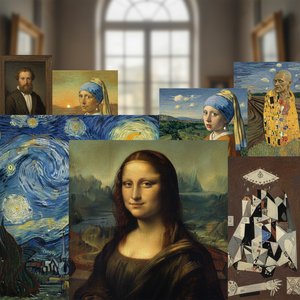
Oppdag de 10 mest innflytelsesrike oljemaleriene gjennom tidene! Fra Leonardo da Vinci til Van Gogh – lær historiene bak ikoniske kunstverk og finn inspirasjon for ditt hjem. Museumskvalitet reproduksjoner på WahooArt.no. Utforsk samlingen online!

Oppdag de 10 mest legendariske maleriene på panel som revolusjonerte kunsthistorien! Rembrandt, Van Eyck og mer. Historier, teknikker & inspirasjon for ditt hjem. Finn museumskvalitets reproduksjoner på WahooArt.com.

Explore the captivating world of Baroque Classicism! Discover its history, key artists like Caravaggio & Rubens, and defining characteristics. Expert insights & high-quality reproductions at WahooArt.


Hold deg oppdatert med de siste kunstnyhetene, eksklusive tilbud og dekorasjonsideer.
Fortell oss om prosjektet ditt, så vil våre kunsteksperter gi deg 3 personlige kunstforslag.
Vi velger ut 3 alternativer kun for deg – helt gratis!
 Del med andre


 Vis hele teksten







 Glassalternativet er kun tilgjengelig i størrelser under 110 cm


