Gratis kunstkonsultasjon

x
Bestill maleri Bestill maleriKjøp digitalt bilde Kjøp digitalt bilde SendSend
DetaljerDetaljer Legg til i favoritter Legg til i favoritter Last ned bildetLast ned bildet Liknende objekterLiknende objekter RøntgenRøntgen LysbildefremvisningLysbildefremvisning

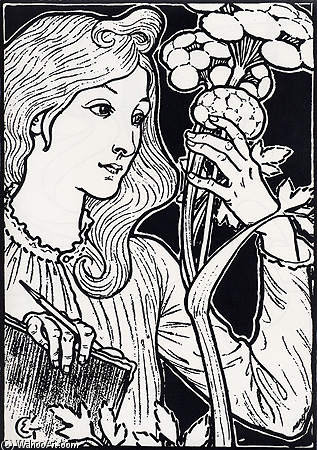
Poster Study

Eugène Grasset (1845-1917): Pioner innen Art Nouveau og dekorativ kunst. Kjent for blomstermotiver, japanske inspirasjoner og ikoniske plakater fra den fransk-schweiziske kunstneren. En viktig figur i tidlig 20. århundres kunst.

Giclée / Kunsttrykk

Giclée- eller lerretsprint av museumskvalitet med rask produksjon og fleksible valgmuligheter for etterbehandling.

Standard
custom
CM
INCH

Velg mellom våre forhåndsdefinerte størrelser som bevarer kunstverkets opprinnelige proporsjoner.

bredde
høyde

Du kan oppgi egne mål for å tilpasse en spesifikk ramme eller et bestemt område. Dersom den valgte størrelsen ikke samsvarer med det originale bildets proporsjoner, vil vi enten beskjære kunstverket eller utvide bildet med en speilet eller ensfarget kant. En digital mockup vil bli sendt til din godkjenning før produksjonen starter.
Vennligst merk at forhåndsvisningen på skjermen ikke gjenspeiler den faktiske beskjæringen eller utvidelsen. Kun mockuppen vil vise den endelige komposisjonen nøyaktig.
Selv om tilpassede størrelser er tilgjengelige, anbefaler vi å velge et mål fra den forhåndsdefinerte listen for å bevare de originale proporsjonene.

Verdensomspennende levering () på 2 uker i stedet for standard 4/5 uker. (3 July)

why_choose_icon
Gratis ekspressfrakt over hele verden
why_choose_icon
Lerretsduk av høykvalitets lin
why_choose_icon
Full forsikring under transport
why_choose_icon
Garanti for refusjon av toll og importavgifter
why_choose_icon
Garantert korrekt fargegjengivelse
why_choose_icon
60 dagers returrett (kun ved feil)
why_choose_icon
100% pengene tilbake-garanti
why_choose_icon
Rabatt ved flere kjøp

Totalpris for bestilling

-

reproduction

Poster Study

Giclée / Kunsttrykk

Størrelse på reproduksjon

-

Endelig pris

-


Om kunstneren

A Pioneer of Art Nouveau: The Life and Legacy of Eugène Samuel Grasset

Eugène Samuel Grasset, born in Lausanne, Switzerland on May 25th, 1845 (though some sources cite 1841), emerged as a pivotal figure bridging the gap between traditional craftsmanship and the burgeoning aesthetic of Art Nouveau. His journey began within an artistic household; his father, a skilled cabinet designer and sculptor, instilled in young Eugène both a practical understanding of materials and a deep appreciation for creative expression. This early exposure fostered a sensitivity to form and detail that would become hallmarks of Grasset’s distinctive style. Initial studies under François-Louis David Bocion honed his drawing skills, but it was a subsequent foray into architectural studies in Zurich that broadened his artistic horizons, though ultimately proved insufficient to contain his burgeoning creativity. A transformative experience followed – a voyage to Egypt after completing his formal education. This journey ignited a lifelong fascination with exoticism and ancient design principles, profoundly influencing the decorative motifs that would later define his work. Equally significant was his growing admiration for Japanese art, particularly its emphasis on flowing lines, flattened perspectives, and harmonious compositions—elements he masterfully integrated into his own unique visual language.

Early Training and Influences

Grasset’s artistic inclinations were nurtured from a young age by his father's profession as sculptor and cabinetmaker. This familial connection instilled in him not only technical proficiency but also an innate understanding of sculptural form and material manipulation—skills that would prove invaluable throughout his career. Recognizing the importance of formal training, Grasset enrolled at École Supérieure des Beaux-Arts in Zurich where he studied architecture alongside fellow artists like Eugène Viollet-le Duc, a figure who would profoundly shape his artistic sensibilities. Viollet-le Duc’s meticulous reconstruction of Notre Dame Cathedral instilled in Grasset a deep respect for Gothic architecture and its intricate ornamentation—a fascination that would permeate many of his later designs. Simultaneously, Grasset absorbed the aesthetic principles of Japanese art through extensive study, captivated by its serene landscapes, stylized depictions of nature, and deliberate use of asymmetry. These influences combined to forge a distinctive visual vocabulary characterized by graceful curves, delicate textures, and harmonious compositions—elements that would become central to Grasset’s Art Nouveau style.

From Lausanne to Paris: A Diverse Artistic Career

By 1869-1870, Grasset established himself as both a painter and sculptor in Lausanne, demonstrating an early aptitude for multiple artistic mediums. However, the allure of Paris—the epicenter of artistic innovation and intellectual ferment—proved irresistible. In 1871, he relocated to France, embarking on an extraordinarily diverse career that encompassed furniture design, fabric creation, tapestry weaving, ceramic artistry, and jewelry making. These weren’t merely exercises in applied arts; Grasset elevated them to high art, employing luxurious materials like ivory and gold with a meticulous attention to detail and innovative combinations of textures and forms. His creations quickly became foundational elements of the Art Nouveau movement, embodying its organic aesthetic and rejection of rigid academic conventions. He skillfully blended Gothic art’s intricate detailing with the elegant simplicity of Japanese aesthetics, forging a distinctive visual vocabulary that resonated with the spirit of the age. This ability to harmonize disparate elements was central to his success and cemented his position as a leading innovator in decorative design.

The Art Nouveau Style: Floral Motifs and Geometric Harmony

Grasset’s artistic style is instantly recognizable for its graceful, flowing lines, inspired by natural forms—particularly floral motifs—and a remarkable synthesis of historical influences. He didn't simply imitate these sources; rather, he skillfully blended Gothic art’s intricate detailing with the elegant simplicity of Japanese aesthetics, forging a distinctive visual vocabulary that resonated with the spirit of the age. His designs prioritized harmony and balance, reflecting the overarching principles of Art Nouveau—a movement characterized by its rejection of industrial uniformity and its embrace of organic beauty. Grasset's meticulous attention to detail—evident in his furniture carvings, fabric patterns, and ceramic sculptures—demonstrated a commitment to craftsmanship that was unparalleled during this period. He championed the use of natural materials like wood, stone, and ivory, skillfully combining them with innovative techniques to achieve breathtaking visual effects.

Notable Achievements and Legacy

Grasset’s prolific output spanned numerous artistic disciplines, leaving an indelible mark on the decorative arts and graphic design landscape. He gained international acclaim for his furniture designs—particularly those commissioned by prominent patrons—and his fabric creations—which adorned palaces and villas across Europe. His stained glass windows graced churches and public buildings throughout Switzerland and France, showcasing his mastery of color and texture. Furthermore, Grasset’s contribution to poster art was monumental; he created iconic lithographs for publications like *Harper's Magazine* and *Century Magazine*, establishing himself as one of the foremost designers of his time. His enduring legacy resides not only in his stunning artworks but also in his influence on subsequent generations of artists—particularly those who embraced Art Nouveau’s aesthetic ideals. Eugène Samuel Grasset died peacefully in Sceaux, France on October 23rd, 1917, leaving behind a rich artistic heritage that continues to inspire admiration and scholarly study today. He remains a cornerstone of Art Nouveau history, embodying the movement's spirit of innovation, beauty, and harmonious integration of tradition and experimentation.
Eugène Grasset

Eugène Grasset

1845 - 1917 , Sveits

Kort om kunstneren

  • Artistic Movement Or Style: Art Nouveau
  • Artists Who Influenced This Artist:
    • Viollet le Duc
    • Japanese art
  • Date Of Birth: May 25, 1845
  • Date Of Death: October 23, 1917
  • Full Name: Eugène Samuel Grasset
  • Nationality: Swiss-French
  • Notable Artworks:
    • Jeanne d'Arc Sarah Bernhardt
    • Semeuse (the sower)
    • February
  • Place Of Birth: Lausanne, Switzerland