x
Acrylic On Canvas
WallArt
Abstract Expressionism
1964
236.0 x 273.0 cm
Guggenheim BilbaoGiclée- eller lerretsprint av museumskvalitet med rask produksjon og fleksible valgmuligheter for etterbehandling.
Velg mellom våre forhåndsdefinerte størrelser som bevarer kunstverkets opprinnelige proporsjoner.
Du kan oppgi egne mål for å tilpasse en spesifikk ramme eller et bestemt område. Dersom den valgte størrelsen ikke samsvarer med det originale bildets proporsjoner, vil vi enten beskjære kunstverket eller utvide bildet med en speilet eller ensfarget kant. En digital mockup vil bli sendt til din godkjenning før produksjonen starter.
Vennligst merk at forhåndsvisningen på skjermen ikke gjenspeiler den faktiske beskjæringen eller utvidelsen. Kun mockuppen vil vise den endelige komposisjonen nøyaktig.
Selv om tilpassede størrelser er tilgjengelige, anbefaler vi å velge et mål fra den forhåndsdefinerte listen for å bevare de originale proporsjonene.

Verdensomspennende levering () på 2 uker i stedet for standard 4/5 uker. (3 July)
Untitled
Størrelse på reproduksjon
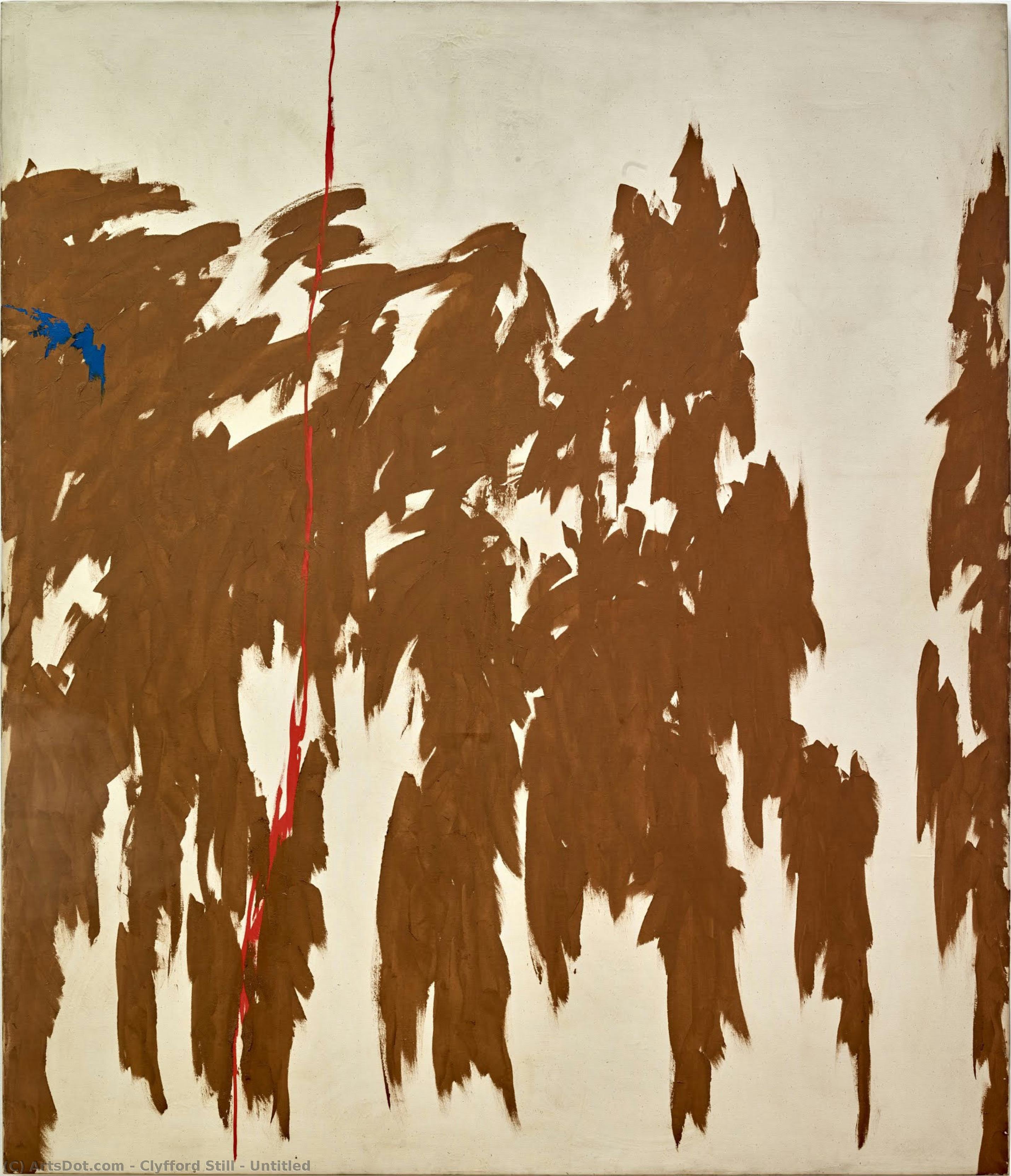
Clyfford Still’s “Untitled,” a monumental canvas from 1964, isn’t merely a painting; it’s an immersion into the heart of Abstract Expressionism and a profound meditation on American identity. Measuring a substantial 236 x 273 centimeters, this work immediately commands attention with its scale and the sheer physicality of its execution. Yet, it's not the size that dominates, but rather the intensely concentrated field of color – a restless interplay of ochre, red, and the stark, almost unsettling presence of bare canvas – that draws the viewer in. Still, a pivotal figure who largely shunned the limelight, deliberately eschewed representational imagery, opting instead to explore the very essence of form and color as conduits for emotional and philosophical experience.
The painting’s genesis lies within a specific period of Still's life – 1961 – following his deliberate retreat from New York City. This isolation in rural Maryland profoundly shaped his artistic vision, fostering a sense of detachment and a focus on the elemental. The work embodies this shift; it feels less like a depiction of something external and more like an articulation of internal states. The prominent bare canvas isn’t simply a compositional element; it acts as a visual anchor, a deliberate void that invites contemplation and forces the viewer to confront the raw materiality of the paint itself.
Perhaps the most striking aspect of “Untitled” is its insistent verticality. A dominant, deep red line – approximately two and a half meters in height – cuts diagonally across the canvas, acting as both a structural element and a powerful directional force. This line isn’t static; it appears to thrust upward, almost aggressively, challenging any sense of conventional spatial boundaries. The ochre forms that surround this central vertical are similarly oriented, creating a dynamic tension between horizontal and vertical planes. It's a deliberate disruption of perspective, suggesting an attempt to transcend the limitations of traditional representation and access a more primal, visceral experience.
This emphasis on verticality resonates with broader themes within Still’s oeuvre – his exploration of American ideals of freedom and individuality. The upward thrust can be interpreted as a symbolic reaching for something beyond the earthly realm, a striving towards an abstract notion of transcendence. The painting isn't about capturing a specific landscape or object; it’s about conveying a feeling, a state of being—a powerful declaration of independence from the constraints of the material world.
Still’s technique is characterized by a remarkable directness. He applied paint with broad, gestural strokes, often layering colors directly onto the canvas without any intervening underpainting. This creates a palpable sense of texture and physicality – the ridges of the paint, the drips and splatters, all contribute to the painting's raw energy. The use of unprimed canvas allows the inherent qualities of the material to shine through, further emphasizing the painting’s materiality.
The color palette is deliberately restrained, yet intensely evocative. The dominant red is not a cheerful hue; it possesses an almost brooding quality, suggesting both passion and danger. The ochre tones are earthy and grounding, providing a counterpoint to the intensity of the red. It’s a carefully calibrated balance between opposing forces – chaos and order, emotion and restraint.
“Untitled” is more than just a visually arresting composition; it's a potent symbol of its time—the mid-1960s in America. The painting reflects the anxieties and aspirations of a nation grappling with profound social and political change, while simultaneously seeking to redefine its identity. Still’s rejection of traditional representation can be seen as a deliberate act of rebellion against the prevailing cultural norms, mirroring the broader countercultural movements of the era.
Ultimately, “Untitled” invites viewers to engage in a deeply personal dialogue with the artwork. It's a painting that demands attention, provoking contemplation and eliciting a range of emotional responses—from awe and wonder to unease and perhaps even a sense of disorientation. It remains a powerful testament to Clyfford Still’s unique vision and his enduring legacy as one of America’s most important Abstract Expressionist painters.
1904 - 1980 , USA
Fortell oss om prosjektet ditt, så vil våre kunsteksperter gi deg 3 personlige kunstforslag.
Vi velger ut 3 alternativer kun for deg – helt gratis!