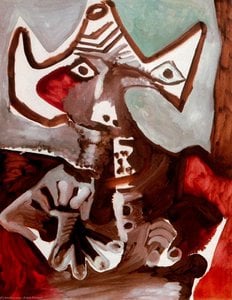
Få en utskriftsklar fil som går langt utover forhåndsvisningen på nett. Hvert digitale bilde vi selger er hentet fra en høyoppløselig master i vår database – vanligvis mellom 5 000 og 15 000 piksler bred – slik at du kan trykke stort, beskjære tett eller gjenskape fine detaljer med full trygghet.
Ingen filer forlater studioet vårt uten å bli bearbeidet. En digital ekspert kontrollerer fargene mot det originale maleriet og korrigerer dem ved behov, for deretter å forbedre klarhet og detaljrikdom med profesjonelle retusjeringsverktøy — alltid tro mot kunstnerens penselstrøk og stil. Resultatet er et bilde som fremstår som selve maleriet, ikke som en skann med filter.
Du godkjenner før ferdigstilling: vår ekspert sender bildet på e-post til din vurdering innen 72 timer. Ikke fornøyd? Be om forbedringer eller korrigeringer, eller be om refusjon dersom kvaliteten ikke svarer til forventningene.
Dette er kvaliteten forlag, designstudioer, gallerier og trykkerier stoler på.
Last ned en høyoppløselig fil til personlig bruk, utskrift og kreative prosjekter. ( Bytt til trykk Kjøp håndmalt maleri)
Når du velger WahooArt.com, får du ikke bare et bilde – du mottar et profesjonelt etterbehandlet digitalt kunstverk, skapt med presisjon og med en garantert tilfredshetsgaranti. Her er alt som automatisk følger med din bestilling:
Din høyoppløselige digitale bildefil sendes til din e-post innen 72 timer etter bestilling – klar til umiddelbar bruk.
Ditt kunstverk blir profesjonelt optimalisert ved hjelp av avanserte AI-verktøy og manuell redigering, noe som sikrer maksimal detaljrikdom, klarhet og fargegjengivelse.
Har du ved et uhell slettet eller mistet filen din? Ingen bekymring – vi sender den på nytt når som helst, helt gratis.
Nyt ditt kunstverk umiddelbart uten toll, avgifter eller leveringskostnader – digitale nedlastinger er alltid avgiftsfrie.
Vi sikrer at det digitale bildet gjenspeiler de originale fargene så nøyaktig som mulig ved hjelp av profesjonelle verktøy og fargehåndtering.
Hvis du ikke er fornøyd med ditt digitale bilde, vil vi revidere det eller refundere 100% innen 100 dager – uten spørsmål.
Ikke fornøyd? Få full refusjon innen 100 dager etter at du har mottatt din digitale fil – uten spørsmål.
Kjøp 3 bilder, spar 10% - Kjøp 5, spar 15% - Kjøp 10+, spar 20%. Ideelt for kreative prosjekter, gallerier og byråer.

In the vibrant, often jarring landscape of late twentieth-century American art, few voices resonated with as much psychological depth and formal precision as Christina Ramberg. Born in 1946 on the Kentucky military base of Camp Campbell, Ramberg’s early years were defined by a nomadic existence, shaped by her father’s service in the United States Army. This transient childhood, which saw her living in diverse locales such as Yokohama, Japan, and various regions of Germany, instilled in her an international perspective that would later inform the layered, culturally complex imagery of her work. Her journey eventually led her to the School of the Art Institute of Chicago (SAIC), a destination that would become the crucible for her artistic identity.
It was within the halls of SAIC that Ramberg encountered the transformative influence of Ray Yoshida. A mentor of profound significance, Yoshida encouraged his students to look beyond the traditional canons of fine art, urging them to find inspiration in the ubiquitous textures of popular culture—from the gritty lines of underground comic books to the glossy surfaces of commercial magazines. This pedagogical freedom allowed Ramseb to develop a visual language that was simultaneously high-art and pop-inflected, blending the meticulousness of classical draftsmanship with the subversive energy of Pop Art and Surrealism.
Ramberg’s oeuvre is most famously associated with the Chicago Imagists, a group of artists who rejected the prevailing trends of Minimalism and Conceptualism in favor of a more representational, often visceral, approach to painting. Her work became a profound interrogation of the female form, yet she avoided the clichés of traditional portraiture. Instead, she focused on partial bodies—heads, torsos, and hands—often presented in states of tension or compression. Through her use of bold geometric shapes and a highly controlled, almost clinical technique, she depicted figures encased in mid-century undergarments, such as corsets and girdles.
These garments were not merely clothing; they functioned as architectural metaphors for societal expectations. The way the fabric pressed against the skin or constrained the limbs served to illustrate a sense of female vulnerability and the psychological weight of gendered norms. Her compositions often possessed an eerie, dreamlike quality, where the boundaries between the organic body and the rigid, manufactured object became blurred. This tension created a unique brand of Pop Surrealism, where the familiar objects of domesticity were reimagined as instruments of both adornment and entrapment.
The significance of Christina Ramberg lies in her ability to navigate the intersection of the personal and the political without sacrificing aesthetic beauty. While her work touched upon the burgeoning feminist discourses of the 1970s, it did so through a sophisticated lens of abstraction and formal experimentation. She did not merely depict struggle; she sculpted it into the very fabric of her compositions.
Throughout her career, Ramberg achieved remarkable milestones that cemented her place in art history:
Though her life was tragically cut short in 1995, Ramberg’s impact remains indelible. Her paintings continue to challenge viewers to contemplate the structures—both physical and social—that shape our identities. In every meticulously rendered line and every compressed silhouette, her work stands as a testament to the enduring power of art to expose the complexities of the human condition.

1946 - 1995 , United States of America
 Forhåndsvisning
 Send
Send Del
Del
 Vis detaljer
 Utskriftsvennlig guide

 Last ned bilde
 Liknende objekter
 Røntgenundersøkelse
 Lysbildefremvisning
 Spørsmål og svar
 Statistikk

 Vis hele teksten