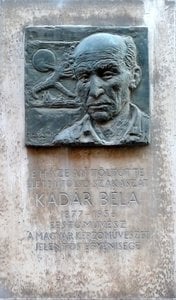
En ungarsk stemme fra avantgarden: Livet og kunsten til Béla Kádár
Født inn i en jødisk arbeiderklassefamilie i Budapest i 1877, var Béla Kádárs reise mot å bli en sentral skikkelse i det tidlige 20. århundrets avantgardekunst preget av både motgang og en urokkelig dedikasjon til kunstnerisk utforskning. Hans formelle utdannelse var begrenset til seks år, men denne mangelen på tradisjonell skolegang virket å frigjøre ham fra konvensjonelle begrensninger, noe som lot et unikt personlig visuelt språk vokse frem. Kádár begynte ikke sitt yrkesliv med penselen i hånd, men som lærling innen jerndreierfaget – et håndverk som satte dype spor i hans kunstneriske sans og ga ham en fundamental forståelse for form, struktur og den iboende skjønnheten i industrielle materialer. Selv i disse tidlige årene skinte hans kreative ånd igjennom; han fokuserte først på å male veggmalerier over hele Budapest, noe som vitnet om en medfødt dragning mot storslått visuell uttrykksform og historiefortelling. Denne formative perioden la grunnlaget for de dristige og dynamiske komposisjonene som senere skulle definere hans livsverk.
Paris, Berlin og en syntese av stiler
Den virkelige katalysatoren for Kádárs kunstneriske utvikling kom med reisene til Paris og Berlin i 1910. Disse ferdene eksponerte ham for de fremvoksende avantgarde-bevegelsene som feide over Vest-Europa, og endret hans kunstneriske bane uopprettelig. Han møtte de radikale ideene fra Der Blaue Reiter, de fragmenterte formene i kubismen, dynamikken i futurismen og den rå energien i neo-primitivismen – påvirkninger han ikke bare adopterte ukritisk, men som han snarere syntetiserte til et særegent visuelt vokabular. Kádár var ikke tilfreds med å knytte seg til én enkelt «skole»; i stedet la han ut på en konstant utforskning av form, farge og komposisjon, drevet av et umettelig ønske om å bryte fri fra den tradisjonelle representasjonskunstens lenker. Han absorberte elementer fra konstruktivismen og selv de drømmeaktige kvalitetene fra metafysisk maleri, og vevde dem sammen i en kompleks tekstur som reflekterte hans unike perspektiv. Denne perioden markerte et avgjørende vendepunkt som forvandlet ham fra en lovende veggmaler til en genuint nyskapende kunstner på randen av internasjonal anerkjennelse.
Anerkjennelse og internasjonalt gjennombrudd
Kádárs store gjennombrudd kom i oktober 1923 med en utstilling hos Herwarth Waldens prestisjetunge Galerie der Sturm i Berlin. Denne utstillingen presenterte hans verk i en distinkt ekspresjonistisk stil, noe som umiddelbart fanget oppmerksomheten og etablerte ham som en kraft å regne med på den europeiske kunstscenen. Galleriet, kjent for å fremme radikale nye stemmer, ga Kádár en ideell plattform for å knytte kontakter med samlere og kunstnere som delte hans eksperimentelle vilje. Hans internasjonale profil ble ytterligere styrket av to utstillinger organisert av Katherine Dreier ved Brooklyn Museum of Art i New York i 1926 og 1928. Det er verdt å merke seg at Kádár selv deltok på den andre utstillingen, noe som sementerte hans tilstedeværelse i det amerikanske kunstlandskapet og skapte verdifulle forbindelser til den voksende modernistiske bevegelsen på den andre siden av Atlanteren. Hans malerier fra denne perioden skildret ofte scener hentet fra ungarsk folklore, intime portretter og glimt av landsbylivet – motiver fremstilt med en dristig fargepalett og dynamiske komposisjoner som fanget både hjemlandets sjel og den moderne tids energi.
En arv av dristig innovasjon
Béla Kádárs kunstneriske stil er umiddelbart gjenkjennelig for sin levende og ekspressive bruk av farger, der han ofte benyttet ikke-naturalistiske nyanser for å formidle følelser og atmosfære. Komposisjonene hans kjennetegnet av en merkbar følelse av bevegelse og energi, oppnådd gjennom et samspill mellom linjer, former og figurer som ser ut til å vibrere på lerretet. Han benyttet ofte impasto-teknikk – påføring av tykke lag med maling – noe som skapte teksturerte overflater som forsterker verkets visuelle slagkraft og inviterer til en taktil opplevelse. Men kanskje det som virkelig skiller Kádár fra mengden, er hans bemerkelsesverdige evne til å forene disse mangfoldige kunstneriske påvirkningene til en sammenhengende og original stil. Han representerer et avgjørende bindeledd mellom den ungarske avantgarden og de bredere europeiske bevegelsene i sin samtid, og reflekterer det 20. århundrets sosiale og politiske omveltninger gjennom kunsten. Selv om han ikke alltid ble like feiret i sin egen levetid som enkelte av sine samtidige, har Kádárs arbeid opplevd en renessanse i de siste tiårene, idet forskere i økende grad anerkjenner hans betydelige bidrag til den moderne kunsten. Han døde i Budapest i 1956 og etterlot seg en arv av dristige og innovative malerier som fortsetter å inspirere kunstnere og bergta publikum den dag i dag – et vitnesbyrd om den varige kraften hos en kunstner som våget å stake ut sin egen vei.
Sentrale kjennetegn ved Kádárs arbeid
- Dristig fargepalett: Kádár var berømt for sin levende og ekspressive bruk av farger, der han ofte brukte ikke-naturalistiske toner for å formidler følelser og stemning.
- Dynamisk komposisjon: Hans verk er preget av en følelse av bevegelse og energi, skapt gjennom et samspill mellom linjer, former og figurer.
- Impasto-teknikk: Han brukte ofte tykke lag med maling (impasto) for å skape teksturerte overflater som gir verket en sterkere visuell effekt.
- Unik syntese: Kádárs evne til å forene ulike kunstneriske impulser til en helhetlig og original stil gjør ham til en betydningsfull skikkelse i det tidlige 20. århundrets kunsthistorie.
- Temaer og motiver: Hans malerier skildrer ofte scener fra folklore, landsbyliv og intime portretter, utført med kraftige farger og dynamiske komposisjoner. Han utforsket også abstrakte temaer og eksperimenterte med fragmenterte former.



 Se i rommet
 Bytt til trykkversjon
 Del som digitalt kort
 Del
Del
 Detaljer
 Studentguide

 Last ned
 Liknende objekter
 Røntgen
 Lysbildefremvisning
 Besøksstatistikk
 Les mer