Forhåndsvisning Se i AR Kjøp håndlaget maleri Bytt til digitalt bilde Send
Vis detaljer Veiledning Legg til i favoritter Last ned bildet Liknende objekter Røntgenundersøkelse Lysbildefremvisning Statistikk

Untitled (study for

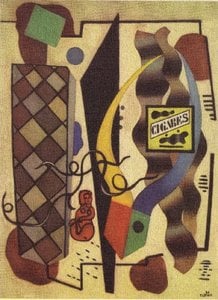
This artwork is a bold exploration of abstraction featuring geometric shapes and expressive blues and reds. Inspired by early Cubism and Expressionism, it showcases Souza-Cardoso's pioneering spirit in Portuguese art.

Oppdag Amadeo de Souza-Cardoso (1887–1918), Portugals første moderne maler! Utforsk hans levende abstrakte komposisjoner inspirert av Kubisme og Futurisme og hans varige kunstneriske arv.

Giclée / Kunsttrykk

Giclée- eller lerretsprint av museumskvalitet med rask produksjon og fleksible valgmuligheter for etterbehandling. ( Kjøp håndlaget maleri Bytt til digitalt bilde)

P118B $10
P118H $10
P118W $10
P438Z $10
P508JH $12
P508YH $12
P805H $10
P805Z $10
P919BZ $10
P919G $10
P919XJ $10
P959ZH $10
P968JZ $12
W106C $8
W218G $10
W218JH $8
W218Y $10
W307PJ $10
W316G $10
W316PJ $8
W316Y $10
W398PJ $8
W4111J $10
W500HY $15
W500JH $15
W692G $12
W849H $8
W940BG $15
W953PJ $8

Standardformat
skreddersydd
CM
INCH

Velg mellom våre forhåndsdefinerte størrelser som bevarer kunstverkets opprinnelige proporsjoner.

bredde
høyde

Du kan oppgi egne mål for å tilpasse en spesifikk ramme eller et bestemt område. Dersom den valgte størrelsen ikke samsvarer med det originale bildets proporsjoner, vil vi enten beskjære kunstverket eller utvide bildet med en speilet eller ensfarget kant. En digital mockup vil bli sendt til din godkjenning før produksjonen starter.
Vennligst merk at forhåndsvisningen på skjermen ikke gjenspeiler den faktiske beskjæringen eller utvidelsen. Kun mockuppen vil vise den endelige komposisjonen nøyaktig.
Selv om tilpassede størrelser er tilgjengelige, anbefaler vi å velge et mål fra den forhåndsdefinerte listen for å bevare de originale proporsjonene.

Verdensomspennende levering () på 2 uker i stedet for standard 4/5 uker. (24 September)

why_choose_icon
Gratis ekspressfrakt over hele verden
why_choose_icon
Lerretsduk av høykvalitets lin
why_choose_icon
Full forsikring under transport
why_choose_icon
Garanti for refusjon av toll og importavgifter
why_choose_icon
Garantert korrekt fargegjengivelse
why_choose_icon
100 dagers returrett (kun ved mangler)
why_choose_icon
100% pengene tilbake-garanti
why_choose_icon
Rabatt ved flere kjøp

Totalpris for bestilling

$ 68

reproduction

Untitled (study for

Giclée / Kunsttrykk

Størrelse på reproduksjon

-

Endelig pris

$ 68

Kort om verket

  • Influences: Futurism
  • Notable elements or techniques: Bold colors, geometric shapes
  • Medium: Watercolor/Gouache on paper
  • Location: Private Collection
  • Movement: Modernism
  • Dimensions: 33 x 28 cm
  • Artistic style: Cubism/Expressionism

Kunstighetsquiz

Det er kun ett riktig svar på hvert spørsmål.

Spørsmål 1:
What artistic movement is Amadeo de Souza-Cardoso’s Untitled (study for) most closely associated with?
Spørsmål 2:
The image description mentions a ‘dynamic and abstract composition.’ What does this suggest about Souza-Cardoso’s approach to painting?
Spørsmål 3:
What medium is likely used in the artwork based on its appearance?
Spørsmål 4:
The color palette described as ‘dominated by blues and reds’ reflects a characteristic feature of which artistic style?
Spørsmål 5:
Considering Souza-Cardoso's connections with Parisian artists like Brancusi and Delaunay, what broader context does this artwork represent?

A Fragmented Vision of Modernity: Analyzing Amadeo de Souza-Cardoso’s “Untitled (study for )”

“Untitled (study for )”, executed in 1915 by Portuguese modernist painter Amadeo de Souza-Cardoso, stands as a testament to the burgeoning artistic fervor of its time—a pivotal moment where European avant-garde movements wrestled with capturing the dynamism and complexity of the modern experience. More than just pigment on paper, this piece embodies a profound engagement with Cubism’s revolutionary exploration of spatial perception and the expressive potential of color, establishing Souza-Cardoso as one of Portugal's foremost champions of artistic innovation amidst the broader European landscape.

Composition and Technique: Embracing Instability

The artwork’s visual impact immediately commands attention through its strikingly asymmetrical composition. Geometric shapes—primarily rectangles and squares—overlap and intersect with disconcerting abandon, creating a palpable sense of movement and disrupting any conventional notion of equilibrium. Souza-Cardoso eschews meticulous detail in favor of loose brushstrokes and broad color blocks, prioritizing expressive gesture over precise representation. This technique – characteristic of the early Cubist experimentation – reflects a desire to dismantle traditional artistic conventions and convey an emotional response to the subject matter rather than simply mirroring reality. The subtle variations in opacity within the paint layers contribute to textural interest without resorting to overtly decorative elements.

Color Palette: A Clash of Emotion

Dominating the canvas is a vibrant color palette dominated by hues of blue and red, punctuated by flashes of yellow, green, and purple. These colors aren’t blended harmoniously; instead, they are applied in bold strokes that create a jarring juxtaposition—a deliberate provocation designed to stimulate visual perception. The strategic use of warm reds against cool blues underscores the inherent tension within the composition, mirroring perhaps the anxieties and uncertainties prevalent during Souza-Cardoso's era. This chromatic dissonance speaks volumes about the artist’s intention to communicate feeling rather than simply depicting form.

Symbolism and Context: Echoes of Parisian Avant-Garde

Beyond its formal qualities, “Untitled (study for )” carries symbolic weight rooted in the intellectual currents circulating within Paris during Souza-Cardoso's formative years. Influenced by figures like Picasso and Gris, he actively participated in the dialogue between Portuguese art and the revolutionary ideas of Cubism—a movement that sought to challenge perspectival illusion and represent objects from multiple viewpoints simultaneously. The inclusion of “Corporation” – a simple inscription – adds another layer of meaning, hinting at broader concerns about social identity and artistic patronage within Portugal’s cultural milieu. It serves as a reminder that Souza-Cardoso's work wasn't merely an aesthetic exercise but also a reflection of his engagement with the pressing questions of his time.

Concluding Impression: A Legacy of Bold Experimentation

Ultimately, “Untitled (study for )” transcends its technical merits to convey a powerful emotional resonance—a feeling of restless energy and intellectual curiosity. Souza-Cardoso’s masterful manipulation of color and form encapsulates the spirit of early modernism, demonstrating an unwavering commitment to artistic innovation and establishing himself as a cornerstone of Portuguese art history. It remains a compelling visual testament to the transformative power of abstraction and the enduring fascination with capturing the complexities of human experience through unconventional stylistic choices.

Om kunstneren

Amadeo de Souza-Cardoso: A Pioneer of Portuguese Modernism

Amadeo de Souza-Cardoso, a name resonating with the vibrant energy of early 20th-century modernism, remains a somewhat enigmatic figure despite his pivotal role in bridging Portuguese art to the international avant-garde. Born on November 14, 1887, in Manhufe, Mancelos, Amarante, Portugal, his brief but intensely creative life was marked by a restless spirit and an unwavering dedication to artistic innovation. From humble beginnings rooted in the rural landscapes of his homeland, Souza-Cardoso embarked on a journey that would lead him to the heart of Parisian modernism, where he forged connections with some of the most influential artists of his time – Modigliani, Brancusi, Delaunay, and Gris among them. His early education began with architectural studies in Lisbon, but it was the allure of painting, particularly the expressive power of caricature, that truly captured his imagination and set him on a path toward artistic exploration. This initial foray into art wasn’t merely technical training; it was an awakening to the potential of visual language as a means of commentary and self-expression.
  • Early Life & Education: Amadeo’s formative years were spent in Manhufe, where he absorbed the traditions of rural Portugal. His architectural studies provided him with foundational knowledge but it was caricature—a medium that allowed for biting social critique—that ignited his artistic passion.
  • Parisian Encounters & Artistic Development: In 1906, Souza-Cardoso relocated to Paris, immersing himself in the city’s burgeoning artistic milieu. He quickly embraced Cubism and Futurism, establishing himself as one of Portugal's first true modern painters. His style was characterized by bold forms, vibrant colors, and dynamic compositions—a deliberate rejection of academic conventions.
  • Key Influences: Souza-Cardoso drew inspiration from masters like Brancusi and Gris, whose sculptural and painterly explorations mirrored his own quest for expressive abstraction. He actively participated in Salon des Indépendants and the Armory Show, showcasing his innovative work to an international audience.
  • Synthesis of Styles: Unlike many artists of his era who merely adopted trends, Souza-Cardoso synthesized them with his unique sensibility. His paintings weren’t simply representations of reality; they were investigations into perception, emotion, and the essence of form itself—a testament to his artistic genius.

Notable Works & Artistic Style

Souza-Cardoso's oeuvre is marked by a distinctive stylistic approach that blended Cubism, Futurism, and Expressionism. His canvases pulsated with vibrant color palettes and dynamic compositions—often employing fragmented perspectives to challenge conventional viewpoints. Consider *Saut du Lapin* (1911) and *Cabeça* (1913)—works that exemplify his experimentation with abstraction while retaining a palpable connection to Portuguese cultural heritage. These paintings weren’t chaotic; they were carefully balanced structures revealing a profound artistic vision beneath the surface. His participation in exhibitions like the Salon des Indépendants cemented his reputation as a vanguard artist, bringing Portuguese innovation to the forefront of European art discourse.

Recognition & Legacy

Despite initial obscurity following Souza-Cardoso’s untimely death in 1918—a victim of the Spanish Flu pandemic—his contributions to Portuguese modernism have gained renewed appreciation in recent decades. Two major retrospectives – one in 1958 and another at the Grand Palais in Paris in 2016 – reintroduced his work to a wider audience, solidifying his place in art history. Today, his paintings reside in museums across Europe, including Plymouth City Museum & Art Gallery, alongside masterpieces by other prominent artists of the era. His legacy continues to inspire contemporary painters—a reminder that artistic innovation transcends temporal boundaries and cultural distinctions.

Concluding Thoughts

Amadeo de Souza-Cardoso’s brief but impactful life stands as a beacon for Portuguese art history. He wasn't merely an artist; he was a translator of ideas, bridging the gap between tradition and modernity—a pioneer who dared to reimagine visual language as a tool for profound artistic expression.

Amadeo de Souza-Cardoso

Amadeo de Souza-Cardoso

1887 - 1918 , Portugal

Kort om kunstneren

  • Artistic Movement Or Style: Modernism, Cubism, Futurism
  • Artists Or Movements Influenced By This Artist:
    • Cubism
    • Futurism
  • Artists Who Influenced This Artist:
    • Modigliani
    • Brancusi
    • Delaunay
    • Gris
  • Date Of Birth: 14 november 1887
  • Date Of Death: 25 october 1918
  • Full Name: Amadeo de Souza-Cardoso Ferreira
  • Nationality: Portugisisk
  • Notable Artworks:
    • Saut du Lapin
    • Cabeça
  • Place Of Birth: Manhufe, Portugal
Utforsk kunstverk organisert etter temaer, stiler og kjennetegn.