Se i rommet Se i AR Bestill håndmalt reproduksjon Gå til digitalt bilde Del som digitalt kort
Detaljer Studentguide Legg til i favoritter Last ned Liknende objekter Røntgen Lysbildefremvisning Besøksstatistikk

Luchon

Alphonse Mucha (1860-1939) var en sjarmerende tsjekkisk kunstner kjent for sin Art Nouveau stil og fantastiske plakater med vakre kvinner. Han skapte det monumentale «Slav Epic» og ble en pioner i dekorativ kunst!

Giclée / Kunsttrykk

Giclée- eller lerretsprint av museumskvalitet med rask produksjon og fleksible valgmuligheter for etterbehandling. ( Bestill håndmalt reproduksjon Gå til digitalt bilde)

Corner sample of the P118B picture frame: støpt polystyren, 5 cm wide and 3 cm thick
P118B Nkr10
Corner sample of the P118H picture frame: støpt polystyren, 5 cm wide and 3 cm thick
P118H Nkr10
Corner sample of the P118W picture frame: støpt polystyren, 5 cm wide and 3 cm thick
P118W Nkr10
Corner sample of the P438Z picture frame: støpt polystyren, 5.5 cm wide and 3.5 cm thick
P438Z Nkr10
Corner sample of the P508JH picture frame: støpt polystyren, 7 cm wide and 3.5 cm thick
P508JH Nkr12
Corner sample of the P508YH picture frame: støpt polystyren, 7 cm wide and 3.5 cm thick
P508YH Nkr12
Corner sample of the P805H picture frame: støpt polystyren, 5 cm wide and 3.5 cm thick
P805H Nkr10
Corner sample of the P805Z picture frame: støpt polystyren, 5 cm wide and 3.5 cm thick
P805Z Nkr10
Corner sample of the P919BZ picture frame: støpt polystyren, 7 cm wide and 3.5 cm thick
P919BZ Nkr10
Corner sample of the P919G picture frame: støpt polystyren, 7 cm wide and 3.5 cm thick
P919G Nkr10
Corner sample of the P919XJ picture frame: støpt polystyren, 7 cm wide and 3.5 cm thick
P919XJ Nkr10
Corner sample of the P959ZH picture frame: støpt polystyren, 5 cm wide and 3 cm thick
P959ZH Nkr10
Corner sample of the P968JZ picture frame: støpt polystyren, 6 cm wide and 4 cm thick
P968JZ Nkr12
Corner sample of the W106C picture frame: massivt tre, 5 cm wide and 3 cm thick
W106C Nkr8
Corner sample of the W218G picture frame: massivt tre, 5 cm wide and 3 cm thick
W218G Nkr10
Corner sample of the W218JH picture frame: massivt tre, 5 cm wide and 3 cm thick
W218JH Nkr8
Corner sample of the W218Y picture frame: massivt tre, 5 cm wide and 3 cm thick
W218Y Nkr10
Corner sample of the W307PJ picture frame: massivt tre, 6 cm wide and 3 cm thick
W307PJ Nkr10
Corner sample of the W316G picture frame: massivt tre, 6 cm wide and 3 cm thick
W316G Nkr10
Corner sample of the W316PJ picture frame: massivt tre, 6 cm wide and 3 cm thick
W316PJ Nkr8
Corner sample of the W316Y picture frame: massivt tre, 6 cm wide and 3 cm thick
W316Y Nkr10
Corner sample of the W398PJ picture frame: massivt tre, 5 cm wide and 3 cm thick
W398PJ Nkr8
Corner sample of the W4111J picture frame: massivt tre, 6.5 cm wide and 3.5 cm thick
W4111J Nkr10
Corner sample of the W500HY picture frame: massivt tre, 7 cm wide and 5 cm thick
W500HY Nkr15
Corner sample of the W500JH picture frame: massivt tre, 7 cm wide and 5 cm thick
W500JH Nkr15
Corner sample of the W692G picture frame: massivt tre, 8 cm wide and 4 cm thick
W692G Nkr12
Corner sample of the W849H picture frame: massivt tre, 5 cm wide and 3 cm thick
W849H Nkr8
Corner sample of the W940BG picture frame: massivt tre, 7.5 cm wide and 4.5 cm thick
W940BG Nkr15
Corner sample of the W953PJ picture frame: massivt tre, 6 cm wide and 3.5 cm thick
W953PJ Nkr8

Standardformat
tilpasset
CM
INCH

Velg mellom våre forhåndsdefinerte størrelser som bevarer kunstverkets opprinnelige proporsjoner.

bredde
høyde

Skriv inn bredden og høyden du trenger, slik at den passer til din ramme eller vegg. Et trykk kan kun beskjæres, aldri gjøres større enn bildet, så et format med en annen form vil miste en del av motivet. Vi sender deg en digital mockup for godkjenning før vi trykker noe som helst. Bildet som vises på denne siden viser ikke den faktiske beskjæringen — det er kun mockuppen som gjør det.

Verdensomspennende levering () på 2 uker i stedet for standard 4/5 uker. (27 October)

Gratis ekspressfrakt over hele verden
Lerretsduk av høykvalitets lin
Full transportforsikring
Garanti for refusjon av toll og importavgifter
Garantert fargeekthet
100 dagers returrett ved fabrikasjonsfeil
100% pengene tilbake-garanti
Mengderabatt

Totalpris

Nkr 647

Luchon

Giclée / Kunsttrykk

Format på reproduksjon

-

Totalpris

Nkr 647

Kort om verket

  • Year: 1895
  • Medium: Painting
  • Subject: Man & Horse Scene
  • Title: Luchon
  • Style: Organic forms, flow

Kunstquiz

Det er kun ett riktig svar på hvert spørsmål.

Spørsmål 1:
What artistic style is most prominently displayed in Alphonse Mucha’s ‘Luchon’?
Spørsmål 2:
The painting depicts a scene with a man on horseback. What distinctive feature is noted about the man in the image?
Spørsmål 3:
In what year was ‘Luchon’ painted?
Spørsmål 4:
Which of the following best describes Mucha’s artistic influences?
Spørsmål 5:
The painting’s color palette is primarily characterized by:

Alphonse Mucha’s ‘Luchon’: A Symphony of Art Nouveau

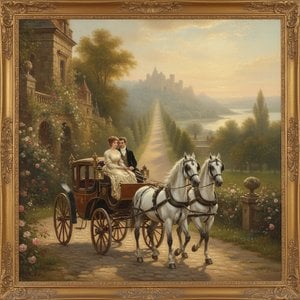
Dating back to 1895, Alphonse Maria Mucha's “Luchon” is more than just a painting; it’s a meticulously crafted window into the heart of the Art Nouveau movement. This captivating scene, depicting a gentleman on horseback before a building bearing the same name, immediately draws the viewer in with its harmonious blend of naturalism and stylized elegance. Measuring 75 x 106 cm, the scale of this artwork invites contemplation, allowing for an intimate appreciation of Mucha’s masterful technique and his profound understanding of visual storytelling.

A Masterclass in Art Nouveau Style

Mucha's signature style is immediately recognizable in “Luchon.” The flowing lines that define the horse’s musculature, the gentle curve of the building’s façade, and even the man’s top hat are all hallmarks of this influential artistic movement. Art Nouveau, born from a desire to break away from academic constraints, sought inspiration directly from nature – particularly the organic forms of plants and flowing water. Here, that influence is palpable, creating a sense of dynamic energy and graceful movement. The earthy color palette—ochres, browns, and muted greens—further enhances this naturalistic feel, lending the scene a warmth and timeless quality. Notice how Mucha employs decorative elements – subtle patterns within the building’s design and the man's attire – to elevate the image beyond simple representation, transforming it into a richly ornamented composition.

Historical Context & Influences

Created in 1895, “Luchon” reflects Mucha’s burgeoning career as a prominent figure within Paris’s vibrant artistic circles. Having moved to the city in 1887 after becoming disillusioned with traditional academic training at the Academy of Fine Arts in Prague, Mucha was actively engaged with the innovative currents shaping European art. His work demonstrates clear influences from artists like Pierre-Auguste Renoir, known for his luminous depictions of everyday life, and Gustave Moreau, a key figure in the Symbolist movement who explored esoteric themes through richly detailed imagery. The painting’s subject matter – a gentleman on horseback – was a popular motif within Art Nouveau, often used to evoke notions of nobility, adventure, and connection with the natural world.

Symbolism & Emotional Resonance

Beyond its technical brilliance, “Luchon” possesses a subtle symbolic depth. The idealized figure of the man on horseback can be interpreted as representing strength, control, and perhaps even aspiration – qualities frequently associated with the Art Nouveau aesthetic. The setting itself, a building named "Luchon," adds an element of mystery and intrigue, inviting viewers to contemplate its significance. Mucha’s frequent use of idealized female figures in flowing robes—a hallmark of his style—suggests a romanticized vision of beauty and grace. The overall effect is one of serene elegance and quiet contemplation, capturing a fleeting moment of idyllic harmony.

A Timeless Acquisition

"Luchon" by Alphonse Maria Mucha represents a pivotal work in the history of Art Nouveau. Its exquisite detail, masterful composition, and evocative atmosphere make it a truly exceptional piece. WahooArt.com offers meticulously crafted hand-painted reproductions that faithfully capture the essence of this iconic artwork, allowing you to bring its beauty into your home or office. This reproduction ensures that you own a genuine piece of art history, celebrating Mucha’s legacy for generations to come.

Spørsmål og svar

Hvor kan jeg laste ned "Luchon" av Alphonse Mucha?

Bildet av "Luchon" av Alphonse Mucha kan lastes ned fra verkets Last ned-side: nedlasting av et digitalt bilde i høy oppløsning.

Hvilken palett og hvilken følelse forener "Luchon"?

"Luchon" av Alphonse Mucha kombinerer en Earthy fargepalett med en Romantic tone.

Hvilke farger dominerer "Luchon" av Alphonse Mucha?

"Luchon" er definert av en Earthy-palett med Walnut (#6e4c34) som dominerende farge.


Kunstnerbiografi

Early Life and Artistic Beginnings

Alphonse Maria Mucha, født den 24. juli 1860 i den lille by Ivančice i Moravia – nå en del av Tsjekkia – var et barn av en kunstnerisk familie. Hans far, Ondřej Mucha, var en hoffsekretær, og hans mor, Amalie (født Mala), var en møllers datter. Familien levde et beskjeden liv, men allerede i ung alder viste Alphonse en tydelig talent for tegning. Han ble ofte sett med blyanten i hånden, fanget i å skape bilder av omgivelsene sine og fantasifulle figurer. Hans tidlige interesse for kunst ble bekreftet da han mottok en gave fra en lokal handelsmann – et sett med papir, noe som var en luksus i den tiden.

Alphonse hadde to eldre søstre, og senere kom to yngre søstre til familien. Han viste tidlig musikalsk talent, og ble utdannet som kantor i den lokale kirken. Denne musikalske bakgrunnen bidrog kanskje til hans sans for harmoni og balanse, noe som senere ville gjenspeile seg i hans kunstneriske stil. Etter fullført gymnazium ønsket han å fortsette sin utdannelse, men familiens økonomiske situasjon hindret ham i å følge drømmen om en akademisk karriere. I stedet begynte han å arbeide som dekorasjonsmaler, og fikk erfaring med scenografi for teatre.

Paris og Kunstnoveau

I 1887 flyttet Alphonse Mucha til Paris, etableringspunktet for mange unge kunstnere på den tiden. Han studerte ved Académie Julian og Académie Colarossi, og begynte å arbeide som illustratør for ulike magasiner og reklamekampanjer. Det var i Paris han fant sin egen unike stil – en distinkt form for Art Nouveau, også kjent som Jugendstil i Tyskland. Denne stilen ble preget av flytende linjer, organiske former og en følelse av bevegelse, og skilte seg markant fra den dominerende akademiske stilen på det tidspunktet.

Mucha ble raskt kjent for sine plakatdesign, spesielt de han skapte for den berømte skuespillerinnen Sarah Bernhardt. Hans første plakat for hennes forestilling av Gismonda i 1894 ble en umiddelbar suksess og markerte starten på hans karriere. Bernhardt var så imponert over resultatet at hun inngikk en seks års kontrakt med Mucha, som resulterte i et hav av plakater og design for hennes forestillinger.

Sarah Bernhardt og Universal Exhibition

Samarbeidet med Sarah Bernhardt ble avgjørende for Muchas suksess. Han skapte ikke bare plakater, men også kostymer og scenografi for hennes forestillinger, noe som ytterligere etablerte hans rykte som en allsidig og talentfull kunstner. I 1900 deltok han i den store Universell utstillingen i Paris, hvor hans Art Nouveau-stil fikk internasjonal anerkjennelse. Han dekorerte både Bosnia og Hersegovinas pavillon og samarbeidet om den østerrikske paviljongen, og demonstrerte dennes popularitet.

Mucha var kjent for å skildre kvinnelige figurer i sine arbeider – ofte idealiserte og omgitt av luksuriøse blomster. Hans plakater og illustrasjoner utstrålte en følelse av eleganse, sensualitet og romantikk, noe som gjorde dem svært populære blant publikum.

Slav Epic og Etternavnet

Etter første verdenskrig begynte Mucha å fokusere på et ambisiøst prosjekt: *The Slav Epic* (Slovansk epopej). Han ble støttet av Charles Richard Crane, en amerikansk industrimagnat og slavofil, som finansierte den monumentale serien med 20 store symbolistiske malerier. Disse bildene skildret historien til alle de slaviske folkene i verden, fra deres mytologiske opprinnelse til moderne tid. Mucha brukte over et tiår på å fullføre *The Slav Epic*, og presenterte den for det nylig uavhengige Tsjekkoslovakia i 1928.

Selv om han var kjent for sine plakater og dekorative kunstverk, betraktet Mucha *The Slav Epic* som sitt viktigste verk. Han hevdet at det representerte hans dypeste lidenskap og et forsøk på å formidle en dypere mening gjennom kunsten – ikke bare for estetikkens skyld, men for å kommunisere en åndelig budskap.

Senere Liv og Arv

Alphonse Mucha giftet seg med Maruska Chytilová i 1906, og de fikk to barn: Jaroslava og Jiří. Familien tilbrakte noen år i USA fra 1906 til 1910, hvor deres datter ble født i New York City. Etter hjemreisen til Tsjekkoslovakia fortsatte Mucha å designe frimerker, sedler og andre offisielle dokumenter for den nye staten. Han døde på 14. juli 1939 i Praha, og hans kunst har siden blitt anerkjent som en viktig del av europeisk kunsthistorie.

Alphonse Mucha

Alphonse Mucha

1860 - 1939 , Tsjekkia

Kort om kunstneren

  • Artistic Movement Or Style: Art Nouveau
  • Artists Or Movements Influenced By This Artist: ['Prokopcová']
  • Artists Who Influenced This Artist:
    • Renoir
    • Moreau
  • Date Of Birth: 15. juli 1860
  • Date Of Death: 14. juli 1939
  • Full Name: Alphonse Maria Mucha
  • Nationality: Tsjekkisk
  • Notable Artworks:
    • Slav Epic
    • Gismonda
    • Salon des Cent
  • Place Of Birth: Brno, Tsjekkia