Biografie van de kunstenaar
A Life Immersed in Beauty: The World of William-Adolphe Bouguereau
Born in 1825, amidst the vineyards and olive groves of La Rochelle, France, William-Adolphe Bouguereau’s life was destined to be a celebration of classical ideals and breathtaking realism. From an early age, his artistic inclinations were nurtured, leading him to Paris and the prestigious École des Beaux-Arts. There, under the guidance of François-Edouard Picquenot, he honed his skills, absorbing the lessons of the Old Masters – Raphael and Titian foremost among them. These influences weren’t mere imitation; they became the bedrock upon which Bouguereau built a unique artistic vision, one characterized by meticulous detail, luminous color palettes, and an unwavering commitment to portraying beauty in its most idealized form. He wasn't simply painting what he *saw*, but rather what he believed to be inherently beautiful, striving for a perfection that resonated with the aesthetic sensibilities of his time.
The Architect of Academic Perfection
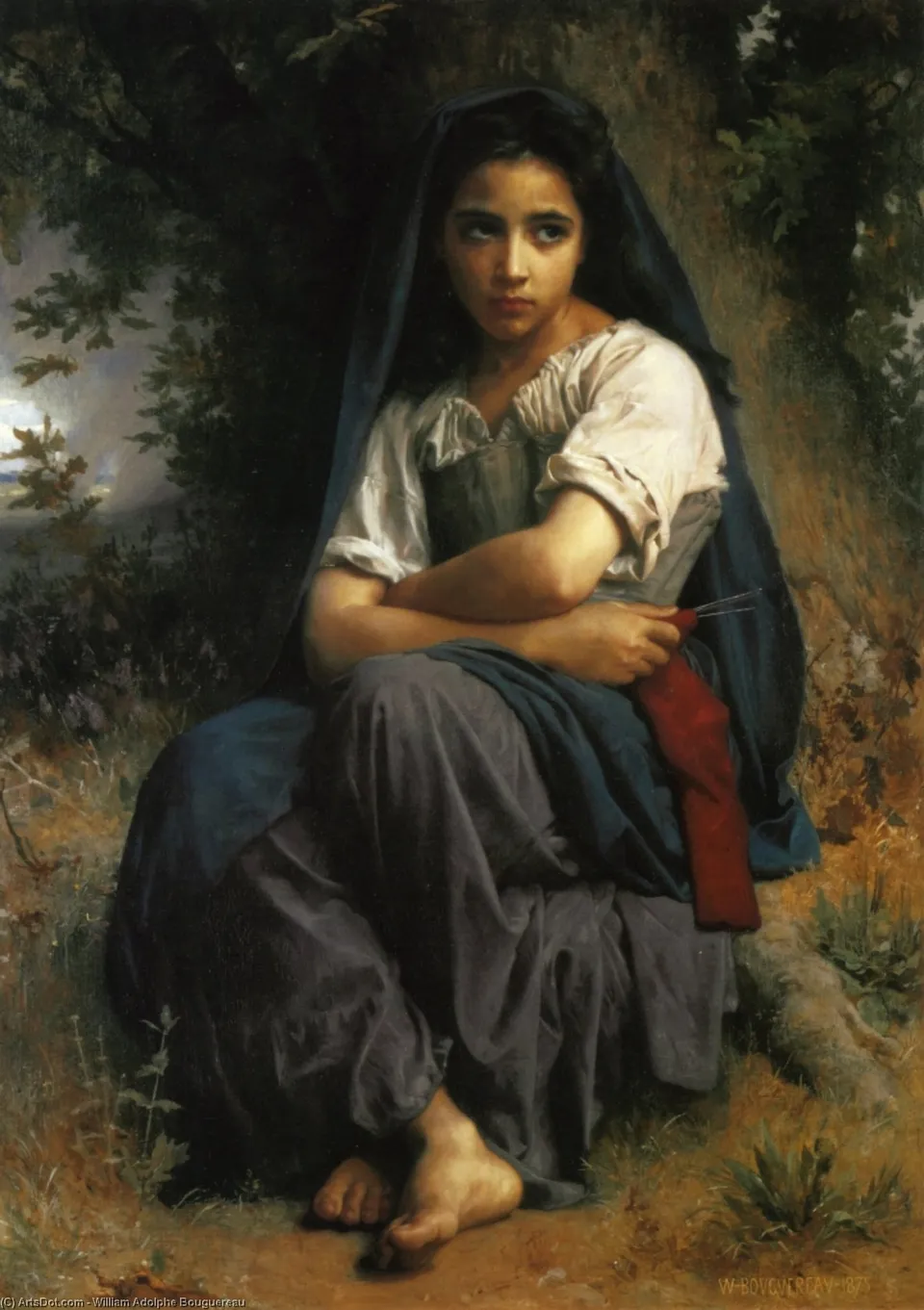
Bouguereau’s artistic style is often described as academic realism, and rightly so. He possessed an unparalleled mastery of anatomy, light, and composition. His canvases are populated by figures rendered with astonishing precision – the delicate curve of a shoulder, the subtle flush of skin, the expressive depth of an eye. But his work transcends mere technical skill; it’s infused with emotion and narrative power. He frequently depicted mythological scenes, transforming ancient tales into vibrant, emotionally resonant moments. *The Birth of Venus*, for example, isn't just a depiction of a goddess emerging from the sea; it’s a celebration of feminine grace and ethereal beauty. Similarly, works like *Zenobia Found by Shepherds on the Banks of the Araxes* capture vulnerability and pathos with remarkable sensitivity. Beyond mythology, Bouguereau found inspiration in everyday life – shepherdesses tending their flocks, young girls at play, mothers cradling their children. These genre scenes, while seemingly simple, are imbued with a sense of dignity and tenderness that elevates them to the realm of art. *Faneuse (1869)* exemplifies this approach, portraying a young woman in a tranquil landscape with an exquisite attention to detail and atmosphere. His dedication to capturing innocence is particularly evident in paintings like *Child at Bath*, where the delicate rendering of skin and light creates a truly captivating image.
Influences and Artistic Development
Bouguereau’s artistic journey was profoundly shaped by his early exposure to the works of Raphael and Titian, whose mastery of composition, color, and idealized beauty served as enduring models. He also drew inspiration from the Neoclassical painters, particularly Ingres, appreciating their emphasis on anatomical accuracy and classical themes. However, Bouguereau’s style evolved beyond mere imitation; he developed a distinctive approach characterized by a heightened sense of lyricism and emotional intensity. He was deeply influenced by the Pre-Raphaelite Brotherhood, adopting their interest in medieval legends and romantic subjects, though he tempered their darker tones with a more optimistic vision. The influence of his teacher, François-Edouard Picquenot, who emphasized meticulous draftsmanship and careful observation, is also evident in Bouguereau’s work. Throughout his career, Bouguereau consistently sought to refine his technique, striving for an unparalleled level of realism and beauty. His early works were characterized by a more rigid adherence to academic conventions, but as he matured, he gradually introduced elements of Impressionism into his palette and brushwork, creating a unique synthesis of styles.
Major Achievements and Recognition
William-Adolphe Bouguereau achieved widespread recognition during his lifetime, becoming one of the most celebrated painters in France. He was awarded the prestigious Prix de Rome in 1850, which provided him with invaluable training in Italy and opened doors to the Parisian art world. His paintings were regularly exhibited at the Salon, the official exhibition of the Académie des Beaux-Arts, where he consistently garnered critical acclaim and commercial success. Bouguereau’s works were highly sought after by wealthy collectors, including American millionaires who recognized his talent and commissioned numerous portraits and genre scenes. He was elected to the Académie Royale de Peinture et de Sculpture in 1883, a testament to his artistic merit and influence. His paintings are now housed in prestigious museums worldwide, including the Musée d’Orsay in Paris, the Carnegie Museum of Art in Pittsburgh, and The J. Paul Getty Museum in Los Angeles. *Song of the Angels (1881)*, with its ethereal beauty and serene composition, remains a particularly celebrated masterpiece, embodying the artist's ability to evoke a sense of wonder and spiritual transcendence.
A Rediscovered Master
Despite his initial success, Bouguereau’s work fell somewhat out of favor in the early 20th century as modern art movements gained prominence. His meticulous realism and adherence to academic conventions were seen as outdated by artists embracing abstraction and experimentation. However, in recent decades, there has been a significant resurgence of interest in Bouguereau's oeuvre. Art historians have reassessed his work, recognizing its technical brilliance, emotional depth, and enduring beauty. Bouguereau is now widely regarded as one of the most important figures in 19th-century French painting, a master craftsman who deserves recognition alongside other great artists of his time. His legacy continues to inspire contemporary figurative painters, demonstrating the timeless appeal of classical ideals and the power of meticulous observation and artistic skill.


 Voorvertoning
 Bestel handgeschilderde reproductie
 Verstuur
 Delen
Delen
 Details bekijken

 Download
 Vergelijkbare items
 Röntgenonderzoek
 Diavoorstelling
 Statistieken


 Lees meer






































 De optie voor glas is alleen beschikbaar bij een formaat kleiner dan 110 cm.


