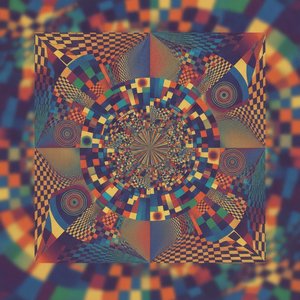
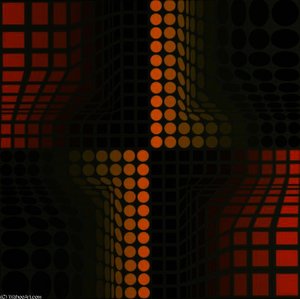
Maamor II: A Symphony of Geometric Illusion
Victor Vasarely’s Maamor II is more than just a quilt; it's an embodiment of Op Art—Optical Art—a movement that revolutionized visual perception in the mid-20th century. Created around 1969, this vibrant textile piece exemplifies Vasarely’s groundbreaking approach to artmaking, prioritizing geometric abstraction and challenging viewers’ senses.
- Artist: Victor Vasarely (1906–1997) – Hungarian-French artist
- Style: Op Art – Characterized by illusionistic effects created through precise repetition of patterns.
- Technique: Acrylic on canvas – Vasarely meticulously applied pigment to create a textured surface that generates optical distortions when viewed from different angles.
Born Károly Vászary in Pécs, Croatia, Vasarely’s artistic journey began with studies in medicine but swiftly pivoted towards painting after enrolling at Sándor Bortnyik’s influential Bauhaus workshop. This formative experience instilled in him a fascination for functional design and geometric abstraction—principles that would become the cornerstone of his distinctive style.
The Genesis of Geometric Abstraction
Vasarely's exploration into Op Art wasn’t merely stylistic; it stemmed from a deeper philosophical inquiry into how our eyes perceive reality. Influenced by Piet Mondrian and Kazimir Malevich, he sought to distill visual experience into its purest form—mathematical shapes arranged in harmonious patterns.
The quilt's bold color palette – reds, yellows, blues, greens, purples, oranges, and blacks – isn’t accidental. Vasarely deliberately utilized color to amplify the illusionistic qualities of his work. Each square contributes to a larger visual puzzle, inviting contemplation on how our brains interpret spatial relationships.
Historical Context & Legacy
Maamor II emerged during a period of artistic experimentation and intellectual ferment following World War II. Op Art gained prominence as artists sought new ways to engage audiences emotionally while simultaneously questioning traditional notions of representation. Vasarely’s work anticipated developments in graphic design, interior decoration, and even computer graphics—demonstrating the enduring relevance of his geometric aesthetic.
Considered by many as “the grandfather” of Op Art, Vasarely's influence extends far beyond the quilt itself. His systematic approach to visual perception continues to inspire artists today, reminding us that art can transcend literal depiction and tap into the subconscious realm.



 Bekijk op ware grootte
 Schakel over naar print
 Verstuur
 Delen
Delen
 Details bekijken
 Gids
Gids

 Download
 Vergelijkbare items
 Röntgenonderzoek
 Diavoorstelling
 Statistieken
 Lees meer






































 De optie voor glas is alleen beschikbaar bij een formaat kleiner dan 110 cm.