A Life Forged in Motion: The Revolutionary Vision of Umberto Boccioni
Umberto Boccioni, geboren in Reggio Calabria in 1882, was een figuur van formaat binnen de Italiaanse Futuristische beweging – een kracht die streefde naar het ontwrichten van artistieke conventies en de dynamiek van de moderne wereld omarmde. Zijn leven, tragisch verkort op slechts dertig-driejarige leeftijd, werd een getuigenis van deze vurige overtuiging in vooruitgang, snelheid en de betoverende energie van de machine-tijdperk. Boccioni’s vroege jaren waren gekenmerkt door voortdurende verhuizingen vanwege zijn vader’s dienstplaatsingen binnen de overheidsadministratie – een opvoeding die hem blootstelde aan diverse landschappen en in hem een onrustige geest zaaide. Deze nomadenbestaan leidde uiteindelijk tot Rome, waar hij aanvankelijk studie volgde aan toegepaste kunstnijverheid, maar zich vervolgens richtte op schilderkunst, onder invloed van de Liberty-stijl posterkunstenaars van die tijd. Echter, het was zijn ontmoeting met Futurisme, aangewakkerd door de geschriften van Filippo Tommaso Marinetti, die zijn artistieke traject werkelijk in brand zette.
Embracing the Whirlwind: The Rise of a Futurist
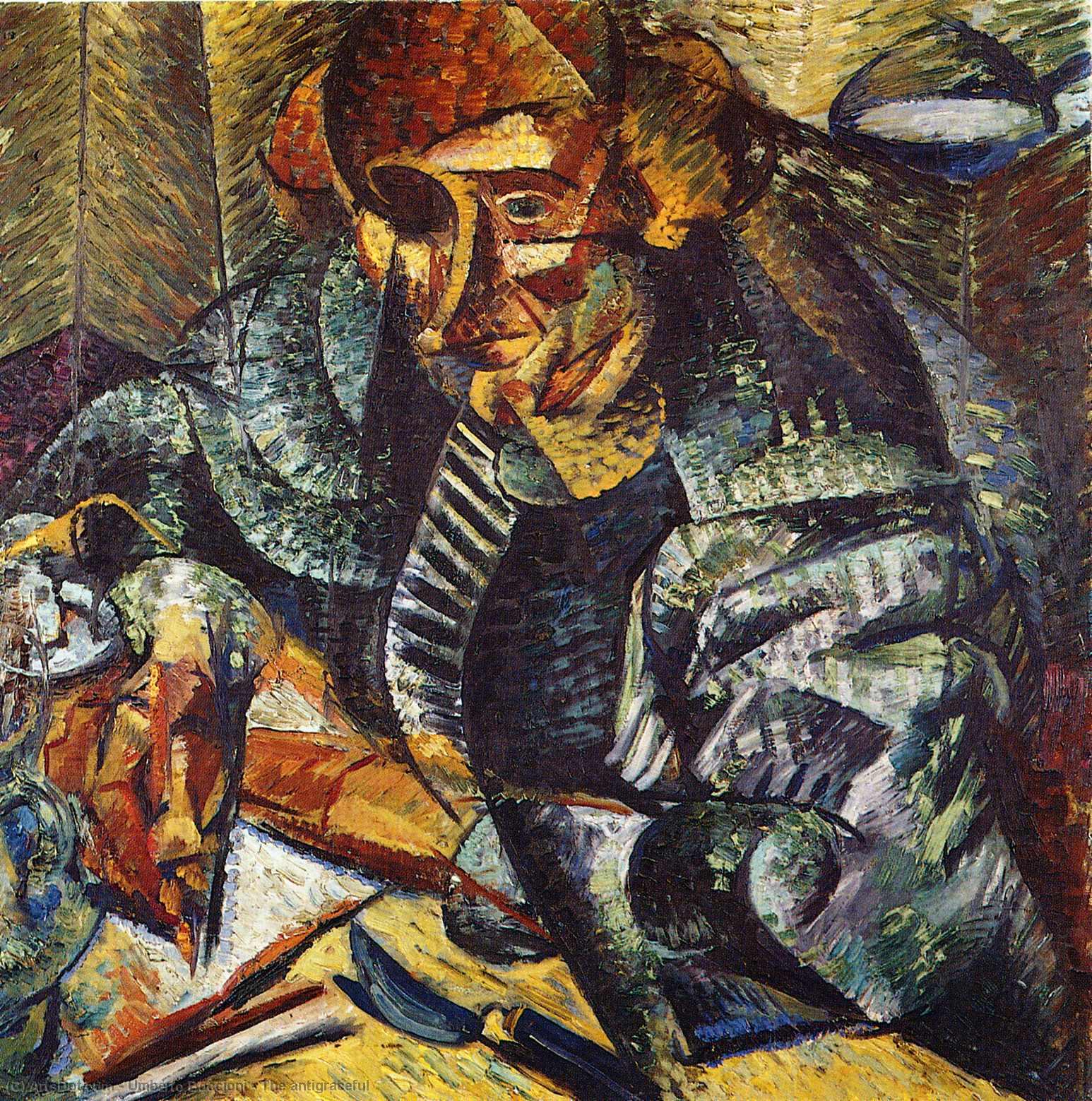
Het jaar 1910 bleek cruciaal voor Boccioni. Hij tekende de *Manifesto dei Pittori Futuristi*, waarmee hij zich committeerde aan een beweging die technologie, snelheid en zelfs geweld als emblemen van moderniteit vierde. Dit was niet slechts een esthetische keuze; het was een filosofisch verzet tegen het gewicht van traditie, een wens om de essentie te vangen van een wereld die met volle snelheid vooruit hurtelde naar een onzekere toekomst. Boccioni werd snel een van de meest overtuigende theoretici van Futurisme, verder uitwerkend aan Marinetti’s initiële verkondigingen en deze toepassend op de visuele kunsten. Hij betoogde dat een complete breuk met representatievere nauwkeurigheid noodzakelijk was, in plaats daarvan schilderijen die niet alleen *wat* dingen leken, maar ook *hoe* ze voelden in beweging – het gevoel van snelheid, de fragmentatie van vorm, de overweldigende energie van stedelijk leven – overbrachten. Zijn vroege werken, hoewel nog steeds hints van Impressionisme en Divisionisme vertoonden, begonnen deze opborrelende obsessie met dynamiek te demonstreren. Schilderijen zoals *The City Rises* (1910-1911) zijn monumentaal in schaal en ambitie, een chaotische weergave van de moderne stad – een draaiende vortex van menselijke figuren, gebouwen en machines die het Futurist ideaal belichaamt.
Deconstructing Reality: Techniek en Thema’s
Boccioni’s artistieke ontwikkeling kenmerkte zich door een steeds radicalere benadering van vorm. Hij verliet traditionele opvattingen over perspectief en compositie, en omarmde fragmentatie als een manier om beweging en energie te communiceren. Objecten werden ontleed in hun samenstellende delen, krachtenlijnen straalden naar buiten, en kleuren vermengden in draaiende patronen – allemaal ontworpen om een gevoel van visuele trilling te creëren. Deze deconstructie was niet alleen stijliciëus; het was geworteld in Boccioni’s overtuiging dat werkelijkheid zelf vloeibaar en voortdurend veranderend was. Hij zocht naar een manier om niet alleen de statische verschijning van dingen te representeren, maar ook hun dynamische essentie. Dit is krachtig geïllustreerd in werken zoals *Dynamism of a Human Body* (1913), waarbij een figuur wordt afgebeeld niet als een solide vorm, maar als een reeks fragmentarische vormen die beweging door de ruimte suggereren. Zijn meest iconische creatie, *Unique Forms of Continuity in Space* (1913), gaat verder dan schilderkunst – een bronzen beeld dat het Futurist ideaal met verbluffende kracht belichaamt. De figuur lijkt midden in een stap te staan, zijn ledematen en torso uitgerekt en vervormd, die een gevoel van onstuitbare momentum overbrengen.
Influences and Legacy
Boccioni’s vroege invloeden omvatten de technieken van Giacomo Balla’s Divisionisme, de fragmentatie van vorm uit Cubisme, en de filosofische geschriften van Nietzsche. Zijn werk werd beïnvloed door de Italiaanse kunstenaars Carlo Carrà en Luigi Russolo. Ondanks zijn vroege dood in 1916, bleef zijn ideeën en werken resoneren lang na zijn overlijden. Hij heeft niet alleen latere Futuristen beïnvloed, maar ook bewegingen als Constructivisme en Abstract Expressionisme. Zijn verkenning van beweging, dynamiek en de representatie van moderne levenswijze heeft nieuwe vormen van artistieke expressie geopend, traditionele opvattingen over schoonheid en representatie uitdaagend.
Zijn werk gaat niet alleen over het weergeven van beweging; het is over het belichamen ervan.
- Invloeden: Technieken van Giacomo Balla’s Divisionisme, fragmentatie van vorm uit Cubisme, filosofische geschriften van Nietzsche.
- Bekende Werken: *Dynamism of a Human Body*, *Unique Forms of Continuity in Space*, *The City Rises*, *Dynamism of a Cyclist*.
- Historische Betekenis: Een sleutelfiguur in de 20e-eeuwse kunst, daagde Boccioni artistieke conventies uit en heeft de loop van moderne kunst beïnvloed. Zijn theorieën over dynamiek en de representatie van beweging inspireren kunstenaars nog steeds.


 Voorvertoning
 Switch to Print
 Verstuur
 Delen
Delen
 Details bekijken

 Download
 Vergelijkbare items
 Röntgenonderzoek
 Diavoorstelling
 Stats
Stats


 Lees meer


