VoorvertoningVoorvertoning Bekijk in ARBekijk in AR Bestel handgeschilderde reproductie Bestel handgeschilderde reproductieSchakel over naar digitale afbeelding Schakel over naar digitale afbeelding VerstuurVerstuur
Details bekijkenDetails bekijken Toevoegen aan favorieten Toevoegen aan favorieten DownloadDownload Vergelijkbare itemsVergelijkbare items RöntgenonderzoekRöntgenonderzoek DiavoorstellingDiavoorstelling StatistiekenStatistieken

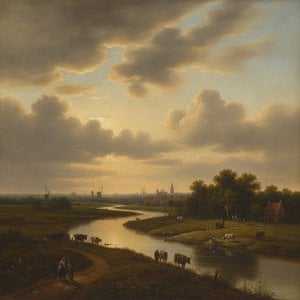
The Seamstress

Experience 'The Seamstress' by Philips de Koninck (1671). This Dutch Golden Age portrait captures a seamstress with stunning realism and dramatic lighting, reflecting the artist’s mastery of light & texture.

Philips de Koninck (1619-1688) was een Nederlandse landschapsschilder, bekend om zijn panorama's, atmosferisch licht en invloed van Rembrandt. Ontdek zijn uitgestrekte taferelen van het Nederlandse platteland.

Giclée / Kunstafdrukken

Giclée- of canvasafdruk van museumkwaliteit met een snelle productie en flexibele afwerkingsmogelijkheden. (Bestel handgeschilderde reproductie Bestel handgeschilderde reproductieSchakel over naar digitale afbeelding Schakel over naar digitale afbeelding)

P118B $10
P118H $10
P118W $10
P438Z $10
P508JH $12
P508YH $12
P805H $10
P805Z $10
P919BZ $10
P919G $10
P919XJ $10
P959ZH $10
P968JZ $12
W106C $8
W218G $10
W218JH $8
W218Y $10
W307PJ $10
W316G $10
W316PJ $8
W316Y $10
W398PJ $8
W4111J $10
W500HY $15
W500JH $15
W692G $12
W849H $8
W940BG $15
W953PJ $8

Standaardformaat
op maat gemaakt
CM
INCH

Kies uit onze vooraf ingestelde maten die overeenkomen met de originele verhoudingen van het kunstwerk.

breedte
hoogte

U kunt uw eigen afmetingen opgeven om in een specifieke lijst of ruimte te passen. Als de door u gekozen maat niet overeenkomt met de proporties van het originele kunstwerk, zullen wij de afbeelding bijsnijden of uitbreiden met een gespiegelde of effen rand. Een digitaal mockup wordt ter goedkeuring naar u verzonden voordat de productie begint.
Houd er rekening mee dat de preview op het scherm de werkelijke bijsneding of uitbreiding niet weergeeft. Alleen de mockup toont de uiteindelijke compositie nauwkeurig.
Hoewel aangepaste maten beschikbaar zijn, raden wij aan een afmeting uit de vooraf bepaalde lijst te kiezen om de originele proporties te behouden.

Wereldwijde levering () binnen 2 weken in plaats van de standaard 4/5 weken. (9 september)

why_choose_icon
Gratis wereldwijde expressverzending
why_choose_icon
Hoogwaardig linnen canvas
why_choose_icon
Volledige verzendverzekering
why_choose_icon
Garantie op terugbetaling van invoerrechten
why_choose_icon
Garantie op exacte kleurweergave
why_choose_icon
Retourbeleid van 100 dagen (alleen bij defecten)
why_choose_icon
100% Geld-terug-garantie
why_choose_icon
Korting bij meerdere afnames

Totaalprijs

$ 69

reproduction

The Seamstress

Giclée / Kunstafdrukken

Afmetingen reproductie

-

Eindtotaal

$ 69

Snelle feiten

  • Dimensions: 26 x 20 cm
  • Medium: Oil on panel
  • Year: 1671
  • Subject or theme: Seamstress portrait
  • Movement: Dutch Golden Age
  • Influences: Rembrandt
  • Artist: Philips de Koninck

Kunstquiz

Er is slechts één goed antwoord op elke vraag.

Vraag 1:
What is the primary subject of ‘The Seamstress’?
Vraag 2:
In what year was ‘The Seamstress’ painted?
Vraag 3:
Which artist is credited with influencing Philips de Koninck’s style?
Vraag 4:
What does the image description suggest about the room where the seamstress is depicted?
Vraag 5:
Philips de Koninck was primarily known for his work in which genre?

A Glimpse into Domesticity: Philips de Koninck’s “The Seamstress”

Philips de Koninck's "The Seamstress," painted in 1671, is more than just a portrait; it’s a carefully constructed tableau of Dutch life during the Golden Age. This intimate scene, measuring a modest 26 x 20 cm, offers a rare and compelling window into the daily existence of a woman engaged in her craft – a profession often overlooked in the grand narratives of European art history. De Koninck, a relatively enigmatic figure despite his prolific output, masterfully captures not just a likeness but also a palpable sense of quiet industry and understated dignity.

The painting immediately draws the eye to its subject: a woman seated before a table laden with tools – needles, thread spools, and a partially completed garment. Her posture is relaxed yet purposeful, her hands deftly manipulating fabric. The lighting, characteristic of de Koninck’s style, is dramatic and directional, casting deep shadows that emphasize the textures of the cloth and the folds of her garments. This chiaroscuro technique – a hallmark of Rembrandt's influence – imbues the scene with a sense of depth and realism, transforming a simple domestic activity into a moment of profound visual interest.

A Study in Light and Texture

De Koninck’s technical skill is evident in his meticulous rendering of detail. The fabric itself appears almost tactile, its folds and wrinkles rendered with astonishing precision. He employs a layering technique, building up the image through numerous thin glazes of paint, creating a luminous surface that seems to shimmer with reflected light. The artist's use of color is restrained yet effective; muted browns, grays, and creams dominate the palette, reflecting the practicality and simplicity of the subject’s world. However, subtle variations in tone – particularly in the highlights on the woman’s hands and clothing – add visual interest and draw the viewer’s attention to key elements within the composition.

Beyond the technical mastery, “The Seamstress” reveals a keen understanding of spatial relationships. The room itself is subtly suggested through architectural details – a chair positioned near the right side, another further back – creating a sense of depth and grounding the subject within her environment. The two books on the table, alongside the bowl, contribute to a feeling of domestic comfort and routine, hinting at a life centered around work and contemplation.

Historical Context and Symbolic Resonance

Painted during the Dutch Golden Age, “The Seamstress” reflects the burgeoning mercantile prosperity and social mobility of the era. While portraiture was traditionally reserved for the wealthy elite, artists like de Koninck increasingly catered to a broader clientele, depicting scenes of everyday life – including those of skilled tradeswomen. The seamstress herself represents a significant segment of Dutch society; women were often responsible for producing clothing for their families and selling it in local markets. Her presence in this painting is therefore not merely decorative but also serves as a subtle commentary on the economic realities of the time.

The inclusion of the books suggests an appreciation for learning and perhaps even a desire to improve her craft. The bowl, a symbol of abundance and nourishment, hints at the simple pleasures of domestic life. Together, these elements contribute to a nuanced portrayal of a woman’s role within her community – one that was both practical and dignified.

A Timeless Portrait of Quiet Strength

“The Seamstress” endures as a captivating example of Dutch Golden Age portraiture. It's not a grand, heroic depiction but rather a quietly intimate study of a woman engaged in her work. De Koninck’s masterful use of light and shadow, combined with his meticulous attention to detail, creates an image that is both visually stunning and emotionally resonant. It invites us to pause and consider the lives of ordinary people – those who often remain unseen but whose contributions shaped the fabric of society. Reproductions of this remarkable painting offer a beautiful addition to any collection, bringing a touch of Dutch history and artistic elegance into your home.


Biografie van de kunstenaar

Philips de Koninck: Een Panoramisch Visioen van het Nederlandse Landschap

Philips de Koninck (1619–1688) staat te boek als een prominente figuur binnen de Nederlandse Gouden Eeuw, vooral gevierd om zijn uitgestrekte landschappen die de grootsheid en subtiliteit van het Nederlandse platteland vangen. Hoewel hij relatief productief was in vergelijking met tijdgenoten als Rembrandt of Rubens, blijft zijn oeuvre bescheiden—geschat op ongeveer 50 schilderijen—wat hem een enigmatische kunstenaar maakt wiens nalatenschap verweven is met wetenschappelijke debatten over toeschrijving en artistieke afstamming. Geboren in Amsterdam, werd het leven van de Koninck gekenmerord door aanzienlijk succes als zakenman; hij woonde aan de Reguliersgracht, waar hij een welgesteld leven leidde. Toch lijken zijn artistieke ambities grotendeels onafhankelijk te zijn nagejaagd, wat getuigt van een toewijding aan het vakmanschap in plaats van aan grootschalige opdrachtgeversprojecten.
  • Vroege jaren en opleiding: Er is weinig definitief bekend over de vormende jaren van de Koninck. Hij leerde het vak onder Jacob Savery, een Vlaamse landschapsschilder die de barokstijl bepleitte en invloeden absorbeerde van Rubens en Caravaggio—kunstenaars wiens dramatische composities en meesterlijke gebruik van licht ongetwijfeld zijn artistieke gevoeligheid zouden vormen.
  • Amsterdamse atelier en artistieke stijl: De Koninck vestigde zijn eigen atelier in Amsterdam, waar hij studenten aantrok en een samenwerkingscultuur bevorderde. Zijn landschappen worden gekenmerende door minutieuze details, waarbij de texturen van boomschors, gebladerte en water met opmerkelijke nauwkeurigheid worden vastgelegd. Cruciaal hierbij was zijn gebruik van atmosferisch perspectief—een techniek gepionierd door Rembrandt—om diepte en realisme over te brengen, waarbij hij het effect van zonlicht dat door de bomen filtert simuleerde om een illusie van afstand te creëren.

Panoramische uitzichten en de invloed van Rembrandt

De landschappen van De Koninck zijn direct herkenbaar aan hun monumentale schaal en adembenemende vergezichten. In tegenstelling tot veel kunstenaars uit zijn tijd, die de voorkeur gaven aan kleinere, intiemere scènes, koos hij voor panoramische composities die de kijker wilden onderdompelen in de grootsheid van het Nederlandse landschap—een bewuste keuze die de barokke fascinatie voor spektakel weerspiegelt en een gevoel van sublieme schoonheid oproept. Zijn schilderijen tonen vaak beboste gebieden gehuld in een gouden licht, waarbij vluchtige momenten van atmosferisch drama worden gevangen. De invloed van Rembrandt is onmiskenbaar; zijn meesterlijke gebruik van chiaroscuro – het samenspel tussen licht en schaduw – verleent zijn doeken een emotionele resonantie die verder gaat dan louter visuele representatie. Denk aan ‘Een uitgestrekt bebost landschap’ (AQR46N), waar het gefilterde zonlicht de complexe details van de bosbodem verlicht, als een spiegeling van de kenmerkende stijl van Rembrandt.
  • Opmerkelijke werken: Tot zijn meest gevierde schilderijen behoren ‘De Naailerster’ (AQR47J) en ‘De Herderin’, die beide landelijke figuren afbeelden tegen een dramatische achtergrond. Deze werken illustranc de bekwaamheid van De Koninck om psychologische diepgang te combineren met visuele pracht.
  • Discussies over toeschrijving: Het oeuvre van De Koninck is onderwerp geweest van aanzienlijke controverse wat betreft de toeschrijving. Veel schilderijen die aan Rembrandt werden toegeschreven, zijn onomstotelijk bewezen door zijn neef, Salomon de Koninck te zijn uitgevoerd—een leerling die de stijl van Rembrandt op meesterlijke wijze imiteerde. Deze verwarring onderstreept de uitdagingen waar kunsthistorici voor staan bij het vaststellen van auteurschap en compliceert ons begrip van artistieke innovatie tijdens de Gouden Eeuw.

Nalatenschap en historische betekenis

Ondanks de discussies over de toeschrijving van zijn werk, blijft Philips de Koninck een belangrijke bijdrager aan de Nederlandse landschapsschilderkunst. Zijn schilderijen zijn ondergebracht in musea door heel Europa—waaronder het Rijksmuseum Amsterdam en het Kunsthistorisches Museum in Wenen—wat getuigt van hun blijvende aantrekkingskracht. De landschappen van De Koninck staan als krachtige belichamingen van de barokke esthetiek, waarin de preoccupatie van die tijd met grootsheid, emotie en het sublieme weerklinkt. Hij versterkte de nalatenschap van Rembrandt door te laten zien hoe dramatische lichtinval vertaald kan worden naar het genre van het landschap, waarmee hij zijn plaats verworven onder de meest invloedrijke kunstenaars van zijn tijd.
  • Verdere verkenning: Voor meer informatie over het leven en de kunst van Philips de Koninck kunt u Art UK raadplegen () en reproducties van zijn schilderijen ontdekken op WahooArt.com.

Philips De Koninck

Philips De Koninck

1619 - 1688 , Nederland

Belangrijkste feiten

  • Artistic Movement Or Style: Nederlandse landschapsschilderkunst
  • Artists Or Movements Influenced By This Artist: Barok
  • Artists Who Influenced This Artist: Rembrandt
  • Date Of Death: 1688
  • Full Name: Philips de Koninck
  • Nationality: Nederlands
  • Notable Artworks:
    • Een uitgestrekt bebost landschap
    • De naaister
  • Place Of Birth: Amsterdam, Nederland