Voorvertoning Bekijk in AR Schakel over naar print Schakel over naar digitale afbeeldingen Verstuur
Details bekijken Gids Toevoegen aan favorieten Download Vergelijkbare items Röntgenonderzoek Diavoorstelling Q&A Statistieken

Arno Landscape Hand-painted oil painting reproduction

Experience the breathtaking atmospheric depth of Leonardo da Vincis 1473 Arno Landscape, a pioneering Early Renaissance masterpiece capturing the Tuscan hills, and bring this timeless vision of nature into your collection.

Ontdek Leonardo da Vinci (1452-1519): het Renaissance-genie achter de Mona Lisa & Het Laatste Avondmaal! Ontdek zijn sfumato-techniek, anatomische studies & baanbrekende uitvindingen.

Handgemaakte olieverfreproductie

Met de hand geschilderd in olieverf op canvas in uw gewenste maat en lijst, op bestelling gemaakt door onze kunstenaars. ( Schakel over naar print Schakel over naar digitale afbeeldingen)

Corner sample of the P118B picture frame: gegoten polystyreen, 5 cm wide and 3 cm thick
P118B €10
Corner sample of the P118H picture frame: gegoten polystyreen, 5 cm wide and 3 cm thick
P118H €10
Corner sample of the P118W picture frame: gegoten polystyreen, 5 cm wide and 3 cm thick
P118W €10
Corner sample of the P438Z picture frame: gegoten polystyreen, 5.5 cm wide and 3.5 cm thick
P438Z €10
Corner sample of the P508JH picture frame: gegoten polystyreen, 7 cm wide and 3.5 cm thick
P508JH €12
Corner sample of the P508YH picture frame: gegoten polystyreen, 7 cm wide and 3.5 cm thick
P508YH €12
Corner sample of the P805H picture frame: gegoten polystyreen, 5 cm wide and 3.5 cm thick
P805H €10
Corner sample of the P805Z picture frame: gegoten polystyreen, 5 cm wide and 3.5 cm thick
P805Z €10
Corner sample of the P919BZ picture frame: gegoten polystyreen, 7 cm wide and 3.5 cm thick
P919BZ €10
Corner sample of the P919G picture frame: gegoten polystyreen, 7 cm wide and 3.5 cm thick
P919G €10
Corner sample of the P919XJ picture frame: gegoten polystyreen, 7 cm wide and 3.5 cm thick
P919XJ €10
Corner sample of the P959ZH picture frame: gegoten polystyreen, 5 cm wide and 3 cm thick
P959ZH €10
Corner sample of the P968JZ picture frame: gegoten polystyreen, 6 cm wide and 4 cm thick
P968JZ €12
Corner sample of the W106C picture frame: massief hout, 5 cm wide and 3 cm thick
W106C €8
Corner sample of the W218G picture frame: massief hout, 5 cm wide and 3 cm thick
W218G €10
Corner sample of the W218JH picture frame: massief hout, 5 cm wide and 3 cm thick
W218JH €8
Corner sample of the W218Y picture frame: massief hout, 5 cm wide and 3 cm thick
W218Y €10
Corner sample of the W307PJ picture frame: massief hout, 6 cm wide and 3 cm thick
W307PJ €10
Corner sample of the W316G picture frame: massief hout, 6 cm wide and 3 cm thick
W316G €10
Corner sample of the W316PJ picture frame: massief hout, 6 cm wide and 3 cm thick
W316PJ €8
Corner sample of the W316Y picture frame: massief hout, 6 cm wide and 3 cm thick
W316Y €10
Corner sample of the W398PJ picture frame: massief hout, 5 cm wide and 3 cm thick
W398PJ €8
Corner sample of the W4111J picture frame: massief hout, 6.5 cm wide and 3.5 cm thick
W4111J €10
Corner sample of the W500HY picture frame: massief hout, 7 cm wide and 5 cm thick
W500HY €15
Corner sample of the W500JH picture frame: massief hout, 7 cm wide and 5 cm thick
W500JH €15
Corner sample of the W692G picture frame: massief hout, 8 cm wide and 4 cm thick
W692G €12
Corner sample of the W849H picture frame: massief hout, 5 cm wide and 3 cm thick
W849H €8
Corner sample of the W940BG picture frame: massief hout, 7.5 cm wide and 4.5 cm thick
W940BG €15
Corner sample of the W953PJ picture frame: massief hout, 6 cm wide and 3.5 cm thick
W953PJ €8

Standaardformaat
op maat gemaakt
CM
INCH

Kies uit onze vooraf ingestelde maten die overeenkomen met de originele verhoudingen van het kunstwerk.

breedte
hoogte

Voer de breedte en hoogte in die u nodig heeft, passend bij uw lijst of uw muur. Omdat dit handgeschilderd is, kan de kunstenaar bij een afmeting met een andere beeldverhouding iets meer rondom het schilderij schilderen of juist iets meer weglaten — u kiest zelf. Wij sturen u een digitaal mockup ter goedkeuring voordat het schilderwerk begint. De afbeelding die op deze pagina wordt getoond, is niet het uiteindelijke resultaat — alleen de mockup geeft dit weer.

Voorbeelden van aanpassingen: Vervang het gezicht met een eigen foto; Voeg een huisdier toe (bijv. vervang de kat door een hond); Verwerk een verborgen boodschap in de achtergrond; Wijzig het landschap of andere elementen in de achtergrond.
Na de bestelling zal het team van WahooArt.com per e-mail contact opnemen met de klant voor instructies en een mockup-voorbeeld sturen.

Wereldwijde levering () binnen 3 tot 4 weken in plaats van de standaard 5 weken. (30 oktober). Zonder concessies aan de kwaliteit.

Gratis wereldwijde expressverzending
Hoogwaardig linnen canvas
Volledige verzendverzekering
Garantie op terugbetaling van invoerrechten
Garantie op exacte kleurweergave
Retourbeleid van 100 dagen (alleen bij defecten)
100% Geld-terug-garantie
Korting bij meerdere afnames

Totaalprijs

€ 241

Arno Landscape

Druktechniek

Afmetingen reproductie

-

Eindtotaal

€ 241

Snelle feiten

  • Movement: Early Renaissance
  • Influences: Verrocchio
  • Artistic style: Leonardo’s Early Style
  • Subject or theme: Landscape; Riverine Scene
  • Artist: Leonardo da Vinci

Kunstquiz

Er is slechts één goed antwoord op elke vraag.

Vraag 1:
What artistic movement is Leonardo da Vinci’s ‘Arno Landscape’ considered to be?
Vraag 2:
The image description highlights Da Vinci's use of what artistic technique?
Vraag 3:
What is the primary subject matter depicted in ‘Arno Landscape’?
Vraag 4:
Where can you find Leonardo da Vinci's 'Arno Landscape'?
Vraag 5:
What does the inclusion of figures and animals in ‘Arno Landscape’ reflect about Da Vinci's artistic interests?

A Dawn of Genius: The Birth of a Landscape

In the summer of 1473, a twenty-one-year-old apprentice named Leonardo da Vinci turned his gaze toward the rolling hills of the Arno Valley, capturing a moment that would forever alter the trajectory of Western art. Arno Landscape is not merely a depiction of the Tuscan countryside; it is a profound testament to the dawn of a scientific eye within an artistic soul. At this pivotal moment in the Early Renaissance, Leonardo moved beyond the traditional boundaries of portraiture and religious iconography to elevate the natural world itself to the status of a central protagonist. This work serves as a window into his nascent fascination with the living, breathing earth, marking one of the earliest instances where a landscape became the primary subject of an artist's devotion.

The scene unfolds with a breathtaking sense of tranquility, where the meandering Arno River anchors the composition, its gentle curves guiding the viewer’s eye through a lush, verdant expanse. As one wanders deeper into the canvas, the mountains rise in the distance, their rugged contours softened by a delicate, ethereal haze. This mastery of aerial perspective—the subtle manipulation of color and tonal values to simulate the way light interacts with moisture and air—reveals Leonardo’s burgeoning scientific curiosity. He was not simply painting what he saw, but rather interpreting the very physics of sight, creating an illusion of infinite depth that invites the observer to step directly into the Tuscan mist.

The Harmony of Human Presence and Nature

Within this sweeping vista, the presence of humanity is felt through a delicate, rhythmic placement of figures. Scattered throughout the foreground and middle ground, small groups of people and animals move through the landscape, their tiny forms providing a vital sense of scale against the grandeur of the mountains. This integration of human activity within the vastness of nature reflects the core tenets of Renaissance Humanism, suggesting a world where man is not an intruder upon the earth, but a harmonious participant in its eternal cycles. The composition achieves a rare equilibrium; there is a profound stillness to the water and the stone, yet the scene pulses with the quiet energy of life.

For the discerning collector or interior designer, Arno Landscape offers more than just aesthetic beauty; it provides an atmosphere of contemplative peace. The muted, earthy palette and the soft, blended transitions characteristic of Leonardo’s early style create a sophisticated visual texture that complements both classical and contemporary spaces. A high-quality reproduction of this masterpiece brings with it a sense of historical weight and intellectual depth, serving as a focal point that inspires wonder and invites long periods of quiet reflection. To hang this work is to invite the timeless spirit of the Renaissance into one's home, celebrating the eternal connection between the human spirit and the magnificent natural world.

Veelgestelde vragen

Welke sfeer brengt "Arno Landscape" in een ruimte?

De Serene sfeer van "Arno Landscape" door Leonardo Da Vinci past perfect bij de aanbevolen ruimte: een Living Room.

Hoe kan ik een reproductie van "Arno Landscape" door Leonardo Da Vinci bekijken?

Een voorproefje van "Arno Landscape" door Leonardo Da Vinci is beschikbaar op de Voorvertoning-pagina van het kunstwerk.

Hoe kan "Arno Landscape" door Leonardo Da Vinci worden gebruikt in interieurdecoratie?

"Arno Landscape" wordt aanbevolen voor Accent; de ideale plek hiervoor is een Living Room.


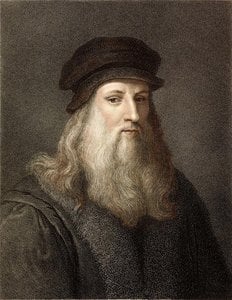
Biografie kunstenaar

Het leven en de nalatenschap van Leonardo da Vinci.

Leonardo di ser Piero da Vinci, geboren in 1452 nabij het Toscaanse dorpje Vinci, blijft ongetwijfeld de meest universeel erkende figuur uit de Renaissance—een ware polymath wiens onverzadigbare nieuwsgierigheid hem over vele disciplines dreef en een onuitwisbare stempel drukte op kunst, wetenschap en techniek. Zijn naam is synoniem geworden met genialiteit, een bewijs van zijn buitengewone breedte aan talent en visionair denkvermogen. Geboren buiten het huwelijk uit Piero da Vinci, een notaris, en Caterina, een boerin, was Leonardo’s vroege leven onconventioneel, maar bood hem tegelijkertijd toegang tot zowel de praktische wereld als een waardering voor de natuur die zijn artistieke visie diepgaand zou vormen. Hij ontving een basisopleiding in lezen, schrijven en rekenen, maar het was zijn leerperiode onder Andrea del Verrocchio in Florence die zijn creatieve vonk echt aanwakkerde. Binnen de werkplaats van Verrocchio leerde Leonardo niet enkel schilderen of beeldhouwen; hij werd ondergedompeld in een wereld van technische vaardigheid, waarbij hij meesterschap verwierf in metaalbewerking, houtbewerking, tekenkunst en de complexiteit van artistieke creatie—een fundament waarop hij zijn veelzijdige genie zou bouwen. Zelfs tijdens deze vormende periode gingen er geruchten rond over zijn uitzonderlijke talent, met verhalen die suggereerden dat Verrocchio zelf het schilderen neerlegde nadat hij getuige was geweest van Leonardo’s superieure bekwaamheid.

Milanese innovaties en artistieke bloei

In 1482 begon Leonardo aan een nieuw hoofdstuk toen hij in dienst trad bij Ludovico Sforza, de hertog van Milaan. Dit was niet louter een artistieke aanstelling; Leonardo fungeerde als militair ingenieur, architect, beeldhouwer en ontwerper voor het hof—een getuigenis van zijn diverse vaardigheden. Hij bedacht innovatieve fortificaties, ontwierp uitgebreide toneeldecors en schetste zelfs plannen voor fantastische machines. Het was echter tijdens deze periode dat hij begon aan een van zijn meest iconische meesterwerken: Het Laatste Avondmaal. Geschilderd als fresco in het refectorium van het klooster Santa Maria delle Grazie, overstijgt dit werk loutere representatie; het is een diepgaande verkenning van menselijke emotie en psychologisch drama, waarbij het exacte moment waarop Christus zijn verraad aankondigt, wordt vastgelegd. De compositie, innovatief voor zijn tijd, en het meesterlijke gebruik van perspectief zouden de westerse kunst eeuwenlang diepgaand beïnvloeden. Hoewel veel beeldhouwprojecten tijdens zijn Milanese periode onvoltooid bleven, bleef Leonardo's inventieve geest floreren, wat de basis legde voor toekomstige wetenschappelijke ontdekkingen.

De terugkeer naar Florence en het streven naar perfectie

Na de Franse invasie van Milaan in 1499 keerde Leonardo terug naar Florence, een stad die een hoogtepunt in artistieke ontwikkeling beleefde. Hoewel hij in deze tijd minder voltooide werken produceerde, was hun impact immens. Het was hier dat hij begon aan wat ongetwijfeld het beroemdste schilderij ter wereld zou worden: de Mona Lisa (La Gioconda). De raadselachtige glimlach en de hypnotiserende blik van het onderwerp hebben toeschouwers generaties lang gefascineerd, terwijl Leonardo’s revolutionaire sfumato-techniek—het subtiele verloop van licht en schaduw om vage contouren en atmosferisch perspectief te creëren—aanzienlijk bijdroeg aan de etherische kwaliteit van het schilderij. Deze periode zag ook de voortdurende verfijning van zijn anatomische studies, gedreven door een onwankelbaar verlangen om het menselijk lichaam met wetenschappelijke precisie te begrijrei. Hij ontleedde lijken en documenteerde nauwgezet spieren, botten en organen in een reeks ongelooflijk gedetailleerde tekeningen die eeuwen voor hun tijd waren.

Een nalatenschap voorbij de kunst: wetenschap, uitvinding en blijvende invloed

De latere jaren van Leonardo werden gekenmerkt door reizen tussen Florence, Milaan en Rome, waarbij hij altijd werd gezocht vanwege zijn expertise, maar vaak projecten onvoltooid achterliet—misschien een weerspiegeling van zijn rusteloze intellect en de enorme omvang van zijn interesses. In 1516 aanvaardde hij een uitnodiging van koning Frans I om te leven en werken in het Château du Clos Lucé nabij Amboise in Frankrijk, waar hij zijn laatste jaren doorbracht. Hij stierf daar in 1519 en liet een enorme nalatenschap na die veel verder reikt dan de wereld van de kunst. Zijn notitieboeken onthullen baanbrekend werk op het gebied van anatomie, optica, hydraulica, geologie en cartografie—en bevatten concepten voor uitvindingen die eeuwen voor hun tijd lagen, waaronder vliegmachines, tanks en geavanceerde wapens. De impact van Leonardo da Vinci op de kunstgeschiedenis is onmeetbaar. Hij verhief de status van kunstenaars van bekwame ambachtslieden naar intellectuele figuren, door aan te tonen dat artistieke creatie gevoed kon worden door wetenschappelijk onderzoek en een diep begrip van de natuurlijke wereld. Zijn schilderijen worden gevierd om hun realisme, psychologische diepgang en innovatieve technieken. Hij blijft een symbool van menselijke nieuwsgierigheid, creativiteit en het onvermoeibare streven naar kennis—een ware belichaming van de geest van de Renaissance, wiens nalatenschap eeuwen na zijn dood nog steeds ontzag en fascinatie oproept.

Belangrijkste prestaties & blijvende impact

  • Schilderkunst: Mona Lisa, Het Laatste Avondmaal, Madonna van de Rotsen, Annunciatie
  • Tekenen & Schetsen: Uitgebreide anatomische studies, Ingenieursontwerpen (vliegmachines, wapens), Botanische illustraties
  • Wetenschap & Techniek: Baanbrekend werk in anatomie, optica, hydraulica, geologie en cartografie. Concepten voor uitvindingen die eeuwen voor hun tijd lagen.

Leonardo Da Vinci

Leonardo Da Vinci

1452 - 1519 , Italië

Belangrijkste feiten

  • Artistic Movement Or Style: Hoge Renaissance
  • Artists Or Movements Influenced By This Artist: ['Renaissance kunst']
  • Artists Who Influenced This Artist: ['Andrea del Verrocchio']
  • Date Of Birth: 15 april 1452
  • Date Of Death: 2 mei 1519
  • Full Name: Leonardo da Vinci
  • Nationality: Italiaans
  • Notable Artworks (List Of Titles):
    • Mona Lisa
    • Het Laatste Avondmaal
  • Place Of Birth (City And Country): Vinci, Italië
Ontdek kunstwerken georganiseerd op thema, stijl en kenmerk.