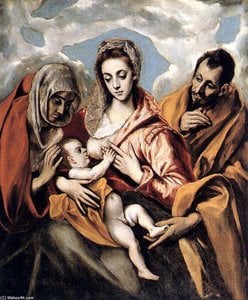
Retable and side altars (1577) door El Greco, handgeschilderde olieverfreproductie door een meesterkunstenaar
Voorvertoning Bekijk in AR Schakel over naar print Schakel over naar digitale afbeeldingen Verstuur
Details bekijken Gids Toevoegen aan favorieten Download Vergelijkbare items Röntgenonderzoek Diavoorstelling Vraag & antwoord Presentatie Statistieken

Retable and side altars Met de hand geschilderde olieverfreproductie

Explore El Greco’s ‘Retable & Side Altars’ (1577). A stunning Baroque masterpiece featuring elongated figures, dramatic lighting & religious symbolism. Discover this iconic artwork!

El Greco's maniëristische stijl schittert in De Begrafenis van de Graaf van Orgaz. Ontdek vandaag zijn spirituele en dramatische meesterwerken.

Handgemaakte olieverfreproductie

Met de hand geschilderd in olieverf op canvas in uw gewenste maat en lijst, op bestelling gemaakt door onze kunstenaars. ( Schakel over naar print Schakel over naar digitale afbeeldingen)

Corner sample of the P118B picture frame: gegoten polystyreen, 5 cm wide and 3 cm thick
P118B €10
Corner sample of the P118H picture frame: gegoten polystyreen, 5 cm wide and 3 cm thick
P118H €10
Corner sample of the P118W picture frame: gegoten polystyreen, 5 cm wide and 3 cm thick
P118W €10
Corner sample of the P438Z picture frame: gegoten polystyreen, 5.5 cm wide and 3.5 cm thick
P438Z €10
Corner sample of the P508JH picture frame: gegoten polystyreen, 7 cm wide and 3.5 cm thick
P508JH €12
Corner sample of the P508YH picture frame: gegoten polystyreen, 7 cm wide and 3.5 cm thick
P508YH €12
Corner sample of the P805H picture frame: gegoten polystyreen, 5 cm wide and 3.5 cm thick
P805H €10
Corner sample of the P805Z picture frame: gegoten polystyreen, 5 cm wide and 3.5 cm thick
P805Z €10
Corner sample of the P919BZ picture frame: gegoten polystyreen, 7 cm wide and 3.5 cm thick
P919BZ €10
Corner sample of the P919G picture frame: gegoten polystyreen, 7 cm wide and 3.5 cm thick
P919G €10
Corner sample of the P919XJ picture frame: gegoten polystyreen, 7 cm wide and 3.5 cm thick
P919XJ €10
Corner sample of the P959ZH picture frame: gegoten polystyreen, 5 cm wide and 3 cm thick
P959ZH €10
Corner sample of the P968JZ picture frame: gegoten polystyreen, 6 cm wide and 4 cm thick
P968JZ €12
Corner sample of the W106C picture frame: massief hout, 5 cm wide and 3 cm thick
W106C €8
Corner sample of the W218G picture frame: massief hout, 5 cm wide and 3 cm thick
W218G €10
Corner sample of the W218JH picture frame: massief hout, 5 cm wide and 3 cm thick
W218JH €8
Corner sample of the W218Y picture frame: massief hout, 5 cm wide and 3 cm thick
W218Y €10
Corner sample of the W307PJ picture frame: massief hout, 6 cm wide and 3 cm thick
W307PJ €10
Corner sample of the W316G picture frame: massief hout, 6 cm wide and 3 cm thick
W316G €10
Corner sample of the W316PJ picture frame: massief hout, 6 cm wide and 3 cm thick
W316PJ €8
Corner sample of the W316Y picture frame: massief hout, 6 cm wide and 3 cm thick
W316Y €10
Corner sample of the W398PJ picture frame: massief hout, 5 cm wide and 3 cm thick
W398PJ €8
Corner sample of the W4111J picture frame: massief hout, 6.5 cm wide and 3.5 cm thick
W4111J €10
Corner sample of the W500HY picture frame: massief hout, 7 cm wide and 5 cm thick
W500HY €15
Corner sample of the W500JH picture frame: massief hout, 7 cm wide and 5 cm thick
W500JH €15
Corner sample of the W692G picture frame: massief hout, 8 cm wide and 4 cm thick
W692G €12
Corner sample of the W849H picture frame: massief hout, 5 cm wide and 3 cm thick
W849H €8
Corner sample of the W940BG picture frame: massief hout, 7.5 cm wide and 4.5 cm thick
W940BG €15
Corner sample of the W953PJ picture frame: massief hout, 6 cm wide and 3.5 cm thick
W953PJ €8

Standaardformaat
op maat gemaakt
CM
INCH

Kies uit onze vooraf ingestelde maten die overeenkomen met de originele verhoudingen van het kunstwerk.

breedte
hoogte

Voer de breedte en hoogte in die u nodig heeft, passend bij uw lijst of uw muur. Omdat dit handgeschilderd is, kan de kunstenaar bij een afmeting met een andere beeldverhouding iets meer rondom het schilderij schilderen of juist iets meer weglaten — u kiest zelf. Wij sturen u een digitaal mockup ter goedkeuring voordat het schilderwerk begint. De afbeelding die op deze pagina wordt getoond, is niet het uiteindelijke resultaat — alleen de mockup geeft dit weer.

Voorbeelden van aanpassingen: Vervang het gezicht met een eigen foto; Voeg een huisdier toe (bijv. vervang de kat door een hond); Verwerk een verborgen boodschap in de achtergrond; Wijzig het landschap of andere elementen in de achtergrond.
Na de bestelling zal het team van WahooArt.com per e-mail contact opnemen met de klant voor instructies en een mockup-voorbeeld sturen.

Wereldwijde levering () binnen 3 tot 4 weken in plaats van de standaard 5 weken. (11 november). Zonder concessies aan de kwaliteit.

Gratis wereldwijde expressverzending
Hoogwaardig linnen canvas
Volledige verzendverzekering
Garantie op terugbetaling van invoerrechten
Garantie op exacte kleurweergave
Retourbeleid van 100 dagen (alleen bij defecten)
100% Geld-terug-garantie
Korting bij meerdere afnames

Totaalprijs

€ 243

Retable and side altars

Druktechniek

Afmetingen reproductie

-

Eindtotaal

€ 243

Snelle feiten

  • Artistic style: Expressionism, Cubism
  • Title: Retable and side altars
  • Subject or theme: Religious devotion
  • Movement: Baroque
  • Artist: El Greco

The Retable and Side Altars of El Greco – A Window into Faith and Fire

El Greco’s “Retable and Side Altars,” painted in 1577 for the Cistercian convent of Santo Domingo el Antiguo in Toledo, Spain, isn't merely a religious depiction; it’s a profound exploration of faith, emotion, and the burgeoning artistic spirit of the late Renaissance. Commissioned during a pivotal moment in El Greco’s career – his arrival in Spain after years spent honing his craft in Italy and Greece – this monumental altarpiece reveals a synthesis of influences, forging a uniquely powerful style that would resonate through art history. The work stands as a testament to El Greco's ability to imbue religious iconography with an intensely personal and dramatic sensibility, pushing beyond the established conventions of the time.

The core of the altarpiece centers around “The Assumption of the Virgin,” a breathtaking vision of Mary ascending into heaven. El Greco masterfully employs a dynamic composition, eschewing the static serenity often associated with religious art. Figures are elongated and distorted, their bodies contorted in expressions of anguish and ecstasy. The use of color is equally arresting – deep reds, blues, and ochres dominate, creating an atmosphere of heightened drama and spiritual intensity. The architectural setting, rendered with a subtle yet effective perspective, anchors the scene within the confines of Toledo’s Santo Domingo convent, grounding the divine in the earthly realm.

A Synthesis of Styles: Flemish Influence Meets Spanish Soul

El Greco's artistic journey is crucial to understanding this masterpiece. His early training in Crete exposed him to Byzantine iconography, characterized by its stylized figures and rich symbolism. However, his time in Italy, particularly Venice, introduced him to the innovations of the Renaissance – a fascination with perspective, naturalism, and the use of oil paint. Crucially, he was deeply influenced by Flemish artists like Jan van Eyck and Dirk Bouts, whose meticulous detail, dramatic lighting, and emotional intensity found their way into his work. This confluence of influences is most evident in the altarpiece’s composition, its use of chiaroscuro (the contrast between light and dark), and the expressive faces of its figures.

Yet, El Greco didn't simply mimic these styles; he transformed them, imbuing them with his own distinctive vision. The elongated figures, the heightened emotionalism, and the unsettling use of color are distinctly *El Greco*. He wasn’t interested in creating a purely realistic representation of religious subjects; instead, he sought to convey their spiritual essence through powerful visual metaphors.

Symbolism and Narrative: Unpacking the Layers of Meaning

The “Retable and Side Altars” is rich with symbolic detail. The figures themselves are not merely portraits but embodiments of theological concepts. The placement of saints, the gestures they make, and their expressions all contribute to a complex narrative that speaks to themes of faith, devotion, and salvation. Note, for example, the prominent role of Saint John the Evangelist in one of the side panels – a figure often associated with divine revelation and prophecy. The inclusion of classical elements, such as the architectural framework and the references to Roman mythology, further enriches the work’s symbolic landscape.

The choice of Toledo itself is significant. As a city steeped in religious history and a center of Spanish culture, it provided El Greco with a fertile ground for his artistic explorations. The depiction of the city's skyline, subtly integrated into the background, connects the divine realm to the everyday world.

Emotional Resonance: A Window into the Soul

Ultimately, “Retable and Side Altars” is a profoundly moving work of art. It’s not simply a depiction of religious events; it's an exploration of human emotion – faith, doubt, joy, sorrow, and ultimately, hope. The elongated figures, the dramatic lighting, and the intense colors all contribute to a sense of heightened emotional intensity. The viewer is drawn into the scene, invited to contemplate the mysteries of faith and the complexities of the human experience. It’s a testament to El Greco's ability to transform religious iconography into a powerful expression of the soul—a legacy that continues to captivate audiences centuries later.

Consider commissioning a high-quality reproduction to bring this extraordinary artwork into your home or office, allowing its evocative power and spiritual depth to enrich your surroundings.

Veelgestelde vragen

Welke afmeting en oriëntatie worden aanbevolen voor een print van "Retable and side altars" door El Greco?

Formaat Large, Portrait oriëntatie: dit is de aanbevolen printinstelling voor "Retable and side altars" door El Greco.

Welke stemming en emotie komen samen in "Retable and side altars"?

"Retable and side altars" door El Greco roept een Spiritual gevoel op binnen een algeheel Elegant stemmigheid.

In welke periode van de carrière van El Greco valt "Retable and side altars"?

"Retable and side altars" behoort tot de Mature Period in de carrière van El Greco. Deze classificatie plaatst het werk in de context van de ontwikkeling van de kunstenaar.


Biografie kunstenaar

De Kretenzische Fundering

Doménikos Theotokópoulos, die de geschiedenis zou binnengaan als El Greco, begon zijn leven in 1541 op het eiland Kreta. In die tijd was het eiland een bezit van Venetië, een feit dat hem er later toe zou brengen de kloof tussen oosterse en westerse tradities te overbruggen. Hij werd opgeleid als icoenschilder binnen de Byzantijnse traditie, een discipline die een minutieuze aandacht voor detail vereiste en een focus op de spirituele essentie van een onderwerp, in plaats van louter de fysieke gelijkenis. Deze vroege onderdompeling in de Kretenzische school gaf hem een gevoel van symbolische precisie dat een constante zou blijven, zelfs toen zijn stijl radicale transformaties onderging.

Op een leeftijd van zesentwintig verhuisde hij naar Venetië, in een poging zijn begrip van de natuurlijke wereld te vergroten. In de Venetiaanse Republiek kwam hij in aanraking met de werken van Titiaan en Tintoretto, waarbij hij hun meesterschap in kleur en het gebruik van licht om vorm te definiëren, in zich opnam. Hij leerde zich los te maken van de rigide lijnen van zijn jeugd en omarmde een vloeiendere penseelvoering en een gevoel van dynamiek. Deze periode was geen verwerping van zijn wortels, maar juist een verbreding ervan, aangezien hij begon de gedisciplineerde iconografie van zijn Griekse erfgoed te versmelten met de atmosferische sensualiteit van de Italiaanse Renaissance.

De Transformatie in Toledo

Na een periode in Rome, waar hij kennismaakte met de verlengde vormen en de verfijnde composities van het Maniërisme, vestigde El Greco zich in 1577 in Toledo, Spanje. Deze verhuizing bleek beslissend. Toledo was tijdens de Contrareformatie een centrum van intense religieuze vurigheid, wat een landschap bood dat perfect aansloot bij zijn steeds mystieker wordende visie. Het was hier dat zijn stijl haar meest kenmerkende fase bereikte, gekenmerkt door figuren die uitgerekt en verwrongen leken, alsof ze werden voortgetrokken door een onzichtbare spirituele kracht. Hij gebruikte kleur niet om de realiteit na te bootsen, maar om de emotionele impact te vergroten, waarbij hij vaak onnatuurlijke tinten inzette om het goddelijke af te beelden.

Zijn werk in Spanje werd gekenmerkt door een spanning tussen het aardse en het etherische. In The Burial of the Count of Orgaz (1586-1588) plaatste hij de realistische voorstelling van hedendaagse figuren tegenover verlengde, hemelse vormen, waardoor een visuele brug ontstond tussen het sterfelijke en het goddelijke. Zijn vermogen om licht en schaduw te manipuleren stelde hem in staat een gevoel van drama te creëren dat zowel theatraal als diep persoonlijk aanvoelde. Hij schilderde niet louter scènes; hij probeerde de emotionele en spirituele realiteiten te vatten die bestaan voorbij de oppervlakte van de fysieke wereld.

Een Erfenis van Vorm en Licht

De latere jaren van zijn leven werden gekenmerkt door een beweging naar nog grotere abstractie en mystiek. Zijn composities werden complexer en zijn figuren vervormder, wat een groeiende distantie van conventionele artistieke normen weerspiegelde. Hoewel hij succes boekte en belangrijke opdrachten ontving van kerken en kloosters in Toledo, werd zijn invloed na zijn dood in 1614 niet onmiddellijk gevoeld door de bredere kunstwereld. Gedurende een lange periode werd hij beschouwd als een excentriekeling, wiens werk grotendeels werd over het hoofd gezien door de mainstream van de kunstgeschiedenis.

Pas in de 20e eeuw werd zijn belang volledig erkend. Modernisten vonden in zijn werk een voorloper van de expressieve en gefragmenteerde stijlen van de toekomst. Zijn vermogen om proporties te vervormen en gedurfde, emotieve kleuren te gebruiken, sloot aan bij hen die de innerlijke psychologische staten wilden overbrengen. Vandaag de dag worden zijn schilderijen beschouwd als vensters naar de menselijke geest, gevierd om hun unieke vermogen om de intensiteit van het geloof en de strijd voor transcendentie vast te leggen.

Opmerkelijke werken zijn onder andere:

El Greco

El Greco

1541 - 1614 , Griekenland

Belangrijkste feiten

  • Artistic Movement Or Style: Renaissance en Barok
  • Artists Who Influenced This Artist:
    • Titian
    • Tintoretto
  • Date Of Birth: 1541
  • Full Name: Doménikos Theotokópoulos
  • Nationality: Grieks
  • Notable Artworks:
    • De Begrafenis van Graaf Orgaz
    • Een uitzicht op Toledo
    • Het Openen van de Vijfde Sleutel
  • Place Of Birth: Crete, Greece
Ontdek kunstwerken georganiseerd op thema, stijl en kenmerk.