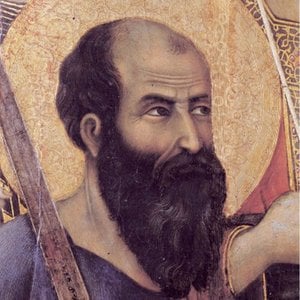
The Sienese Luminary: Duccio di Buoninsegna and the Dawn of a New Italian Vision
Duccio di Buoninsegna, geboren in Siena rond 1255, staat als een cruciale figuur tussen de Byzantijnse wereld en de opkomende artistieke gevoelens van Italië. Hoewel biografische details vaak schaars zijn – de man zelf vaak verdoemd tot de glans van zijn kunst – is zijn impact op de Sienese School en de koers van Italiaanse schilderkunst onmiskenbaar. Hij kwam op een tijdstip waarin religieuze iconografie diep geworteld was, maar een verlangen naar meer naturalisme en emotionele resonatie begon te broeien binnen artistieke kringen. Duccio was niet alleen een schilder; hij was een innovator die durfde heilige verhalen in te kleuren met menselijk gevoel, subtiel de focus verschuivend van rigide formaliteit naar een intimere verbinding tussen het goddelijke en het aardse rijk. Zijn vroege opleiding blijft enigszins mysterieus, hoewel speculatie suggereert dat hij invloeden heeft gehad van Florentijnse meesters, mogelijk directe blootstelling aan Byzantijnse kunst – misschien zelfs reizen naar Constantinopel zelf. Wat zijn opvoeding ook was, het kwam samen tot een unieke stijl die een tijdperk zou definiëren.
A Synthesis of Tradition and Innovation
Duccio’s artistieke ontwikkeling was geen plotselinge breuk met het verleden, maar eerder een gracieuze evolutie. Zijn vroege werken waren diep geworteld in Byzantijnse conventies: het weelderige gebruik van gouddraad om hemelverlichting te oproepen, gestileerde figuren met een etherische kwaliteit en een nauwkeurige aandacht voor religieuze symboliek. Echter, zelfs binnen deze gevestigde parameters begon Duccio subtiel elementen te introduceren die foreshadowden zijn latere innovaties. Hij experimenteerde met ruimtelijke arrangementen, hintend naar diepte waar eerder vlakheid heerste. Zijn kleurenpaletten, hoewel nog steeds levendig, kregen een nieuwe subtiliteit en harmonie. Meer belangrijk nog, begon hij figuren in te kleuren met een opkomende menselijkheid – een zachte kromming van de mond suggererend… Een zachte curve of the mouth suggesting a smile, a slight tilt of the head conveying contemplation. This wasn’t a rejection of Byzantine ideals but a refinement, an infusion of life into what had often been static representations.
He skillfully blended tradition and innovation, creating a style that was both reverent and remarkably fresh.
Masterpieces of Faith and Artistry
Twee werken staan als getuigenissen van Duccio’s genie: de *Rucellai Madonna* (1285) en, meest beroemd, de *Maestà* (1308-1311). De *Rucellai Madonna*, besteld voor een kapel in Florence, markeerde een significante verschuiving ten opzichte van conventionele Byzantijnse iconografie. Zijn compositie, hoewel nog steeds vasthoudend aan traditionele vormen, toonde een groter gevoel voor ruimtelijke organisatie en een meer naturalistische weergave van de Heilige Maria en Kind. Maar het *Maestà* – een monumentaal altaarstuk gecreëerd voor Siena Cathedral – heeft Duccio’s erfenis daadwerkelijk verankerd. Deze omvangrijke compositie bestaat uit tal van panelen die scènes uit het leven van de Heilige Maria en Christus weergeven, elk op zichzelf een miniatuur kunstwerk.
The Maestà is not merely a collection of paintings; it's a visual narrative, unfolding with breathtaking detail and emotional depth. Duccio’s meesterschap in licht en schaduw, zijn vermogen om complexe emoties over te brengen door subtiele gebaren en zijn innovatieve gebruik van perspectief komen hier samen in één, indrukwekkend kunstwerk. Naast deze monumentale stukken tonen werken zoals *Polyptych No. 28* zijn voortdurende vaardigheid in compositie en zijn nauwkeurige aandacht voor detail.
A Lasting Legacy: Shaping the Future of Italian Art
Duccio di Buoninsegna’s invloed strekte zich ver buiten zijn leven uit. Hij revolutioneerde Italiaanse schilderkunst, waardoor de weg vrij werd gemaakt voor de ontwikkeling van de Sienese School – een unieke artistieke traditie gekenmerkt door elegantie, verfijning en emotionele intensiteit. Zijn nadruk op naturalisme, ruimtelijke diepte en menselijkheid had direct invloed op latere generaties kunstenaars, niet alleen binnen Siena maar ook buiten. Hoewel Giotto vaak wordt toegeschreven aan het initiëren van de Renaissance-stijl, waren Duccio’s bijdragen even cruciaal, waardoor de artistieke innovaties werden gelegd die de 14e eeuw en daarna zouden definiëren. Zijn werken worden vandaag de dag in prominente musea over de hele wereld tentoongesteld, waardoor een blik wordt geworpen op een wereld waar geloof, kunst en menselijke emotie samenkomen met adembenemende schoonheid.
- Hij pioneered new approaches to depicting space and perspective.
- His paintings are renowned for their vibrant and harmonious color schemes.
- He infused his figures with a sense of humanity and emotional resonance.



 Bekijk op ware grootte
 Schakel over naar print
 Verstuur
 Delen
Delen
 Details bekijken
 Gids
Gids

 Download
 Vergelijkbare items
 Röntgenonderzoek
 Diavoorstelling
 Statistieken


 Lees meer






































 De optie voor glas is alleen beschikbaar bij een formaat kleiner dan 110 cm.