Bekijk op ware grootte Bekijk in AR Schakel over naar print Schakel over naar digitale afbeeldingen Verstuur
Details bekijken Gids Toevoegen aan favorieten Download Vergelijkbare items Röntgenonderzoek Diavoorstelling Statistieken

Birth of Christ

Discover Paolo Uccello's stunning 1443 stained glass 'Birth of Christ'. Explore the Early Renaissance masterpiece, intricate details & innovative perspective.

Paolo Uccello (1397-1475): Florentijnse Renaissance meester van perspectief & dynamische vliegevelden zoals San Romano. Ontdek zijn innovatieve kleurgebruik, licht en wiskundige principes.

Handgemaakte olieverfreproductie

Met de hand geschilderd in olieverf op canvas in uw gewenste maat en lijst, op bestelling gemaakt door onze kunstenaars. ( Schakel over naar print Schakel over naar digitale afbeeldingen)

P118B $10
P118H $10
P118W $10
P438Z $10
P508JH $12
P508YH $12
P805H $10
P805Z $10
P919BZ $10
P919G $10
P919XJ $10
P959ZH $10
P968JZ $12
W106C $8
W218G $10
W218JH $8
W218Y $10
W307PJ $10
W316G $10
W316PJ $8
W316Y $10
W398PJ $8
W4111J $10
W500HY $15
W500JH $15
W692G $12
W849H $8
W940BG $15
W953PJ $8

Standaardformaat
op maat gemaakt
CM
INCH

Kies uit onze vooraf ingestelde maten die overeenkomen met de originele verhoudingen van het kunstwerk.

breedte
hoogte

U kunt uw eigen afmetingen invoeren om in een specifieke lijst of ruimte te passen. Als de door u gekozen maat niet overeenkomt met de verhoudingen van het originele beeld, zullen we het kunstwerk bijsnijden of het schilderij uitbreiden met extra handgeschilderde elementen. Een digitale mockup wordt ter goedkeuring naar u verzonden voordat de productie begint.
Houd er rekening mee dat de preview op het scherm niet de werkelijke uitsnede of uitbreiding weergeeft. Alleen de mockup toont de uiteindelijke compositie nauwkeurig.
Hoewel aangepaste afmetingen mogelijk zijn, raden we aan een maat uit de vooraf gedefinieerde lijst te selecteren om de originele verhoudingen te behouden.

Voorbeelden van wat aangepast kan worden: Vervang het gezicht met een eigen foto; Voeg een huisdier toe (bijv. vervang de kat door een hond); Verwerk een verborgen boodschap in de achtergrond; Wijzig het landschap of andere elementen in de achtergrond.
Na de bestelling zal het team van WahooArt.com per e-mail contact opnemen met de klant voor instructies en een mockup-voorbeeld sturen.

Wereldwijde levering () binnen 3 tot 4 weken in plaats van de standaard 5 weken. (22 september). Zonder concessies aan de kwaliteit.

why_choose_icon
Gratis wereldwijde expressverzending
why_choose_icon
Hoogwaardig linnen canvas
why_choose_icon
Volledige verzendverzekering
why_choose_icon
Garantie op terugbetaling van invoerrechten
why_choose_icon
Garantie op exacte kleurweergave
why_choose_icon
Retourbeleid van 100 dagen (alleen bij defecten)
why_choose_icon
100% Geld-terug-garantie
why_choose_icon
Korting bij meerdere afnames

Totaalprijs

$ 272

reproduction

Birth of Christ

Reproductiemethode

Formaat reproductie

-

Totaalprijs

$ 272

Belangrijkste kenmerken

  • Artistic style: Idiosyncratic
  • Title: Birth of Christ
  • Subject or theme: Nativity of Jesus
  • Notable elements or techniques: Perspective, color
  • Artist: Paolo Uccello
  • Medium: Stained glass

Kunstquiz

Er is slechts één goed antwoord op elke vraag.

Vraag 1:
In what year was Paolo Uccello commissioned to create the stained glass window depicting the Birth of Christ?
Vraag 2:
What is a defining characteristic of Paolo Uccello's artistic style, as highlighted in his biography?
Vraag 3:
Based on the image description, what is a dominant color used in the stained glass window?
Vraag 4:
Paolo Uccello initially trained under which renowned sculptor?
Vraag 5:
Approximately how many figures are depicted in the stained glass window scene of the Birth of Christ?

A Celestial Vision in Glass: Paolo Uccello’s Birth of Christ

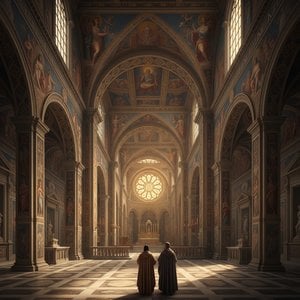
Paolo Uccello's “Birth of Christ,” originally conceived as a stained glass window for the Florence Cathedral in 1443, is not merely a depiction of a sacred event; it’s a testament to the burgeoning Renaissance fascination with perspective, geometry, and the very act of seeing. This intricate panel, now largely experienced through reproductions, offers a captivating glimpse into Uccello's unique artistic world – one where mathematical precision dances with narrative storytelling. The scene unfolds with a gentle vibrancy, dominated by rich blues that evoke both the solemnity of the night and the divine presence illuminating the stable. Thirteen figures are carefully arranged within the circular frame, each possessing a distinct character and contributing to the overall sense of reverent awe. Mary, central to the composition, is shown in the act of giving birth, surrounded not only by Joseph but also by attending figures and celestial angels, all rendered with delicate detail despite the limitations inherent in the stained glass medium.

The Geometry of Faith: Uccello’s Pioneering Perspective

To understand “Birth of Christ,” one must appreciate Paolo Uccello's singular obsession. He wasn’t simply interested in *representing* reality, but in understanding its underlying structure. Vasari famously recounts how Uccello would lose sleep wrestling with the principles of perspective, striving to achieve a perfect illusion of depth on a two-dimensional surface. While not employing linear perspective as rigorously as later Renaissance masters, this window demonstrates his early explorations – a subtle attempt to create spatial relationships and guide the viewer’s eye through the scene. The arrangement of figures, their positioning relative to one another, and the implied architectural elements all contribute to this effect. This wasn't merely technical exercise; for Uccello, it was a way to elevate the sacred narrative, imbuing it with a sense of order and divine harmony. He believed that mathematical principles were inherent in God’s creation, and thus, by employing them in his art, he was drawing closer to understanding the divine.

Symbolism Woven in Light

Beyond its technical innovations, “Birth of Christ” is rich with symbolic meaning. The choice of blue, a color traditionally associated with the Virgin Mary and representing heaven, dominates the palette, creating an atmosphere of spiritual transcendence. The inclusion of numerous angels underscores the celestial significance of the event, while the attentive figures surrounding Mary emphasize the communal aspect of faith. Even Uccello’s characteristic fondness for depicting animals – a detail noted by Vasari – finds expression here, subtly reminding us of the natural world witnessing this miraculous birth. The circular format itself, reminiscent of a halo or divine aura, reinforces the sacred nature of the scene. The stained glass medium further enhances these symbolic layers; as light passes through the colored glass, it transforms the image into something ethereal and otherworldly, evoking the radiant glow of faith.

A Legacy in Reproduction

Though the original window suffered damage over time, its enduring beauty continues to inspire. Today, high-quality hand-painted reproductions allow art lovers to experience Uccello’s vision firsthand. These meticulously crafted replicas capture not only the vibrant colors and intricate details of the original but also the emotional resonance that makes “Birth of Christ” such a compelling work of art. Whether adorning a sacred space or gracing a private collection, this piece serves as a powerful reminder of the Renaissance spirit – a time when faith, reason, and artistic innovation converged to create works of lasting beauty and profound meaning.


Biografie van de kunstenaar

A Florentine Visionary: The Life and Art of Paolo Uccello

Paolo Uccello, geboren Paolo di Dono in 1397, midden in de heuvels rond Florence, blijft een van de meest fascinerende en enigmatische figuren van het vroege Renaissance. Zijn bijnaam – “Uccello” – ‘vogel’ – hint naar een speelse natuur en een artistieke neiging tot het weergeven van de vogelwereld, maar verbergt een geest die diep betrokken is bij de opkomende intellectuele stromingen van zijn tijd. Hij was niet alleen een schilder; hij was een pionier, een wiskundige van het doek, strevend naar de geheimen van visuele ruimte en deze te vertalen in betoverende kunstwerken. Zijn vader, Dono di Paolo, oefende zowel de beroepen van barbier-chirurg als handelaar uit, terwijl zijn moeder, Antonia, afkomstig was uit een Florentijnse adellijke familie – een erfgoed dat hem mogelijk zowel een praktische gevoeligheid als een waardering voor verfijnde esthetiek meebracht. Van 1412 tot 1416 bracht Uccello zijn vormende jaren door onder de begeleiding van Lorenzo Ghiberti, wiens werkplaats een broeinest was van artistische innovatie, gericht op het creëren van de prachtigste bronzen deuren voor Florence’s Baptisterium. Deze vroege blootstelling introduceerde hem in de heersende Gotiek, met zijn nadruk op decoratieve elegantie en narratieve helderheid, maar ontketende tegelijkertijd een verlangen om daarbuiten te gaan.

The Pursuit of Perspective: A Mathematical Mind at Play

Uccello’s artistieke ontwikkeling was niet alleen gericht op het beheersen van techniek; het werd gedreven door een onverzadigbare nieuwsgierigheid naar de onderliggende principes die perceptie regeren. Hij raakte verzonken in wiskunde, met name geometrie en perspectief, niet als abstracte disciplines maar als hulpmiddelen om een ​​echtere weergave van de werkelijkheid te ontlokken. Hoewel Filippo Brunelleschi vaak wordt toegeschreven aan het ontdekken van lineair perspectief, was Uccello een van de eersten die dit systematisch toepaste op schilderkunst, nauwkeurig verdwijningspunten en orthogonale lijnen berekende om een ​​illusie van diepte te creëren die eerder grotendeels afwezig was in kunst. Dit ging niet alleen om technische nauwkeurigheid; voor Uccello werd perspectief een middel tot het structureren van narratie, drama te verhogen en zijn composities een gevoel van orde en intellectuele ernst te geven. Zijn fascinatie was bijna obsessief, zoals beschreven door Giorgio Vasari, die Uccello omschreef als iemand die zich laat zien in de late uren van de nacht, verloren in contemplatie over verdwijningspunten en ruimtelijke relaties. Deze toewijding, hoewel soms als excentriek werd ervaren, heeft uiteindelijk de schilderkunst veranderd en het pad geëffend voor toekomstige generaties kunstenaars.

Masterpieces of Illusion: Key Works and Stylistic Traits

Uccello’s oeuvre, hoewel relatief klein, is gekenmerkt door een kenmerkende stijl die Gotische elegantie combineert met Renaissance-innovatie. The Battle of San Romano, een reeks van drie panelen besteld ter ere van een Florentijnse overwinning, staat als zijn meest beroemde prestatie. Deze schilderijen zijn niet alleen weergaven van oorlog; ze zijn dynamische composities vol met rondzwervende figuren, fragmentarisch harnas en dramatisch verschoven lansen – allemaal weergegeven in levendige kleuren en gerangschikt volgens nauwkeurig berekende perspectief. The Birth of the Virgin toont Uccello’s beheersing van lineair perspectief, waardoor een overtuigende illusie van diepte ontstaat in een beperkte ruimte, terwijl zijn St George and the Dragon een opvallend beeld weergeeft van de legendarische heilige, gekenmerkt door felle kleuren en gestileerde vormen. Zelfs in werken zoals *The Flood and the Ark*, onderdeel van de fresco’s in de Santa Maria Novella, toont Uccello’s fascinatie met architectonisch detail en complexe composities zich duidelijk. Zijn stijl onthult consequent:
  • Een levendige palet en een felle kleurgebruik.
  • Een nadruk op lineair perspectief, vaak tot het uiterste gedreven voor dramatische effecten.
  • Gestileerde figuren en decoratieve patronen die herinnering roepen aan Gotische kunst.
  • Een diepe fascinatie met geometrische vormen en ruimtelijke relaties.

Legacy and Influence: A Lasting Impact on Art History

Paolo Uccello’s bijdrage aan de Renaissance gaat verder dan zijn individuele schilderijen. Zijn baanbrekende verkenning van perspectief heeft het pad van kunstgeschiedenis fundamenteel veranderd, invloed uitsgierend op talloze kunstenaars die na hem kwamen. Albrecht Dürer, de beroemde Duitse printmaker en schilder, werd diep beïnvloed door Uccello’s werk, en verdiepte zich in het bestuderen van perspectief en integreerde deze principes in zijn eigen artistieke praktijk. Hoewel Uccello’s stijl gedurende zijn hele carrière enigszins excentriek bleef – een uniek mengsel van Gotische verfijning en Renaissance-innovatie – heeft zijn baanbrekende benadering van ruimte en vorm de kunstgeschiedenis voorgoed veranderd. Hij stierf in Florence in 1475, nalatend niet alleen prachtige schilderijen maar ook intellectuele nieuwsgierigheid en artistieke moed. Zijn werk inspireert nog steeds bewondering en waardering, herinnerend ons dat ware kunst niet alleen wordt gezien, maar ook begrepen wordt.

Paolo Uccello

Paolo Uccello

1397 - 1475 , Italië

Snelle feiten

  • Artistic Movement Or Style: Vroege Renaissance
  • Artists Or Movements Influenced By This Artist:
    • Dürer
    • Renaissance
  • Artists Who Influenced This Artist:
    • Ghiberti
    • Donatello
  • Date Of Birth: 1397
  • Date Of Death: 1475
  • Full Name: Paolo Uccello
  • Nationality: Italiaans
  • Notable Artworks:
    • San Romano
    • Verloss van de Maagd
  • Place Of Birth: Pratovecchio, Italië
Ontdek kunstwerken georganiseerd op thema, stijl en kenmerk.