VoorvertoningVoorvertoning Bekijk in ARBekijk in AR Switch to Print Switch to PrintBestel handgeschilderde reproductie Bestel handgeschilderde reproductie VerstuurVerstuur
Details bekijkenDetails bekijken Toevoegen aan favorieten Toevoegen aan favorieten DownloadDownload Vergelijkbare itemsVergelijkbare items RöntgenonderzoekRöntgenonderzoek DiavoorstellingDiavoorstelling StatsStats

Annunciation

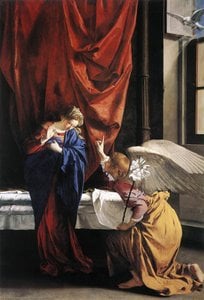
Witness the Annunciation by Domenico Beccafumi, a captivating Baroque masterpiece showcasing divine grace and purity. Explore rich colors, dramatic lighting & intricate detail.

Domenico Beccafumi (1486-1551) was een Sienese schilder die bekend staat om zijn innovatieve Mannerisme stijl – gekenmerkt door dramatische emotie en vervormde figuren, vooral in monumentale fresco's zoals 'De Aankondiging' en 'Het Laatste Avondmaal'.

Koop een digitale afbeelding in hoge resolutie met verbeterde kwaliteit, die veel superieur is aan de online voorvertoning.

Elk bestand wordt met uiterste precisie voorbereid door onze interne specialisten, met behulp van geavanceerde tools en deskundige handmatige retouche. Wij garanderen dat elke afbeelding een uitzonderlijke helderheid, nauwkeurige kleurweergave en verfijnde details bezit.

Het uiteindelijke bestand wordt binnen 72 uur per e-mail geleverd, geoptimaliseerd voor direct gebruik in professionele, redactionele en printomgevingen. Dit is dezelfde kwaliteit waarop vooraanstaande designstudio's, uitgevers en galerieën vertrouwen.

Digitale afbeeldingen

Download een bestand met hoge resolutie voor persoonlijke weergave, afdrukken en creatieve projecten. (Switch to Print Switch to PrintBestel handgeschilderde reproductie Bestel handgeschilderde reproductie)

Totaalprijs

$ 24,90

Inbegrepen bij elke bestelling van een digitale afbeelding

Professionele digitale levering, gegarandeerd

Wanneer u kiest voor WahooArt.com, ontvangt u niet alleen een afbeelding – u krijgt een professioneel verbeterd digitaal kunstwerk, met precisie vervaardigd en voorzien van een tevredenheidsgarantie. Dit is alles wat automatisch bij uw bestelling is inbegrepen:

shipping_icon
Snelle levering per e-mail

Uw hoogwaardige digitale afbeeldingsbestand wordt binnen 72 uur na bestelling naar u gemaild – klaar voor direct gebruik.

canvas_icon
AI-verbeterd digitaal bestand

Uw kunstwerk wordt professioneel geoptimaliseerd met behulp van geavanceerde AI-tools en handmatige bewerkingen, waardoor maximale details, helderheid en kleurnauwkeurigheid worden gegarandeerd.

insurance_icon
Gratis levenslange herlevering van digitale afbeeldingen

Je bestand per ongeluk verwijderd of kwijtgeraakt? Geen zorgen – we sturen het u op elk gewenst moment gratis opnieuw toe.

tax_icon
Geen invoerkosten – nooit

Geniet direct van uw kunstwerk zonder invoerrechten, belastingen of verzendkosten – digitale downloads zijn altijd belastingvrij.

color_icon
Garantie op kleurgetrouwheid

Met behulp van professionele hulpmiddelen en kleurbeheer zorgen wij ervoor dat uw digitale afbeelding de originele kleuren zo nauwkeurig mogelijk weergeeft.

return_icon
100 dagen tevredenheidsgarantie

Als u niet tevreden bent met uw digitale afbeelding, passen wij deze aan of storten wij 100% terug binnen 100 dagen - zonder vragen te stellen.

guarantee_icon
100% Geld-terug-garantie

Niet tevreden? Ontvang een volledige terugbetaling binnen 100 dagen na ontvangst van uw digitale bestand - zonder vragen te stellen.

discount_icon
Korting bij grote bestellingen

Koop 3 afbeeldingen, bespaar 10% - Koop 5, bespaar 15% - Koop 10+, bespaar 20%. Ideaal voor creatieve projecten, galerieën en bureaus.

Snelle feiten

  • Medium: Oil painting
  • Artistic style: Baroque
  • Notable elements or techniques:
    • Dramatic lighting
    • Rich colors
    • Dynamic composition
  • Movement: Renaissance-Mannerism
  • Influences: Sienese school of painting
  • Title: Annunciation

Kunstquiz

Er is slechts één goed antwoord op elke vraag.

Vraag 1:
What artistic style best characterizes Domenico Beccafumi’s ‘Annunciation’?
Vraag 2:
The composition of the artwork primarily utilizes what geometric structure to guide the viewer's eye?
Vraag 3:
What symbolic meaning is most directly associated with the flowers presented by the angel in the artwork?
Vraag 4:
Based on the description, what material is primarily used to create this artwork?

A Vision of Divine Announcement: Domenico Beccafumi's "Annunciation"

This captivating artwork presents a scene steeped in Christian theology – the Annunciation. It depicts the pivotal moment when the Archangel Gabriel announces to the Virgin Mary that she will conceive and bear Jesus, the Son of God. Painted by Domenico di Pace Beccafumi, one of the last significant figures of the Sienese school, this piece offers a unique perspective on a universally recognized biblical narrative.

Style & Technique: A Provincial Mannerism

Beccafumi’s style is characterized as provincial Mannerism. Unlike the more refined and classical approaches prevalent in Florence at the time, Beccafumi's work retains a distinct medieval sensibility. The painting employs oil on canvas or wood panel – traditional materials for the period – allowing for rich pigment application and subtle blending. Notice the dramatic use of light and shadow, a hallmark of Baroque influence even within this Mannerist context. Strong highlights illuminate Mary’s face and garments, creating a focal point while darker tones define the richly decorated architectural setting. The perspective is intentionally flattened, contributing to a sense of depth through receding elements and atmospheric haze. The brushwork reveals texture and volume, adding dynamism to the scene.

Symbolism & Composition: A Pyramid of Grace

Beyond its narrative function, the artwork is rich in symbolic detail. The flowers presented by the angel are traditional symbols of purity and humility, qualities associated with Mary. The angel himself embodies divine grace and serves as a messenger of God’s will. The composition itself is carefully structured around a pyramidal form, with Mary at the base and the angel positioned above her, guiding the viewer's eye upwards towards the heavens. This arrangement reinforces the hierarchical relationship between humanity and the divine. Observe how lines are used to define not only the architecture – arches, columns, drapery – but also to suggest movement in the flowing robes of both figures and the angel’s wings.

Historical Context & Beccafumi's Legacy

Domenico di Pace Beccafumi (1486-1551) was a key figure within the Sienese artistic tradition, which had historically rivaled Florence. His work represents a fascinating bridge between the Renaissance and Mannerism, retaining elements of medieval eccentricity while incorporating some Baroque dramatic flair. He stands out for his unique style that deviates from the dominant trends in Florentine art, showcasing a provincial quality marked by emotional intensity and a non-linear approach to perspective. Beccafumi’s “Annunciation,” like much of his oeuvre, offers a glimpse into a distinct artistic vision – one that celebrates both religious devotion and individual expression within the context of 16th-century Italy.


Kunstenaarsbiografie

A Sienese Visionary: The Life and Art of Domenico Beccafumi

Domenico di Pace Beccafumi, a name that resonates less immediately than those of his Florentine contemporaries, nonetheless occupies a pivotal position in the narrative of Italian Renaissance art. Born around 1486 in the small Tuscan town of Montaperto, near Siena, Beccafumi’s artistic journey was one of remarkable development, culminating in a style that bridged the High Renaissance and the burgeoning complexities of Mannerism. His story isn't simply about technical skill; it is about a deeply individual vision—a sensibility steeped in the traditions of his Sienese heritage yet boldly reaching towards new expressive possibilities. His origins were humble: the son of Giacomo di Pace, a peasant who worked on the estate of Lorenzo Beccafumi, his talent was recognized by Lorenzo Beccafumi, who adopted him and provided for his initial artistic training with Mechero, a local Sienese artist. This early grounding in the Sienese school would prove foundational, even as he ventured beyond its established conventions. The Sienese tradition, already diverging from the classical ideals embraced elsewhere in Italy, fostered an environment where emotional intensity and decorative detail were valued, qualities that would become hallmarks of Beccafumi’s unique style.

Rome and the Forging of a Unique Style

Around 1509, Beccafumi journeyed to Rome, a transformative moment exposing him to the artistic ferment of the papal city. He encountered the groundbreaking works of Raphael and Michelangelo, absorbing their innovations in composition, anatomy, and dramatic expression. However, unlike many artists who sought to directly emulate these masters, Beccafumi synthesized these influences through his own distinct lens. He didn’t simply *copy* the Roman style; he filtered it through a pre-existing Sienese aesthetic—one characterized by a certain provincialism, an emphasis on decorative detail, and a lingering medieval sensibility. Upon returning to Siena, this synthesis began to manifest in a style increasingly his own. It was a style marked by irrationality, emotional intensity, and a captivating visual experience achieved through discordant colors and hallucinatory settings. His paintings weren’t merely representations of reality; they were explorations of inner states, imbued with a sense of unease and psychological depth. This departure from the harmonious balance of High Renaissance ideals signaled his embrace of Mannerism, though he remained distinctly apart from its more widespread trends. He skillfully blended the decorative elements and emotional intensity of the Sienese school with the emerging stylistic features of Mannerism—a fusion that would define his artistic legacy.

The Siena School’s Influence

Beccafumi's formative years were spent in Siena, where he absorbed the distinctive aesthetic sensibilities of the Sienese Renaissance. The city’s artistic environment prioritized expressive emotion and opulent ornamentation, shaping Beccafumi’s approach to painting and sculpture alike. This influence is particularly evident in his early works—particularly those executed before his journey to Rome—where a palpable sense of provincialism coexists with masterful technique. He honed his skills under Mechero, a respected Sienese artist who instilled in him the importance of meticulous observation and careful craftsmanship—values that would continue to guide his artistic endeavors throughout his career. The Siena School’s emphasis on narrative storytelling and symbolic representation profoundly impacted Beccafumi's artistic vision, informing his choice of subjects and shaping his compositional strategies.

A Roman Awakening

Around 1509, Beccafumi embarked upon a pivotal voyage to Rome—a pilgrimage that irrevocably altered the trajectory of his artistic development. He arrived at a time when Raphael and Michelangelo were reshaping the visual landscape of the papal city, pushing the boundaries of artistic innovation in terms of perspective, anatomy, and dramatic theatricality. Unlike many artists who sought to replicate these masters’ achievements verbatim, Beccafumi absorbed their stylistic breakthroughs through his own discerning gaze—a process that resulted in a synthesis uniquely his own. He didn't merely imitate Roman grandeur; he transformed it into something profoundly personal—a style characterized by unsettling distortions and hallucinatory color palettes that defied conventional expectations. This encounter with the titans of Renaissance art served as a catalyst for Beccafumi’s stylistic evolution, propelling him toward Mannerism and establishing him as one of its most distinctive voices.

Major Achievements and Artistic Legacy

Domenico Beccafumi achieved considerable renown during his lifetime, securing commissions from prominent patrons—both ecclesiastical and aristocratic—and producing an impressive oeuvre encompassing painting, sculpture, mosaic design, and printmaking. Among his most celebrated masterpieces are the frescoes adorning the Oratory of St. Benedict in Siena—a testament to his narrative prowess and expressive mastery. The Trinity Triptych, housed in the Pinacoteca Nazionale di Siena, exemplifies Beccafumi’s ability to convey religious devotion with both grandeur and intimacy—a feat accomplished through masterful use of color and composition. Similarly, *The Annunciation*, also at the Pinacoteca Nazionale, showcases his distinctive stylistic sensibilities—characterized by a subtle interplay of light and shadow and an unsettling psychological depth. However, Beccafumi’s most ambitious undertaking was his direction of the pavement for Siena Cathedral between 1517 and 1544—a monumental project that demanded extraordinary technical skill and artistic vision. He skillfully employed innovative techniques to depict biblical narratives with unprecedented emotional intensity—a bold departure from the prevailing stylistic conventions of the time. Domenico Beccafumi died in Siena in 1551, marking a symbolic end to the city’s long and distinguished tradition of painting. His enduring legacy resides not merely in his artistic output but also in his pioneering role as one of Mannerism's foremost practitioners—a figure who irrevocably transformed the aesthetic landscape of Italy and continues to inspire admiration for his singular creative spirit.

domenico di pace beccafumi

domenico di pace beccafumi

1486 - 1551 , Italië

Belangrijkste feiten

  • Artistic Movement Or Style: Mannerisme
  • Artists Who Influenced This Artist:
    • Rafael
    • Michielangelo
  • Date Of Birth: c. 1486
  • Date Of Death: May 18, 1551
  • Full Name: Domenico di Pace Beccafumi
  • Nationality: Italiaans
  • Notable Artworks:
    • Trinity Triptych
    • De Aankondiging
    • Transit van de Maagd Maria
  • Place Of Birth: Montaperto, Italië