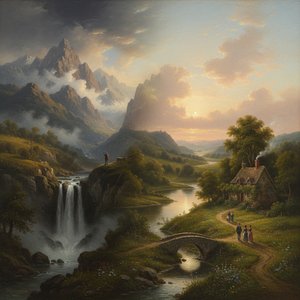
Voorvertoning Bekijk in AR Bestel handgeschilderde reproductie Schakel over naar digitale afbeeldingen Verstuur
Details bekijken Gids Toevoegen aan favorieten Download Vergelijkbare items Röntgenonderzoek Diavoorstelling Q&A Statistieken

De Abtei im Eichwald

Dompel jezelf onder in het aangrijpende landschap van Caspar David Friedrichs 'De Abtei im Eichwald'. Een spookachtige romantische kunstwerk over eenzaamheid en verval, gevangen in prachtige compositie en symboliek.

Caspar David Friedrich (1774-1840): Duitse Romantiek kunstenaar die prachtige landschappen schilderde & symbolische kunst verkende, geïnspireerd door natuur en spiritualiteit. Een pionier van zijn tijd.

Giclée / Kunstafdrukken

Giclée- of canvasafdruk van museumkwaliteit met een snelle productie en flexibele afwerkingsmogelijkheden. ( Bestel handgeschilderde reproductie Schakel over naar digitale afbeeldingen)

Corner sample of the P118B picture frame: gegoten polystyreen, 5 cm wide and 3 cm thick
P118B €10
Corner sample of the P118H picture frame: gegoten polystyreen, 5 cm wide and 3 cm thick
P118H €10
Corner sample of the P118W picture frame: gegoten polystyreen, 5 cm wide and 3 cm thick
P118W €10
Corner sample of the P438Z picture frame: gegoten polystyreen, 5.5 cm wide and 3.5 cm thick
P438Z €10
Corner sample of the P508JH picture frame: gegoten polystyreen, 7 cm wide and 3.5 cm thick
P508JH €12
Corner sample of the P508YH picture frame: gegoten polystyreen, 7 cm wide and 3.5 cm thick
P508YH €12
Corner sample of the P805H picture frame: gegoten polystyreen, 5 cm wide and 3.5 cm thick
P805H €10
Corner sample of the P805Z picture frame: gegoten polystyreen, 5 cm wide and 3.5 cm thick
P805Z €10
Corner sample of the P919BZ picture frame: gegoten polystyreen, 7 cm wide and 3.5 cm thick
P919BZ €10
Corner sample of the P919G picture frame: gegoten polystyreen, 7 cm wide and 3.5 cm thick
P919G €10
Corner sample of the P919XJ picture frame: gegoten polystyreen, 7 cm wide and 3.5 cm thick
P919XJ €10
Corner sample of the P959ZH picture frame: gegoten polystyreen, 5 cm wide and 3 cm thick
P959ZH €10
Corner sample of the P968JZ picture frame: gegoten polystyreen, 6 cm wide and 4 cm thick
P968JZ €12
Corner sample of the W106C picture frame: massief hout, 5 cm wide and 3 cm thick
W106C €8
Corner sample of the W218G picture frame: massief hout, 5 cm wide and 3 cm thick
W218G €10
Corner sample of the W218JH picture frame: massief hout, 5 cm wide and 3 cm thick
W218JH €8
Corner sample of the W218Y picture frame: massief hout, 5 cm wide and 3 cm thick
W218Y €10
Corner sample of the W307PJ picture frame: massief hout, 6 cm wide and 3 cm thick
W307PJ €10
Corner sample of the W316G picture frame: massief hout, 6 cm wide and 3 cm thick
W316G €10
Corner sample of the W316PJ picture frame: massief hout, 6 cm wide and 3 cm thick
W316PJ €8
Corner sample of the W316Y picture frame: massief hout, 6 cm wide and 3 cm thick
W316Y €10
Corner sample of the W398PJ picture frame: massief hout, 5 cm wide and 3 cm thick
W398PJ €8
Corner sample of the W4111J picture frame: massief hout, 6.5 cm wide and 3.5 cm thick
W4111J €10
Corner sample of the W500HY picture frame: massief hout, 7 cm wide and 5 cm thick
W500HY €15
Corner sample of the W500JH picture frame: massief hout, 7 cm wide and 5 cm thick
W500JH €15
Corner sample of the W692G picture frame: massief hout, 8 cm wide and 4 cm thick
W692G €12
Corner sample of the W849H picture frame: massief hout, 5 cm wide and 3 cm thick
W849H €8
Corner sample of the W940BG picture frame: massief hout, 7.5 cm wide and 4.5 cm thick
W940BG €15
Corner sample of the W953PJ picture frame: massief hout, 6 cm wide and 3.5 cm thick
W953PJ €8

Standaardformaat
op maat gemaakt
CM
INCH

Kies uit onze vooraf ingestelde maten die overeenkomen met de originele verhoudingen van het kunstwerk.

breedte
hoogte

Voer de gewenste breedte en hoogte in, passend bij uw lijst of muur. Een afdruk kan alleen worden ingekort en nooit groter worden gemaakt dan het origineel; een formaat met andere verhoudingen zal daarom een deel van de afbeelding verliezen. Wij sturen u een digitaal mockup ter goedkeuring voordat we tot drukwerk overgaan. De afbeelding op deze pagina toont niet de werkelijke uitsnede — dit is alleen te zien op het mockup.

Wereldwijde levering () binnen 2 weken in plaats van de standaard 4/5 weken. (30 oktober)

Gratis wereldwijde expressverzending
Hoogwaardig linnen canvas
Volledige verzendverzekering
Garantie op terugbetaling van invoerrechten
Garantie op exacte kleurweergave
Retourbeleid van 100 dagen (alleen bij defecten)
100% Geld-terug-garantie
Korting bij meerdere afnames

Totaalprijs

€ 61

De Abtei im Eichwald

Giclée / Kunstafdrukken

Afmetingen reproductie

-

Eindtotaal

€ 61

Snelle feiten

  • Artistic style: Symbolisch
  • Subject or theme: Solitude; natuurlijke schoonheid; tijdloze elegantie.
  • Medium: Olieverf op doek
  • Artist: Caspar David Friedrich
  • Dimensions: 110 x 171 cm
  • Location: Alte Nationalgalerie, Berlijn

Kunstquiz

Er is slechts één goed antwoord op elke vraag.

Vraag 1:
¿Quién pintó "La Abadia en el Eichwald"?
Vraag 2:
¿En qué movimiento artístico pertenece esta obra?
Vraag 3:
¿Cuál es el tema principal representado en la pintura?
Vraag 4:
¿Qué técnica pictórica predominó en la creación de "La Abadia en el Eichwald"?
Vraag 5:
¿Qué simboliza la presencia de los árboles desnudos en el paisaje?

Het Abbaye in het Eichwald

Een aangrijpende reis terug naar de Romantiek met een meesterwerk van Caspar David Friedrich. Deze afbeelding vangt een verlaten abdij omgeven door skeletachtige eikenbomen onder een gedempte hemel, waardoor een gevoel van eenzaamheid en melancholie wordt opgewekt. Een krachtig beeld dat een bewijs is van Friedrich’s vermogen om diepe emotionele reacties over te brengen via zijn landschappen – een kunstwerk dat je ogen zal laten spreken. ### Analyse van de Compositie en Techniek Friedrich’s zorgvuldige compositie trekt de aandacht van de kijker naar het centrale abdij, geflankeerd door symmetrisch geplaatste bomen. Het gebruik van sterke verticale lijnen creëert door de stammen van de bomen contrasteert met horizontale lijnen van de grond, waardoor een gevoel van diepte en balans wordt verkregen. De gedempte kleurpalet, gedomineerd door tinten van grijs, bruin en zwart, wordt subtiel verlicht door het zwakke licht van de ondergaande zon, waardoor een spookachtige kwaliteit aan het beeld wordt toegevoegd. Een prachtige combinatie van licht en schaduw die essentieel is voor het creëren van een gevoel van ruimte en atmosfeer. De kunstenaar heeft gekozen voor een stijlvolle manier om zijn visie weer te geven, waarbij aandacht wordt besteed aan zowel technische precisie als emotionele expressie. ### Historische Context en Symbolisme Gemaakt tussen 1809 en 1810, dit kunstwerk weerspiegelt Friedrich’s contemplatieve benadering van landschapschilderkunst. De verlaten abdij en skeletachtige bomen symboliseren thema's als isolatie, mortaliteit en de voortgang van de tijd. De kleine figuren voor het oog suggereren een reis of pelgrimstocht, waardoor een narratief element dat aanmoedigt kijkers om over hun eigen paden te reflecteren wordt toegevoegd. Friedrich’s werk is een directe reactie op de filosofische ideeën van zijn tijd en draagt bij aan het begrijpen van de emotionele en spirituele wereld waarin hij actief was. Een kunstwerk dat meer biedt dan alleen een prachtige natuurlijke scène; het nodigt uit tot zelfreflectie over onze plaats in het universum. ### Emotionele Impact en Inspiratie De emotionele impact van dit kunstwerk is enorm, waardoor een gevoel van rustige contemplatie en ernstige schoonheid wordt opgewekt. Het dient als een krachtige herinnering aan natuur’s blijvende aanwezigheid naast menselijke vluchtigheid. Of je nu een kunstliefhebber bent, verzamelaar of interieurontwerper – dit stuk zal een tijdloze elegantie aan elke ruimte geven, waardoor inspiratie en gesprekken worden aangemoedigd. Laat je laten meevoeren door de prachtige melancholie van Friedrich’s kunst en laat het jouw huisdecoratie verbeteren! Een kunstwerk dat je blijft fascineren lange nadat je het hebt bekeken. ### Een Uitstekende Reproduktie voor Jouw Thuis Ervaar de aangrijpende schoonheid van Romantiek in jouw eigen woning met een hoogwaardige reproductie van dit iconische kunstwerk. Perfect voor iedereen die zijn interieur wil aanvullen met diepte en historische betekenis – een absolute aanrader voor elke kunstenthousiast! Laat je inspireren door de eenvoudige maar krachtige schoonheid van Friedrich’s stijl en breng een stuk geschiedenis naar binnen. Een prachtige manier om jouw huisdecoratie te verbeteren en een gevoel van sereniteit toe te voegen aan jouw dagelijks leven.

Veelgestelde vragen

Zijn de kleuren van "De Abtei im Eichwald" door Caspar David Friedrich levendig of gedempt?

De kleur van "De Abtei im Eichwald" heeft een verzadiging van Gedempt en een intensiteit van Monochroom.

Kan ik een röntgenopname van "De Abtei im Eichwald" door Caspar David Friedrich bekijken?

De Röntgenanalyse-pagina van "De Abtei im Eichwald" door Caspar David Friedrich is een interactieve viewer waarmee u door elf optische lagen van het kunstwerk kunt glijden, inclusief een weergave in röntgenstijl.

Welke sfeer straalt "De Abtei im Eichwald" uit?

"De Abtei im Eichwald" door Caspar David Friedrich wordt qua stemming beschreven als Mystiek. Deze classificatie kan helpen om het werk te laten aansluiten bij een bepaalde omgeving.


Biografie kunstenaar

A Solitary Vision: The Life and Art of Caspar David Friedrich

Born in the Baltic port city of Greifswald in 1774, Caspar David Friedrich’s life was steeped in a melancholic atmosphere that would profoundly shape his artistic vision. His early years were marked by loss – the deaths of his mother and siblings cast a long shadow, fostering a sensitivity to mortality and transience that became central themes in his work. Initially educated by his older brother Christian in drawing, Friedrich’s formal training began at the University of Leipzig, where he pursued both art and theology, though neither degree was completed. This dual interest – a fascination with the visual world alongside a deep spiritual questioning – would prove crucial to his development as an artist. Further studies in Copenhagen honed his technical skills, exposing him to landscape painting traditions that would serve as a foundation for his unique style, yet it was not imitation he sought but rather expression—a means of conveying inner emotional states through the language of nature.

The Birth of Romantic Landscape

Friedrich’s artistic journey wasn't merely about depicting scenery; it was about imbuing landscapes with profound symbolic meaning. He moved away from the meticulous detail favored by earlier artists, embracing a more personal and expressive approach. His paintings are characterized by an emphasis on the sublime – evoking feelings of awe, terror, and spiritual connection in the face of nature’s grandeur. The use of *Rückenfiguren*, figures seen from behind, became a signature element, inviting viewers to step into the scene and share in the contemplative experience. Natural elements like ancient trees, towering mountains, swirling fog, and crumbling ruins weren't simply picturesque details; they were potent symbols representing life’s cycles, spiritual longing, and the weight of history. His palette, often muted with blues, grays, and browns, further enhanced the mood of introspection and solemnity that pervades his work. He pioneered a way to depict landscapes not as mere views but as reflections of the human soul—a revolutionary concept for its time.

Iconic Works and Enduring Themes

Several paintings stand out as defining examples of Friedrich’s artistic achievement. “Abbey in the Oakwood” (1809-1810), a haunting image of a ruined churchyard enveloped by bare trees, speaks powerfully to themes of mortality and spiritual decay. The composition is deliberately sparse, emphasizing the desolate beauty of ruin and prompting reflection on the passage of time. “Wanderer Above the Sea of Fog” (c. 1818), arguably his most recognizable work, depicts a solitary man gazing out over a misty mountain landscape. This iconic image embodies the Romantic ideal of the individual confronting the vastness and mystery of existence—a figure dwarfed by nature yet simultaneously connected to it on a spiritual level. The Rückenfigur technique powerfully conveys this sense of contemplation and vulnerability. “Chalk Cliffs on Rügen” (1818) demonstrates Friedrich’s mastery of atmospheric effects, capturing the ethereal quality of dawn light filtering through fog-laden cliffs. It subtly evokes German national identity—a growing concern in the fragmented political landscape of early 19th-century Germany. Finally, “The Sea of Ice” (1824) presents a dramatic depiction of an Arctic wasteland, representing nature’s immense power and indifference to human fate. The painting's chilling realism underscores Friedrich’s fascination with confronting the sublime—the awe-inspiring beauty that simultaneously inspires terror and reverence.

Influences and Artistic Style

Friedrich drew inspiration from diverse sources, including Dutch Golden Age landscape painters like Jacob van Ruisdael, whose masterful use of light and atmosphere profoundly impacted his artistic sensibilities. He was also deeply influenced by the philosophical writings of Immanuel Kant, particularly Kant’s concept of transcendental idealism—the idea that our experience is shaped by innate mental structures rather than solely by sensory input. This intellectual framework informed Friedrich's belief in the importance of subjective perception and emotional expression as pathways to spiritual understanding. His artistic style is characterized by a deliberate simplification of form, prioritizing mood and symbolism over precise detail. He eschewed academic conventions, favoring instead a painterly technique that conveyed emotion through tonal gradations and textural variations—a radical departure from prevailing artistic trends.

Legacy and Rediscovery

Friedrich’s art achieved considerable renown during his lifetime, though it remained largely unrecognized for decades after his death in Dresden in 1840. However, he experienced a significant revival in the late 20th century, becoming widely celebrated as one of the most important figures in German Romanticism. His emphasis on subjective experience and emotional expression paved the way for later movements like Symbolism and Surrealism, influencing generations of artists who sought to explore the inner world through visual means. He didn’t simply paint what he saw; he painted what he *felt*, and it is this profound honesty that continues to captivate and inspire audiences today. His work stands as a testament to the enduring power of art to confront existential questions—to contemplate our relationship with nature, with God, and with ourselves—a timeless contribution to Western artistic heritage.

Caspar David Friedrich

Caspar David Friedrich

1774 - 1840 , Duitsland

Belangrijkste feiten

  • Artistic Movement Or Style: Romantiek
  • Artists Or Movements Influenced By This Artist:
    • Symbolisten
    • Surrealisten
  • Artists Who Influenced This Artist:
    • Nederlandse Meesters
    • J.C. Dahl
  • Date Of Birth: 5 september 1774
  • Full Name: Caspar David Friedrich
  • Nationality: Duits
  • Notable Artworks:
    • Abtei im Eichwald
    • Wanderer über dem Nebelmeer

    • Kreideklippen auf Rügens
    • Das Eissee
  • Place Of Birth: Greifswald, Duitsland
Ontdek kunstwerken georganiseerd op thema, stijl en kenmerk.