William Hogarth, 1697 – 1764

William Hogarth tapiai: 100 garsiausių kūrinių reitingas

Žymiausias William Hogarth tapas yra Pirmasis plokštė iš „Rake’s Progress“. Kartu su Plate šešėlis iš „Rake's Progress“ ir Gin Lane (1750) tai sudaro tris visai visus pažįstančius darbus. Mūsų kataloge yra 307 darbų autoriaus William Hogarth; žemiau pateiktos 100 daugiausia visame pasaulyje žiūrimų kūrinių, kiekvieno iš jų – su metai, muziejumi, kuriame jis saugomas, ir paaiškintu, kodėl jis svarbus.

Rangos vieta nulegiama pagal mūsų populiarumumo balas, kurį sudaro kiekvieno kūrinio paieškos, apsilankėjimai ir užsakėjimai. Atnaujinta spalis 2026. Kiekvieną šio puslapio šedevrą galite užsisakyti kaip muziejoriaus kokybės rankų darbo alievinę reprodukciją arba aukščiausios kokybės meninį spausdiną jūsų pasirinktu dydžiu.

William Hogarth portretas
William Hogarth · 1697 – 1764
Gedė · mirė
1697 – 1764, Londonas
Darbai mūsų kataloge
307
Labiausiai žinomi
Pirmasis plokštė iš „Rake’s Progress“
Daugiausia darbų yra
Sir John Soane's Museum

10 garsiausių William Hogarth paveikslų

Pirmasis plokštė iš „Rake’s Progress“ aut. William Hogarth
1

Pirmasis plokštė iš „Rake’s Progress“

Graviruotė

Scena: Žvalgmas į kūrybinį chaosą Pasinerkite į gyvybingą dailininko studijos energiją kartu su „Pirmąja plokšte iš „Rėkų Progreso““. Šis sudėtingas Viljamo Hogarto gravirtinis darbas įamžina pulsuojančią sceną, pilną veiklos ir smulkių detalių. Centre elegantiškai aprėstas vyras susitelkia į easel'yje (tvėrykle) esantį kūrinį, jam aplink – skrupčiai dirbantys arba bendraujantys人物. Kompozicija yra sodri interakcijų sluoksnių: nuo dailininko prie savo stalo iki moterų, diskutuojančių apie paveikslus, – taip sukuriamas dinamiškas bendradarbiavimo ir…

Plate šešėlis iš „Rake's Progress“ aut. William Hogarth
2

Plate šešėlis iš „Rake's Progress“

Graviruotė

Žvalgiu į XVIII amžiaus satyrą Pasinerkite į gyvą „Šeštąją iliustraciją iš kūrinio „Išgirtojo pažangos““ chaosą – meistrišką Vilmo Hogarto graviūrą. Ši sudėtinga juodai ir baltai sukonstruota scena įamžina pulsuojančią triukšmingo moteleio energiją, pateikdama ryškią XVIII amžiaus socialinio gyvenimo ir moralinės kritikos juodąją momentą. Kompozicija ir stilius Hogarto imzacinė stilistika ryškiai išsisk렵ia šioje detalioje kompozicijoje, kur kiekvienas veikėjas ir kiekvienas daiktas pasakoja savo istoriją. Monochrominė paletė sustiprina kontrastą bei gębę, traukdama…

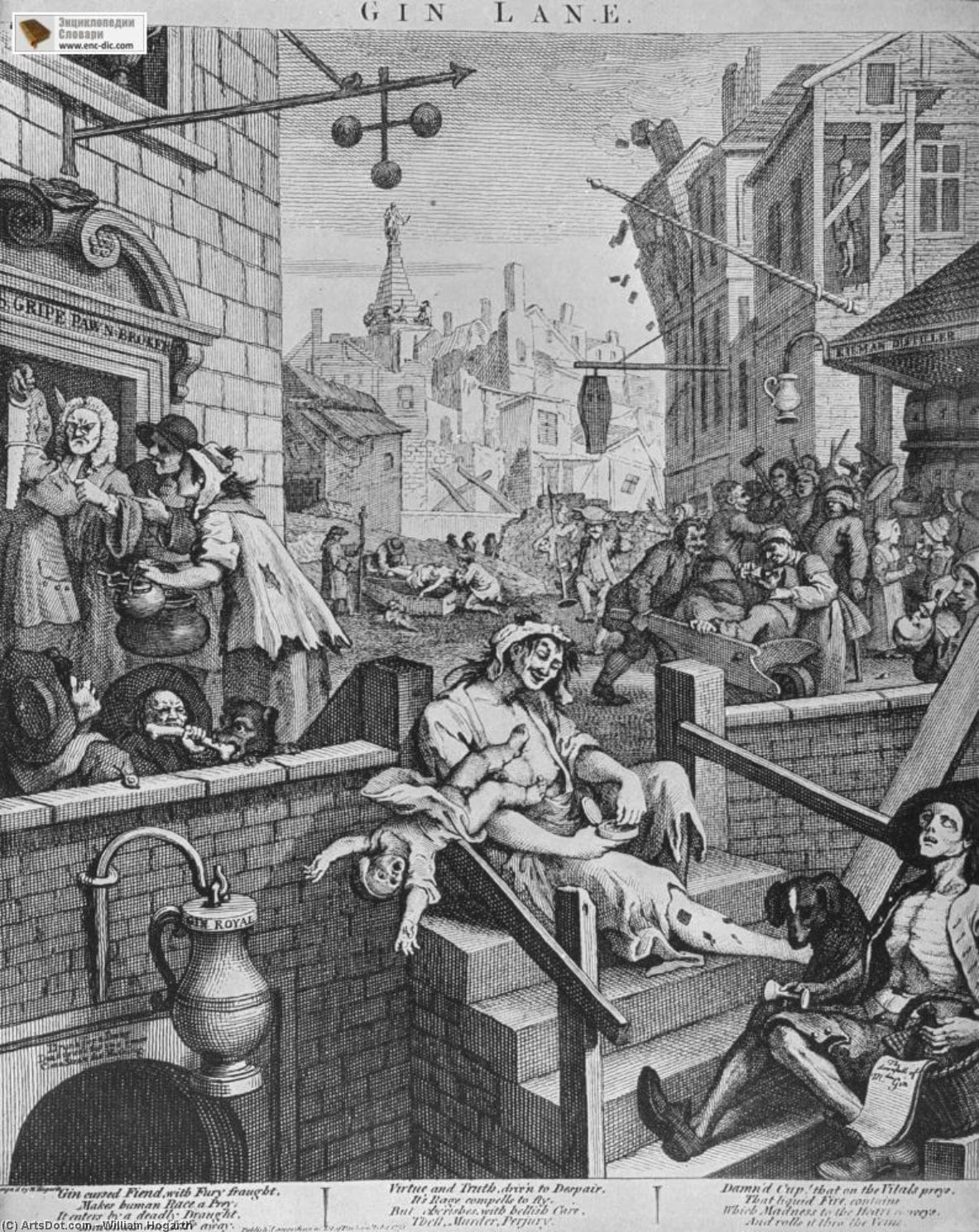
Gin Lane (1750) aut. William Hogarth
3

Gin Lane

1750 · Engraving

In the heart of 18th-century London, amidst the swirling fog and the growing shadows of social upheaval, William Hogarth captured a moment of profound human tragedy that continues to haunt the viewer centuries later. His masterpiece, Gin Lane, is far more than a mere engraving; it is a visceral, breathing chronicle of a city in the throes of moral and physical decay. Completed in 1751, this work serves as a…

The Marriage Contract (1745) aut. William Hogarth
4

The Marriage Contract

1745 · Acrylic On Canvas

A Window Into Georgian Society In the heart of 1745, William Hogarth captured more than a mere domestic arrangement; he froze a pivotal moment of social negotiation in "The Marriage Contract." This meticulously crafted tableau invites the viewer into a room thick with the palpable anxieties and lofty aspirations of Georgian England. As we gaze upon the central table where a man proposes to his prospective bride, we are not…

singular). Given it's a title:

Banketas (1755) aut. William Hogarth
5

singular). Given it's a title: Banketas

1755 · Aliejus ant drobės · Sir John Soane's Museum, London

A Revelrous Scene of 18th-Century Life: Unpacking William Hogarth’s *The Banquet* (1755) William Hogarth’s *The Banquet*, painted in 1755, is a vibrant and densely populated oil painting that offers a fascinating glimpse into the social customs of Georgian England. Measuring 101 x 127 cm, this large-scale work isn't merely a depiction of a feast; it’s a carefully constructed commentary on society, indulgence, and the often-chaotic nature of human interaction. Subject…

Šaltas, Nuoboda ir Mirtis ( scena iš Miltono) (1735) aut. William Hogarth
6

Šaltas, Nuoboda ir Mirtis ( scena iš Miltono)

1735 · Aliejus ant drobės · Tate Britain, Londras

1735 metais parašytas Viljamo Hogarto paveikslas „Šaltas, Nuoboda ir Mirtis“ yra kur kas daugiau nei tiesiog Johno Miltono epinėje poemijoje *Pamadotas* matoma iliustracija; tai kruopščiai sukurta moralinė alegorija, įtraukianti žiūrintį į posūkių, pasekmių ir amžino konflikto pasaulį. Šis ant drobės menamas aliejus, šiuo metu saugomas Londone, Tate Britain muziejuje, užima 74 x 61 cm ir suteikia neįtikėtinai jautrią įžvalgą į gilumines Hogarto supratimą apie Miltono temas – pagundų jėgą, mirties…

The Painter and his Pug (1745) aut. William Hogarth
7

The Painter and his Pug

1745 · Oil On Canvas · Tate Gallery, Londonas

A Portrait of Intimacy: William Hogarth’s ‘The Painter and his Pug’ Subject & Composition: This captivating 1745 portrait by William Hogarth offers a charmingly informal glimpse into the artist's personal life. It depicts Hogarth himself, seated and gazing directly at the viewer, accompanied by his beloved pug, Trump. The composition is remarkably balanced; Hogarth occupies the central space while Trump rests comfortably to his right, creating an intimate and relaxed…

The Suicide of the Countess aut. William Hogarth
8

The Suicide of the Countess

Oil On Canvas

William Hogarth's "The Suicide of the Countess," part of his renowned series "Marriage A-la-Mode," offers a stark and poignant commentary on the societal ills of 18th-century England. Created between 1743 and 1745, this painting serves as a powerful culmination to a narrative exploring the destructive consequences of marriages based on financial gain rather than genuine affection.

The Four Times of Day: Night (1738) aut. William Hogarth
9

The Four Times of Day: Night

1738 · Acrylic On Canvas · Cleveland Museum of Art, Klevlandas

William Hogarth's "The Four Times of Day: Night," painted in 1738, isn’t merely a depiction of a London street scene; it’s a meticulously crafted window into the social and moral landscape of eighteenth-century England. This remarkable work, now immortalized through WahooArt’s hand-painted reproductions, captures a moment of revelry – or perhaps reckless abandon – with an unparalleled level of detail and satirical observation that defines Hogarth's unique artistic legacy. The…

A Harlot's Progress: Quarrels with her Jewish Protector (1743) aut. William Hogarth
10

A Harlot's Progress: Quarrels with her Jewish Protector

1743 · Oil On Canvas · Ascott House, Leighton Buzzard

The room holds a sudden, sharp noise. A tea-table tilts, porcelain clatters, and the heavy weight of an argument settles over the fine fabrics. Mary, known as Moll Hackabout, moves with a violent intent, her arm a decisive line against the opulent interior. She kicks at the furniture to draw eyes away from the doorway, where a lover slips quietly into the shadows. A black serving boy stands near, a…

William Hogarth, paveikslai nuo 11 iki 100

Savitraukios (1757) aut. William Hogarth
#11

Savitraukios

1757 · National Portrait Gallery

1757 metais parašyta Williamo Hogartho Savitraukios atveria užburiantį langą į vieno svarbiausių britų menininkų gyvenimą ir kūrybinę praktiką. Šis aliejaus paveikslas ant drobės (45 x 42 cm) yra…

Užsisakyti rankinio kopijos tapybą →
Soliciting Votes (1754) aut. William Hogarth
#12

Soliciting Votes

1754 · Sir John Soane's Museum

William Hogarth's "Soliciting Votes," completed in 1754, stands as a masterful distillation of Enlightenment satire and a poignant reflection on the burgeoning political landscape of London. More than…

Atneškite į savo namus →
The heir (1735) aut. William Hogarth
#13

The heir

1735 · Sir John Soane's Museum

William Hogarth’s “The Heir,” completed in 1735, is more than simply a depiction of a domestic scene; it’s a meticulously crafted social commentary rendered with the precision and…

Užsisakyti rankinio kopijos tapybą →
South Sea Scheme aut. William Hogarth
#15

South Sea Scheme

In the swirling currents of 1721 London, amidst a fever of unbridled greed and financial delirium, William Hogarth unleashed a visual critique that would forever etch itself into…

Atneškite į savo namus →
Marriage à la Mode (1743) aut. William Hogarth
#16

Marriage à la Mode

1743 · National Gallery

Didžiojamėje XVIII amžiaus britų meno audinyje nedaug kūrinių pasižymi tokia aštrija prota ir naratyviniu gyliu, kokius turi Viliamo Hogartho Marriage à la Mode. Susik રચyta 1743 metais, ši…

Užsisakyti reprodukciją →
Hudibras aut. William Hogarth
#19

Hudibras

William Hogarth's *Hudibras*, specifically the frontispiece and related engravings from Samuel Butler’s satirical poem, offers far more than a simple illustration; it’s a meticulously crafted social commentary frozen…

Atneškite į savo namus →
Lankas pas šarlataną gydovą (1745) aut. William Hogarth
#20

Lankas pas šarlataną gydovą

1745

Gyvybingame, tačiau aštriame XVIII amžiaus Londono pasaulyje Williamo Hogartho kūrinys „Lankas pas šarlataną gydovą“ atsiskleidžia kaip gili teatrinė performanso scena, įtvirtinta paveikslas. Šis apie 1745 m. sukurtas Rokoko…

Atneškite į savo namus →
Miss Mary Edwards (1742) aut. William Hogarth
#25

Miss Mary Edwards

1742 · The Frick Collection

A Portrait of Privilege and Virtue: Examining William Hogarth’s Miss Mary Edwards William Hogarth's "Miss Mary Edwards," completed in 1742, stands as an emblem of Enlightenment England—a meticulously…

Atneškite į savo namus →
Suicide of the Countess (1745) aut. William Hogarth
#27

Suicide of the Countess

1745

Georgian England was gripped by a fervor for moral reform following the Enlightenment. Writers like Jonathan Swift satirized aristocratic excesses and championed reason over superstition, influencing artists like…

Atneškite į savo namus →
Canvassing for Votes aut. William Hogarth
#28

Canvassing for Votes

William Hogarth’s “Canvassing for Votes” isn't merely a painting; it’s a meticulously crafted social commentary, a vibrant snapshot of corruption and manipulation embedded within the seemingly convivial atmosphere…

Atneškite į savo namus →
The Ball (1745) aut. William Hogarth
#30

The Ball

1745

To stand before William Hogarth's depiction of "The Ball" is to be instantly transported across the threshold of time, directly into the glittering heart of an 18th-century London…

Atneškite į savo namus →
The Bench (1758) aut. William Hogarth
#31

The Bench

1758

A Gathering of Characters: Decoding Hogarth’s ‘The Bench’ Subject & Narrative: William Hogarth's 1758 engraving, ‘The Bench’, presents a tightly composed group of six men, each meticulously rendered…

Užsisakyti rankinio kopijos tapybą →
Self-Portrait aut. William Hogarth
#36

Self-Portrait

National Gallery of Ireland

A middle-aged man gazes directly from an oval vignette, his expression calm and steady. He wears a soft red cap and a patterned blue robe, the heavy silk…

Užsisakyti reprodukciją →
The triumph of Representatives (1755) aut. William Hogarth
#38

The triumph of Representatives

1755 · Sir John Soane's Museum

A Window Into Georgian Society: Examining William Hogarth’s “The Triumph of Representatives” William Hogarth's "The Triumph of Representatives," completed in 1755, isn’t merely a depiction of an event;…

Atneškite į savo namus →
Second stage of cruelty (1751) aut. William Hogarth
#42

Second stage of cruelty

1751

This powerful engraving, created by William Hogarth in 1751, offers a chilling glimpse into the realities of 18th-century England. Far from idealized landscapes or flattering portraits, this work…

Užsisakyti reprodukciją →
Simon, Lord Lovat aut. William Hogarth
#46

Simon, Lord Lovat

William Hogarth’s “Simon Lord Lovat” stands as a remarkable testament to the artistic sensibilities of the mid-18th century, capturing not merely a likeness but also the essence of…

Atneškite į savo namus →
Scholars at a Lecture aut. William Hogarth
#48

Scholars at a Lecture

A Window Into Enlightenment: Examining William Hogarth’s “Scholars at a Lecture” The etching by William Hogarth, "Scholars at a Lecture," transcends mere depiction; it's an exquisitely crafted snapshot…

Atneškite į savo namus →
Gin Lane (1751) aut. William Hogarth
#52

Gin Lane

1751

In the heart of 18th-century London, amidst the swirling fog and the growing shadows of social upheaval, William Hogarth captured a moment of profound human tragedy that continues…

Užsisakyti rankinio kopijos tapybą →
The Enraged Musician (1741) aut. William Hogarth
#54

The Enraged Musician

1741

In the heart of 1741 London, amidst the burgeoning energy of the Enlightenment, William Hogarth captured a moment of pure, unadulterated sensory overload. The Enraged Musician is not…

Užsisakyti reprodukciją →
The Bathos aut. William Hogarth
#55

The Bathos

William Hogarth's *The Bathos*, a powerfully unsettling engraving created towards the end of his life, is not merely an artwork; it’s a visual lament—a darkly satirical reckoning with…

Atneškite į savo namus →
The Beggar's Opera (1729) aut. William Hogarth
#59

The Beggar's Opera

1729 · Yale Center for British Art

A Window Into Georgian Society: Exploring Hogarth's "The Beggar's Opera" William Hogarth’s “The Beggar’s Opera,” completed in 1729, transcends mere visual representation; it serves as a meticulously crafted…

Atneškite į savo namus →
Pusiaujo Tvarai aut. William Hogarth
#63

Pusiaujo Tvarai

A Window into 18th-Century London: William Hogarth’s Southwark Fair Pasantumas ir Pasakojimas: Southwark Fair (c. 1733) yra gyvai, verdaanti panorama miesto gyvenimo viename iš Londono populiariausių viešųjų pramogų.…

Atneškite į savo namus →
Self Portrait aut. William Hogarth
#64

Self Portrait

In the quiet intimacy of his studio, William Hogarth presents us with more than just a likeness; he offers a profound window into the very essence of Enlightenment…

Užsisakyti reprodukciją →
Tyburn Large aut. William Hogarth
#72

Tyburn Large

“Tyburn Large,” painted by William Hogarth in 1746, isn't merely a depiction of an execution; it’s a meticulously rendered snapshot of 18th-century London life, brimming with social commentary…

Užsisakyti reprodukciją →
The Mackinen Children (1747) aut. William Hogarth
#77

The Mackinen Children

1747 · National Gallery of Ireland

“The Mackinen Children,” painted by William Hogarth in 1747, stands as a cornerstone of British Rococo art and exemplifies the artist’s masterful command of classical principles. More than…

Užsisakyti reprodukciją →
Thomas Pellett, M.D. (1737) aut. William Hogarth
#93

Thomas Pellett, M.D.

1737

An elderly gentleman, Thomas Pellett, M.D., occupies the center of this 1737 oil portrait. The composition utilizes a dark, oval vignette to focus attention on the subject's face…

Atneškite į savo namus →
Self-Portrait (1735) aut. William Hogarth
#95

Self-Portrait

1735 · Yale Center for British Art

In this 1735 self-portrait, we encounter the artist not as a distant figure, but in an intimate, eye-level encounter. The composition focuses on a bust-length view of a…

Užsisakyti reprodukciją →
The Lottery aut. William Hogarth
#96

The Lottery

The image is a black and white painting of a theater scene featuring a group of people gathered around a stage. The main focus of the painting is…

Atneškite į savo namus →
Beer Street (1751) aut. William Hogarth
#99

Beer Street

1751

Beer Street, an iconic engraving created by William Hogarth in 1751, is a masterpiece that showcases the artist's ability to blend social commentary with artistic finesse. This work…

Atneškite į savo namus →
Rake's Progress' The Gaming House (1735) aut. William Hogarth
#100

Rake's Progress' The Gaming House

1735 · Sir John Soane's Museum

A Window into Georgian Society: Examining Hogarth’s “Rake’s Progress” William Hogarth's "Rake's Progress," completed in 1735, stands as a cornerstone of British Baroque art and a searing indictment…

Atneškite į savo namus →

William Hogarth tapų skirstymas pagal laikotarpius

Daugiausiai temų, kurių vaizdė William Hogarth

Keturi populiariausi temų motyvai tarp šių šedevrų, su geriausiais kiekvieno pavyzdžiais.

Kur galima pamatyti William Hogarth paveikslus

8 muziejai, kuriuose saugoma daugiausia šioje pusėje esamų paveikslų.

Muzejaus Miestas William Hogarth darbai Šiojo sąrašo paveikslai
Sir John Soane's Museum, LondonSir John Soane's Museum London 14 singular). Given it's a title: Banketas, Soliciting Votes, The heir
Yale Center for British Art, New HavenYale Center for British Art New Haven 11 The Beggar's Opera, The Family of John, 2nd Duke of Montagu and an attendant, William Augustus, Duke of Cumberland
National Gallery of Ireland, DublinNational Gallery of Ireland Dublin 7 Self-Portrait, The Mackinen Children
Upton House, BanburyUpton House Banbury 3 The Four Times of Day: Night, Gerard Anne Edwards Hamilton (1732–1773) in his Cradle
Ascott House, Leighton BuzzardAscott House Leighton Buzzard 2 A Harlot's Progress: Quarrels with her Jewish Protector, An Unknown Lady, possibly Miss Woodley, later Mrs Henry Vaughan (not Mrs Jane Hogarth)
National Gallery of Art, VašingtonasNational Gallery of Art Vašingtonas 2 A Scene from The Beggar's Opera, A Scene from the Beggar's Opera
National Gallery, LondonasNational Gallery Londonas 9 Marriage à la Mode
Fitzwilliam MuseumFitzwilliam Museum 9 A prisoner of the Fleet being examined before a committee of the House of Commons

enusičiausio William Hogarth tapiojo dešimtmetės tapiojas

  1. 1720s
    A Scene from The Beggar's Opera (1729) aut. William Hogarth
    14 iš 100

    A Scene from The Beggar's Opera

    Amžius 23 – 32 · National Gallery of Art

    William Hogarth's "A Scene from The Beggar’s Opera," painted in 1729, isn’t merely a depiction of a theatrical performance; it’s a meticulously crafted snapshot of 18th-century London life…

  2. 1730s
    Šaltas, Nuoboda ir Mirtis ( scena iš Miltono) (1735) aut. William Hogarth
    6 iš 100

    Šaltas, Nuoboda ir Mirtis ( scena iš Miltono)

    Amžius 33 – 42 · Tate Britain

    1735 metais parašytas Viljamo Hogarto paveikslas „Šaltas, Nuoboda ir Mirtis“ yra kur kas daugiau nei tiesiog Johno Miltono epinėje poemijoje *Pamadotas* matoma iliustracija; tai kruopščiai sukurta moralinė alegorija,…

  3. 1740s
    The Marriage Contract (1745) aut. William Hogarth
    #4 iš 100

    The Marriage Contract

    Amžius 43 – 52

    A Window Into Georgian Society In the heart of 1745, William Hogarth captured more than a mere domestic arrangement; he froze a pivotal moment of social negotiation in…

  4. 1750s
    Gin Lane (1750) aut. William Hogarth
    Vieta 3 iš 100

    Gin Lane

    Amžius 53 – 62

    In the heart of 18th-century London, amidst the swirling fog and the growing shadows of social upheaval, William Hogarth captured a moment of profound human tragedy that continues…

  5. 1760s
    The Times, plate 2 (1763) aut. William Hogarth
    22 iš 100

    The Times, plate 2

    Amžius 63 – 67

    The Pulse of an Era: London Unveiled In the year 1763, as the gears of the Industrial Revolution began to turn and the streets of London swelled with…

Klausimai apie William Hogarth paveikslus

Koks yra garsiausias William Hogarth tapas?Rodyti atsakymą

Pirmasis plokštė iš „Rake’s Progress“. Toliau eina Plate šešėlis iš „Rake's Progress“ ir Gin Lane (1750).

Kokie yra 10 geriausių William Hogarth paveikslų?Rodyti atsakymą

Pirmasis plokštė iš „Rake’s Progress“, Plate šešėlis iš „Rake's Progress“, Gin Lane, The Marriage Contract, singular). Given it's a title: Banketas, Šaltas, Nuoboda ir Mirtis ( scena iš Miltono), The Painter and his Pug, The Suicide of the Countess, The Four Times of Day: Night ir A Harlot's Progress: Quarrels with her Jewish Protector. Viršuje esančioje reitingo lentelėje nurodyta kiekvieno kūrinio metis ir muziejus.

Kiek paveikslų sukūrė William Hogarth?Rodyti atsakymą

Mūsų kataloge yra 307 William Hogarth darbų, datuojamų nuo 1721 iki 1763.

Kur yra garsiausi William Hogarth paveikslai?Rodyti atsakymą

Dauguma jų yra Sir John Soane's Museum (London), Yale Center for British Art (New Haven) ir National Gallery of Ireland (Dublin). Viršuje esančiame lange muziejai išvardyti po vieni.

Kada William Hogarth namai dažniausiai tapė savo garsiausiais šedevrais?Rodyti atsakymą

1740s laikotarpyje: 18 iš 100 šioje pusėje esančių darbų sukurtos tada, iš jų – The Marriage Contract.

Kokie yra pirmieji ir paskutiniai garsūs William Hogarth paveikslai?Rodyti atsakymą

Pirmasis šioje pusėje yra Emblematical print of the South Sea Scheme (1721), paskutinis – The Times, plate 2 (1763).

Ką dažniausiai tapė William Hogarth?Rodyti atsakymą

Social commentary (27), 18th century (26) ir Satire (25), iš 100 šioje pusėje esančių darbų.

Kurią techniką William Hogarth naudojo dažniausiai?Rodyti atsakymą

Acrylic On Canvas: 30 iš 100 šioje pusėje esančių darbų.

Kurius William Hogarth paveikslus galėčiau pamatyti Sir John Soane's Museum?Rodyti atsakymą

singular). Given it's a title: Banketas, Soliciting Votes ir The heir yra vieni iš 5 šioje puslapyje esamų darbų, kuriuos saugo Sir John Soane's Museum, London.

Ar galiu įsigyti William Hogarth paveikslą-reprodukciją?Rodyti atsakymą

Taip. Kiekvieną šioje pusėje esantį paveikslą galite užsakyti kaip muziejoriaus kokybės rankų darbų alievinę kopiją arba aukščiausios kokybės spausdinį pasirinktu jūsų pageidaujamu dydžiu tiesiai iš paties paveikslą puslapio.

Apie William Hogarth

The Life of William Hogarth

London, 1697. The air in Bartholomew Close is thick with the sounds of a growing metropolis. Here, William Hogarth enters a world of precarious stability. His father, Richard Hogarth, struggles to make a living as a Latin schoolmaster and textbook writer. The family's finances fluctuate; at one point, Richard faces the harsh reality of imprisonment for debt in the Fleet Prison. This early exposure to the instability of urban life leaves a mark. William Hogarth grows up watching the gap between the social classes, a perspective that will eventually define his career as a painter, engraver, satirist, cartoonist, and writer.

The boy's path is not one of inherited wealth or easy patronage. Instead, it is a life shaped by the grit of the city. He moves through the streets of London, observing the characters that populate the coffee houses and the fairs. His mother, Anne Gibbons, provides the domestic anchor to a life often marked by the economic shifts of the era. By the time he begins to make his mark, he is already a man of many disciplines, using ink and paint to dissect the very society that raised him.

Early Life, Family and Training

London, 1697. The son of Richard Hogarth, a Latin schoolmaster and occasional writer, William grows up amidst the shifting fortunes of a man struggling to maintain a footing in the city. The instability of the household takes a sharp turn when Richard is imprisoned in the Fleet Prison for five years due to unpaid debts. This period of hardship, marked by the precariousness of the family's finances, leaves a lasting impression on the young observer of the metropolis.

By 1714, the focus shifts to the technicalities of craft. Hogarth enters an apprenticeship with Ellis Gamble, a gold and silver engraver operating in Leicester Fields. He learns the precision required for trade cards and similar products, developing a fundamental command of the copper plate. This technical grounding provides the tools for a career that will eventually move beyond mere commercial reproduction.

The trajectory changes as he moves toward formal artistic study. In 1720, he enrolls at the St Martin's Lane Academy. His training expands further under Sir James Thornhill, the serjeant painter to George I. Under Thornhill, the focus shifts from the small-scale precision of engraving to the broader complexities of painting and composition. He moves from the meticulous work of a craftsman toward the grander scale of fine art.

Technique and Artistic Style

Hogarth moves between the precision of realistic portraiture and the rapid, sequential energy of comic strip-like series. He does not merely paint; he constructs narratives. This approach finds its peak in his development of "modern moral subjects," a method where he uses visual storytelling to critique the social fabric. He treats the canvas and the copper plate as stages for unfolding drama, often utilizing a blend of humor and biting satire to drive his points home.

The technical foundation of his work lies in his mastery of engraving. He understands the weight of a line and the power of a print to reach a mass audience. In 1753, he shifts from the visual to the theoretical with the publication of his Analysis of Beauty. Here, he moves beyond mere observation to codify his aesthetic theories, specifically stressing the importance of the "serpentine line" as a fundamental principle of beauty and movement.

Key Works and Series

The narrative power of his work finds its peak in the "modern moral subjects," a series of paintings designed to function like visual novels. In 1731/1732, A Harlot's Progress traces the tragic downfall of a young woman arriving in London, only to succumb to the city's temptations. This pattern of social descent continues in 1735 with A Rake's Progress, which follows Tom Rakewell as he squanders an inheritance on gambling and debauchery. These works do not merely depict scenes; they chart the consequences of moral decay through meticulous detail and symbolic elements.

The focus shifts from individual ruin to the collision of social classes in the series Marriage A-la-Mode, produced between 1743 and 1745. Here, the artist skewers the disastrous results of arranged marriages and the pursuit of status. The tension between the opulent interiors of the wealthy and the squalid realities of the poor becomes a recurring theme. Even in his later years, the commentary remains sharp. In 1748, O the Roast Beef of Old England addresses national identity, while 1750's The March of the Guards to Finchley presents a chaotic, boisterous view of military life, contrasting disciplined ranks in the distance with the raucous behavior of soldiers in the foreground.

Legacy and Lasting Impact

The 18th century sees the emergence of a distinctly British school of art, a movement helped into being by Hogarth's refusal to rely on Continental models. He moves beyond the mere imitation of foreign styles to establish a visual language rooted in the streets of London. This shift is significant; he becomes the most important English artist of his generation. His influence is so pervasive that the term "Hogarthian" enters the lexicon to describe his specific brand of satirical observation.

The commercial reality of his success brings a new kind of conflict. As his prints gain massive popularity, they also attract a wave of unauthorized reproductions. Plagiarism becomes a constant threat to his livelihood. This tension forces a legal confrontation that changes the landscape of intellectual property. He lobbies for the Copyright Act of 1735, a move that secures the rights of creators against those who would profit from their labor without permission.

His method of storytelling through sequential imagery creates a blueprint for future media. He functions as a direct precursor to the modern political cartoon and the comic strip. By using a series of images to dissect social behavior, he provides a template for visual narratives that rely on reading rather than just looking. His influence stretches from the satirical prints of the 1700s into the very foundations of popular culture.

Where to See the Works Today

The physical traces of Hogarth's social critiques remain scattered across major institutions. In London, the National Gallery houses pieces from the Marriage à la Mode series, where the visual narrative of social decay is preserved. Nearby, Tate Britain holds Satan, Sin and Death (A Scene from Milton), a work that highlights his ability to translate complex literary themes into visual form. The Foundling Museum also maintains a presence in the city, holding The March of the Guards to Finchley, a piece that captures the chaotic energy of 18th-century military life.

The reach of his work extends beyond the United Kingdom. In New York City, the Frick Collection preserves Miss Mary Edwards, a portrait that reflects his skill in capturing individual character. These collections offer a way to encounter the specific details of his engravings and paintings in their original contexts. Visitors can find his influence in the way these institutions manage the tension between fine art and popular satire.

Visi 307 William Hogarth darbai →