


Rankiniu būdu tapytas aliejus ant droblio jūsų pageidaujamame dydį ir rėmuose – mūsų menininkų darbas pagal užsakymą. ( Pirkti spaudinį Pirkti vaizdą)





























Pasirinkite iš mūsų nustatytų dydžių, atitinkančių originalaus meno kūrinio proporcijas.

Galite įvesti savo matmenis, kad jie atitiktų konkretų rėmą ar erdvę. Jei pasirinktas dydis neatitinka originalaus paveikslėlio proporcijų, mes arba apkropsime meno kūrinį, arba papildysime tapybą rankomis dažytい elementais. Prieš pradėdami gamybą, jūsų patvirtinimui atsiųsime skaitmeninį maketą.
Atkreipkite dėmesį, kad ekrane rodomas vaizdas neatspindi tikrojo apkarpymo ar papildymo. Tik maketas tiksliai parodys galutinę kompoziciją.
Nors galima rinktis ir individualius dydžius, rekomenduojame pasirinkti matmenis iš nustatytos sąrašo, kad būtų išlaikytos originalios proporcijos.
Pristatymas visame pasaulyje () per 3–4 savaites, o ne įprastai – per 5 savaites. (7 rugsėjis). Kokybė lieka nepakeičiama.


Lame theater
Reprodukcijos matmenys
William Hogarth’s “Lame Theater,” completed around 1730, stands as a cornerstone of English Rococo satire and a remarkably astute observation of the social landscape of Georgian London. More than just a depiction of an evening performance—though it vividly captures one—the print operates on multiple levels, delivering a biting critique of morality, ambition, and the pervasive hypocrisy that characterized the era.
Hogarth’s etching technique is paramount to conveying the artwork's impact. The artist employs an extensive network of fine lines to delineate facial features, clothing folds, and architectural details with remarkable accuracy. Simultaneously, thicker lines define structural elements like doorways and walls, establishing depth and creating a sense of spatial realism. This meticulous linework isn’t merely decorative; it actively contributes to the textural qualities of the print—densely hatched areas represent shadows and darker tones, while sparser regions depict illuminated surfaces.
"Lame Theater" transcends its immediate subject matter to resonate with viewers on a deeper emotional level. Hogarth’s unflinching gaze captures the moral decay of his time—a theme that continues to fascinate audiences today. Considered by many critics as one of Hogarth's finest achievements, it exemplifies the artist's commitment to portraying human nature with honesty and wit—a legacy that cemented his place as a pioneer of English satire and profoundly influenced subsequent generations of artists.
The artwork’s creation involved several crucial steps. Initially, Hogarth created a copper plate using etching tools, meticulously transferring the image onto its surface. Subsequently, ink was applied to the plate, followed by printing onto paper—a process that ensured the reproduction of the original print's tonal qualities and textural nuances.


1697 - 1764 , Didžioji Britanija

Explore the satirical world of William Hogarth, pioneering British painter & engraver. Discover his iconic works like *A Rake's Progress* and insightful social commentary on 18th-century London life.
Journey through art history with our Top 10 Legendary Engravings! Explore masterpieces by Dürer, Rembrandt & Goya. Discover the stories behind these iconic prints and find museum-quality reproductions for your home at WahooArt.com.
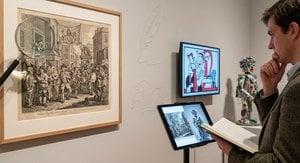
Explore the history of satire in art! From Hogarth's London to contemporary critique, discover how artists use wit & visual power to reflect and challenge society. Expert insights at WahooArt.

Explore the rich history of engraving with WahooArt. Discover techniques, iconic artists like Dürer & Callot, collecting tips, and expert guidance for preserving your art investment. Learn about intaglio printing & more!

Atraskite baroko dramatiškumą! Meno konsultacijos, rankų darbo reprodukcijos ir patarimai, kaip įnešti eleganciją bei emocijas į jūsų interjerą su WahooArt.com. Kokybė garantuota!

 Peržiūrėti realybėje
 Pasidalinti
 Dalintis
 Išsamiau

 Atsisiųsti
 Panašūs eksponatai
 Rentgeno nuotrauka
 Automatinė diorama
 Skaityti daugiau







 Stiklo variantas prieinamas tik pasirinkus dydį iki 110 cm


