François Boucher, 1703 – 1770

François Boucher tapiai: 100 garsiausių kūrinių reitingas

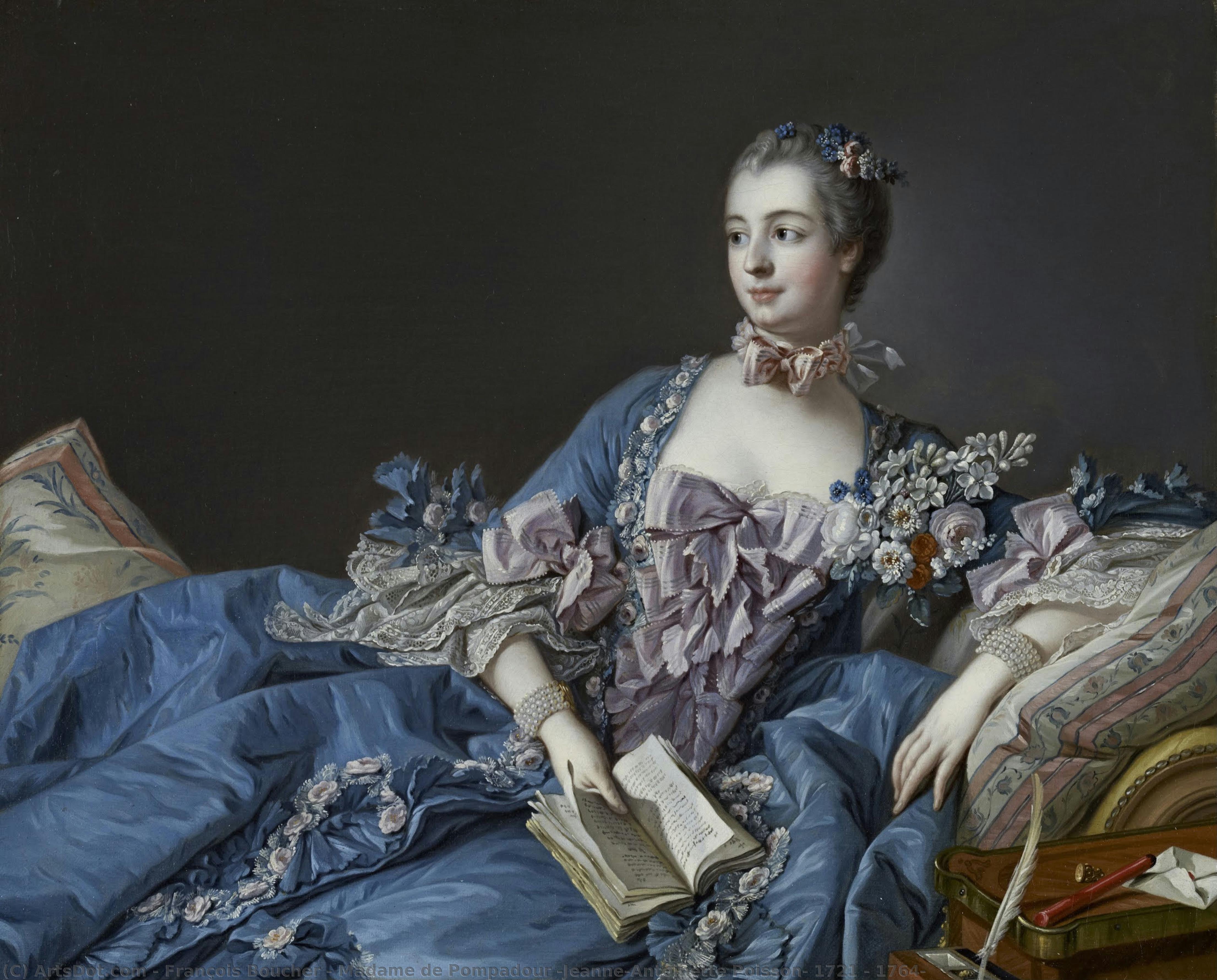
Žymiausias François Boucher tapas yra Diana getting out of her bath (1742). Kartu su Bouguereau Song of the Angels ir Madame de Pompadour (Jeanne-Antoinette Poisson, 1721 - 1764) (1758) tai sudaro tris visai visus pažįstančius darbus. Mūsų kataloge yra 377 darbų autoriaus François Boucher; žemiau pateiktos 100 daugiausia visame pasaulyje žiūrimų kūrinių, kiekvieno iš jų – su metai, muziejumi, kuriame jis saugomas, ir paaiškintu, kodėl jis svarbus.

Rangos vieta nulegiama pagal mūsų populiarumumo balas, kurį sudaro kiekvieno kūrinio paieškos, apsilankėjimai ir užsakėjimai. Atnaujinta spalis 2026. Kiekvieną šio puslapio šedevrą galite užsisakyti kaip muziejoriaus kokybės rankų darbo alievinę reprodukciją arba aukščiausios kokybės meninį spausdiną jūsų pasirinktu dydžiu.

François Boucher portretas
François Boucher · 1703 – 1770
Gedė · mirė
1703 – 1770, Paryžius
Judėjimas
Rokoko
Darbai mūsų kataloge
377
Labiausiai žinomi
Diana getting out of her bath (1742)
Daugiausia darbų yra
Ermitažas

10 garsiausių François Boucher paveikslų

Diana getting out of her bath (1742) aut. François Boucher
1

Diana getting out of her bath

1742 · Oil On Canvas

François Boucher created Diana getting out of her bath in 1742. The work centers on the Roman goddess Diana, portrayed in a state of nudity. She is situated within a dense forest setting, a natural environment that provides the backdrop for her emergence from the water.

Bouguereau Song of the Angels aut. François Boucher
2

Bouguereau Song of the Angels

Oil On Canvas

The air in this 18th-century French Rococo scene vibrates with an invisible melody. At the center, the quiet devotion of Mary and the infant Jesus anchors the composition. Around them, a choir of heavenly beings gathers to perform. One angel rests on the left, another occupies the middle, while two more flank the right side. They hold lyres, flutes, and strings, their movements precise and graceful. The music of the…

Madame de Pompadour (Jeanne-Antoinette Poisson, 1721 - 1764) (1758) aut. François Boucher
3

Madame de Pompadour (Jeanne-Antoinette Poisson, 1721 - 1764)

1758 · Oil On Canvas · Škotijos Nacionalinė galerija, Edinburgas

To gaze upon this portrait of Madame de Pompadour is to step directly into the gilded salons of 18th-century France, a world steeped in exquisite taste and whispered intrigue. Painted around 1758 by the master hand of François Boucher, this work transcends mere likeness; it captures an ephemeral moment of cultivated grace. The subject, Jeanne-Antoinette Poisson, is presented not just as a woman of high standing, but as an embodiment…

Madame Bergeret (1766) aut. François Boucher
4

Madame Bergeret

1766 · Oil On Canvas · National Gallery of Art, Vašingtonas

François Boucher’s “Madame Bergeret,” completed in 1766, stands as a quintessential exemplar of Rococo artistry—a style synonymous with aristocratic refinement and sensual beauty. More than just a depiction of a woman, it's an immersive experience into the opulent aesthetic sensibilities of Louis XV’s court, capturing not merely likeness but also an idealized vision of feminine grace.

The Interrupted Sleep (1750) aut. François Boucher
5

The Interrupted Sleep

1750 · Aliejus ant drobės · Metropolitano meno muziejus, Niujorkas

In the heart of the French Rococo era, few works capture the ephemeral magic of a summer afternoon as tenderly as François Boucher’s The Interrupted Sleep. Created in 1750, this masterpiece serves as a window into an idealized world where the rigors of reality are replaced by a soft, melodic dreamscape. The painting invites the viewer to step into a lush, sun-drenched woodland, where the boundaries between music, nature, and…

The Setting of the Sun aut. François Boucher
6

The Setting of the Sun

Oil On Canvas

In the luminous realm of 18th-century French artistry, few works capture the ephemeral magic of twilight as profoundly as François Boucher’s The Setting of the Sun. This masterpiece serves as a breathtaking window into the Rococo era, an age defined by its pursuit of elegance, pleasure, and a certain dreamlike sensuality. As the sun descends, the canvas erupts into a dramatic and opulent spectacle, where the boundaries between the earthly…

Pastoral Scene (1745) aut. François Boucher
7

Pastoral Scene

François Boucher’s “Pastoral Scene,” painted in 1745, isn't merely a depiction of a rural landscape; it’s a carefully constructed invitation into an idealized world—a sanctuary of innocence and leisure nestled within the heart of France. The painting immediately draws the viewer in with its soft palette of browns, beiges, and muted greens, evoking a sense of gentle warmth and timeless serenity. Two young figures – a boy and girl –…

Venus at Vulcan (1769) aut. François Boucher
8

Venus at Vulcan

1769 · Oil On Canvas · Kimbell Art Museum, Fort Worth

François Boucher’s “Venus at Vulcan’s Forge,” painted in 1769, isn't merely a depiction of mythological figures; it’s a vibrant embodiment of reconciliation and the potent dance between opposing forces. Rooted firmly within the opulent Rococo style that defined late 18th-century France, the painting transports us to a dramatic tableau inspired by Virgil’s *Aeneid*. Here, Venus, goddess of love and beauty, and Vulcan, god of fire and craftsmanship, find themselves caught…

The Toilette (1742) aut. François Boucher
9

The Toilette

1742 · Oil On Canvas · Thyssen-Bornemisza muziejus, Madridas

In the soft, luminous atmosphere of François Boucher’s 1742 masterpiece, La Toilette, we are invited to step into a world of refined grace and quiet domesticity. This exquisite oil on canvas serves as a quintessential window into the Rococo era—a period defined by its celebration of pleasure, light, and the delicate nuances of everyday life. The scene unfolds within a richly appointed room, where the warmth of a fireplace anchors…

Boreas Abducting Oreithyia (1769) aut. François Boucher
10

Boreas Abducting Oreithyia

1769 · Oil On Canvas · Kimbell Art Museum, Fort Worth

François Boucher’s “Boreas Abducting Oreithyia,” completed in 1769, is a captivating distillation of classical mythology rendered with the characteristic exuberance and sensual grace that defined the Rococo style. This painting, measuring an impressive 273 x 205 cm, transports us to a moment of violent disruption – a dramatic retelling of Ovid’s tale from the *Metamorphoses*, where the icy North Wind god, Boreas, forcibly claims the Athenian princess Oreithyia.

François Boucher, paveikslai nuo 11 iki 100

Painter in his Studio aut. François Boucher
#13

Painter in his Studio

Liuvro muziejus

In the heart of the eighteenth century, few artists captured the ephemeral beauty of French aristocratic life as masterfully as François Boucher. His work, “The Painter in His…

Atneškite į savo namus →
The Forest (1740) aut. François Boucher
#16

The Forest

1740 · Liuvro muziejus

To gaze upon François Boucher's The Forest is to step through a veil of time and into an idealized pastoral reverie. This masterpiece, painted in 1740, captures the…

Atneškite į savo namus →
Vertumnus and Pomona aut. François Boucher
#17

Vertumnus and Pomona

Bavarijos valstybinės paveikslų kolekcijos

In Vertumnus and Pomona, François Boucher explores a central myth of classical antiquity. The scene captures the moment of Vertumnus's transformation, a metamorphosis undertaken specifically to woo the…

Užsisakyti reprodukciją →
Madame de Pompadour (1754) aut. François Boucher
#18

Madame de Pompadour

1754 · Nacionalinė Viktorijos galerija

A Portrait of Patronage: Madame de Pompadour by François Boucher Subject: This exquisite hand-painted reproduction captures the essence of Madame de Pompadour, Jeanne-Antoinette Poisson, a figure who epitomized…

Užsisakyti rankinio kopijos tapybą →
Madame de Pompadour (1758) aut. François Boucher
#20

Madame de Pompadour

1758 · Victoria and Albert Museum

François Boucher's “Madame de Pompadour” isn’t merely a portrait; it’s a carefully constructed tableau vivant, a shimmering distillation of 18th-century French elegance and the subtle power wielded by…

Užsisakyti reprodukciją →
The Mill (1751) aut. François Boucher
#23

The Mill

1751 · Liuvro muziejus

François Boucher’s “The Mill,” painted in 1751 during the zenith of Rococo art, offers a glimpse into a refined aesthetic that prioritized elegance and sensual beauty. More than…

Užsisakyti rankinio kopijos tapybą →
The Afternoon Meal (1739) aut. François Boucher
#24

The Afternoon Meal

1739 · Liuvro muziejus

The painting The Afternoon Meal by François Boucher is a quintessential example of the Rococo style, characterized by its delicate lines, soft colors, and intimate atmosphere. Created in…

Atneškite į savo namus →
Pastorale (1760) aut. François Boucher
#26

Pastorale

1760 · Staatliche Kunsthalle Karlsruhe

The painting Pastorale is a work by the French artist François Boucher. Created in 1760, it captures a quiet, idealized moment within a lush landscape. This specific canvas…

Užsisakyti reprodukciją →
Vertumnus and Pomona (1757) aut. François Boucher
#27

Vertumnus and Pomona

1757 · Fine Arts Museums of San Francisco

Vertumnus and Pomona is an oil on canvas by François Boucher, dating to about 1757. The work illustrates a scene from Ovid’s Metamorphoses, focusing on the Roman god…

Užsisakyti reprodukciją →
Death of Meleager (1727) aut. François Boucher
#28

Death of Meleager

1727 · Los Angelos apygardos meno muziejus

The air in the room feels heavy, thick with the scent of damp earth and the metallic tang of tragedy. At the center of the composition, a body…

Atneškite į savo namus →
Triumph of Venus aut. François Boucher
#32

Triumph of Venus

Ermitažas

A Celebration of Venus: François Boucher’s Triumph Revisited François Boucher (1703-1770) stands as a cornerstone of Rococo art, embodying its opulent aesthetic and masterful manipulation of light and…

Užsisakyti reprodukciją →
Washerwomen (1768) aut. François Boucher
#34

Washerwomen

1768 · Metropolitano meno muziejus

The air feels heavy with the scent of damp earth and river mist as a group of women gathers by a flowing stream. Sunlight filters through a thick,…

Atneškite į savo namus →
The Billet-Doux aut. François Boucher
#35

The Billet-Doux

The Billet-Doux is a notable work by the French artist François Boucher. This oil on canvas over wood was originally commissioned for the Chateau at Bellevue. It was…

Atneškite į savo namus →
Monument to Mignard (1735) aut. François Boucher
#37

Monument to Mignard

1735 · Los Angelos apygardos meno muziejus

In this dramatic wash drawing, we find ourselves looking upward at a monumental structure that seems to rise directly from the depths of antiquity. The composition is anchored…

Užsisakyti reprodukciją →
Young Girl and Eros (1750) aut. François Boucher
#39

Young Girl and Eros

1750 · Detroito meno institutas

A young woman and a winged Cupid occupy an intimate, oval-shaped space, their presence defined by the soft textures of the Rococo style. She is draped in flowing…

Atneškite į savo namus →
Saint John the Baptist (1755) aut. François Boucher
#44

Saint John the Baptist

1755 · Minneapolis Institute of Art

In this oil painting from 1755, we find Saint John the Baptist in a state of profound contemplation. The composition draws the eye along a diagonal path, following…

Atneškite į savo namus →
Bathing Nymph (1747) aut. François Boucher
#45

Bathing Nymph

1747 · Art Institute of Chicago

A solitary female figure, identified as a nymph, occupies the center of this composition. She sits amidst a landscape of dark rocks and dense foliage. The skin of…

Atneškite į savo namus →
The Modiste (1746) aut. François Boucher
#47

The Modiste

1746 · Wallace Collection

The Modiste is an oil on canvas painted by François Boucher. The artist, born in Paris, France, in 1703, captured this scene around 1746. His brush moved across…

Užsisakyti reprodukciją →
The Distorted Child (1742) aut. François Boucher
#50

The Distorted Child

1742 · Staatliche Kunsthalle Karlsruhe

The Distorted Child is a genre painting by the French painter François Boucher. Born in Paris, France, in 1703, Boucher captured this intimate scene of parenthood through the…

Atneškite į savo namus →
Diana and Callisto (1760) aut. François Boucher
#52

Diana and Callisto

1760 · Slovak National Gallery

This Rococo-style oil painting depicts the mythological scene of Diana and Callisto set within a lush, wooded landscape. The composition is dynamic and pyramidal, featuring two women reclining…

Užsisakyti rankinio kopijos tapybą →
Pastoral (1730) aut. François Boucher
#54

Pastoral

1730 · Walters Art Museum

The scene unfolds within the quietude of Pastoral, a painting by the French artist François Boucher. Created in France about 1730, this oil on canvas captures a moment…

Atneškite į savo namus →
The Cherry Gatherers (1768) aut. François Boucher
#57

The Cherry Gatherers

1768 · Kenwood House

is an oil on canvas painting by François Boucher, executed in 1768. Also known by the alternative title Landscape With Figures Gathering Cherries, the work belongs to the…

Atneškite į savo namus →
Allegory of Autumn (1753) aut. François Boucher
#59

Allegory of Autumn

1753 · Metropolitano meno muziejus

The oil on canvas titled Allegory of Autumn was painted by François Boucher in 1753. This work captures a specific seasonal transition through the lens of Rococo sensibility.…

Užsisakyti reprodukciją →
The Education of Cupid (1742) aut. François Boucher
#60

The Education of Cupid

1742 · Charlottenburg rūmai

In a quiet corner of the Charltenburg Palace, The Education of Cupid waits, suspended in a moment of divine instruction. This oil on canvas, painted by François Boucher,…

Atneškite į savo namus →
The Birth of Venus (1740) aut. François Boucher
#61

The Birth of Venus

1740 · Nationalmuseum

François Boucher: Rococo Master of Myth, Sensuality, and the French Court François Boucher (1703-1770) was a pivotal figure in 18th-century French art, renowned as one of the most…

Užsisakyti reprodukciją →
Bacchus and Erigone (1745) aut. François Boucher
#71

Bacchus and Erigone

1745 · Wallace Collection

is an oil on canvas painting by the artist François Boucher. Executed in 1745, the work depicts a mythological scene set within a wooded landscape. This specific composition…

Užsisakyti reprodukciją →
The Bird Catchers (1748) aut. François Boucher
#76

The Bird Catchers

1748 · J. Paul Getty muziejus

We are looking at The Bird Catchers, a work by François Boucher. Painted in 1748, this oil on canvas captures a specific moment of leisure within a pastoral…

Atneškite į savo namus →

François Boucher tapų skirstymas pagal laikotarpius

Daugiausiai temų, kurių vaizdė François Boucher

Keturi populiariausi temų motyvai tarp šių šedevrų, su geriausiais kiekvieno pavyzdžiais.

Kur galima pamatyti François Boucher paveikslus

8 muziejai, kuriuose saugoma daugiausia šioje pusėje esamų paveikslų.

Muzejaus Miestas François Boucher darbai Šiojo sąrašo paveikslai
Ermitažas, Šv. PeterburgasErmitažas Šv. Peterburgas 12 Study for The Bath of Venus, Young Woman Sleeping, Triumph of Venus
Metropolitano meno muziejus, NiujorkasMetropolitano meno muziejus Niujorkas 13 The Interrupted Sleep, Imaginary Landscape with the Palatine Hill from Campo Vaccino, Washerwomen
Liuvro muziejus, ParyžiusLiuvro muziejus Paryžius 8 Painter in his Studio, The Forest, The Mill
Los Angelos apygardos meno muziejus, Los AnželesasLos Angelos apygardos meno muziejus Los Anželesas 6 Death of Meleager, Venus and Mercury Instructing Cupid, Monument to Mignard
Wallace Collection, LondonasWallace Collection Londonas 21 The Setting of the Sun, The Modiste, Mercury Confiding the Infant Bacchus to the Nymphs
Škotijos Nacionalinė galerija, EdinburgasŠkotijos Nacionalinė galerija Edinburgas 5 Madame de Pompadour (Jeanne-Antoinette Poisson, 1721 - 1764), A Pastoral Scene ('La Jardiniere Endormie'), A Pastoral Scene ('L'Offrande a la Villageoise')
Cleveland Museum of Art, KlevlandasCleveland Museum of Art Klevlandas 5 Head of a Young Woman, Cupids in Conspiracy, Music and Dance
Kimbell Art Museum, Fort WorthKimbell Art Museum Fort Worth 4 Venus at Vulcan, Boreas Abducting Oreithyia, Juno Asking Aeolus to Release the Winds

enusičiausio François Boucher tapiojo dešimtmetės tapiojas

  1. 1720s
    Death of Meleager (1727) aut. François Boucher
    Vieta 28 iš 100

    Death of Meleager

    Amžius 17 – 26 · Los Angelos apygardos meno muziejus

    The air in the room feels heavy, thick with the scent of damp earth and the metallic tang of tragedy. At the center of the composition, a body…

  2. 1730s
    The Afternoon Meal (1739) aut. François Boucher
    Vieta 24 iš 100

    The Afternoon Meal

    Amžius 27 – 36 · Liuvro muziejus

    The painting The Afternoon Meal by François Boucher is a quintessential example of the Rococo style, characterized by its delicate lines, soft colors, and intimate atmosphere. Created in…

  3. 1740s
    Diana getting out of her bath (1742) aut. François Boucher
    #1 iš 100

    Diana getting out of her bath

    Amžius 37 – 46

    François Boucher created Diana getting out of her bath in 1742. The work centers on the Roman goddess Diana, portrayed in a state of nudity. She is situated…

  4. 1750s
    Madame de Pompadour (Jeanne-Antoinette Poisson, 1721 - 1764) (1758) aut. François Boucher
    Vieta 3 iš 100

    Madame de Pompadour (Jeanne-Antoinette Poisson, 1721 - 1764)

    Amžius 47 – 56 · Škotijos Nacionalinė galerija

    To gaze upon this portrait of Madame de Pompadour is to step directly into the gilded salons of 18th-century France, a world steeped in exquisite taste and whispered…

  5. 1760s
    Madame Bergeret (1766) aut. François Boucher
    4 iš 100

    Madame Bergeret

    Amžius 57 – 66 · National Gallery of Art

    François Boucher’s “Madame Bergeret,” completed in 1766, stands as a quintessential exemplar of Rococo artistry—a style synonymous with aristocratic refinement and sensual beauty. More than just a depiction…

  6. 1770s
    Young Country Girl Dancing (1770) aut. François Boucher
    21 iš 100

    Young Country Girl Dancing

    Amžius 67 · Art Gallery of Ontario

    François Boucher's "Young Country Girl Dancing," painted in 1770, is more than just a depiction of youthful exuberance; it’s a quintessential embodiment of the Rococo aesthetic – a…

Klausimai apie François Boucher paveikslus

Koks yra garsiausias François Boucher tapas?Rodyti atsakymą

Diana getting out of her bath (1742). Toliau eina Bouguereau Song of the Angels ir Madame de Pompadour (Jeanne-Antoinette Poisson, 1721 - 1764) (1758).

Kiek metų buvo François Boucher, kai buvo nupieštas Diana getting out of her bath?Rodyti atsakymą

39 metų amžiaus: Diana getting out of her bath sukurta 1742 m. ir François Boucher gimė 1703.

Kokie yra 10 geriausių François Boucher paveikslų?Rodyti atsakymą

Diana getting out of her bath, Bouguereau Song of the Angels, Madame de Pompadour (Jeanne-Antoinette Poisson, 1721 - 1764), Madame Bergeret, The Interrupted Sleep, The Setting of the Sun, Pastoral Scene, Venus at Vulcan, The Toilette ir Boreas Abducting Oreithyia. Viršuje esančioje reitingo lentelėje nurodyta kiekvieno kūrinio metis ir muziejus.

Kiek paveikslų sukūrė François Boucher?Rodyti atsakymą

Mūsų kataloge yra 377 François Boucher darbų, datuojamų nuo 1720 iki 1770.

Kur yra garsiausi François Boucher paveikslai?Rodyti atsakymą

Dauguma jų yra Ermitažas (Šv. Peterburgas), Metropolitano meno muziejus (Niujorkas) ir Liuvro muziejus (Paryžius). Viršuje esančiame lange muziejai išvardyti po vieni.

Kada François Boucher namai dažniausiai tapė savo garsiausiais šedevrais?Rodyti atsakymą

1730s laikotarpyje: 28 iš 100 šioje pusėje esančių darbų sukurtos tada, iš jų – The Afternoon Meal.

Kokie yra pirmieji ir paskutiniai garsūs François Boucher paveikslai?Rodyti atsakymą

Pirmasis šioje pusėje yra The Judgement of Susannah (1720), paskutinis – Young Country Girl Dancing (1770).

Ką dažniausiai tapė François Boucher?Rodyti atsakymą

Woman (21), Trees (14) ir Man (10), iš 100 šioje pusėje esančių darbų.

Kurią techniką François Boucher naudojo dažniausiai?Rodyti atsakymą

Oil On Canvas: 46 iš 100 šioje pusėje esančių darbų.

Kelią meno kryptį priklauso François Boucher?Rodyti atsakymą

Rokoko, kaip rodo šio puslapio paveikslai.

Kurius François Boucher paveikslus galėčiau pamatyti Ermitažas?Rodyti atsakymą

Study for The Bath of Venus, Young Woman Sleeping ir Triumph of Venus yra vieni iš 6 šioje puslapyje esamų darbų, kuriuos saugo Ermitažas, Šv. Peterburgas.

Ar galiu įsigyti François Boucher paveikslą-reprodukciją?Rodyti atsakymą

Taip. Kiekvieną šioje pusėje esantį paveikslą galite užsakyti kaip muziejoriaus kokybės rankų darbų alievinę kopiją arba aukščiausios kokybės spausdinį pasirinktu jūsų pageidaujamu dydžiu tiesiai iš paties paveikslą puslapio.

Apie François Boucher

François Boucher: Rokoko Eraus Šviesuolis

François Boucher (1703–1770) buvo iškili XVIII amžiaus prancūzų meno figūra, garsėjusi kaip vienas žymiausių rokokinio stiliaus tapytojų. Jo kūryba įkūnija eleganciją, jausmingumą ir žaismingą dvasią, apibrėžusias šį įtakingą stilių. Boucher’io darbai – tai ne tik dailės kūriniai, bet ir atspindys prancūzų aristokratijos gyvenimo būdo, pomėgio malonumams bei mitologinių istorijų interpretacijos. Jo paveikslai spinduliuoja šviesos ir spalvų harmoniją, o personažai – lengvumo ir išskirtinio grožio įvaizdį.

Ankstyvieji Metai Ir Ugdymas

Gimęs 1703 metų rugsėjo 29 dieną Paryžiuje, Prancūzijoje, François Boucher’io meninis kelias prasidėjo tėvo Žano Bušė, kuris irgi buvo tapytojas, globodamas. Sulaukęs septyniolikos metų jis patraukė François Lemoyne dėmesį, todėl turėjo galimybę trumpai bet reikšmingai pasimokyti jo dirbtuvėje. Vėliau jis tobulino savo įgūdžius su graviūros meistru Jean-François Cars prieš pasiekdamas svarbų etapą: laimėdamas prestižinį Grand Prix de Rome apdovanojimą 1720 metais. Šis prizas atvėrė jam duris į Italiją, kur jis galėjo gilinti savo žinias ir patirti naujų meno srovių.

Pakilimas Į Viršūnę Ir Meno Kūrinių Raida

Boucher’io laikas Italijoje, po apdovanojimo Grand Prix de Rome, buvo labai svarbus jo formavimuisi. Grįžęs į Prancūziją, 1731 metais jis buvo priimtas į Académie Royale de Peinture et de Sculpture akademiją. Jo *morceau de réception*, “Rinaldo ir Armida” (1734), nedelsiant įtvirtino jį kaip rokokinio stiliaus meistrą. Šiuo laikotarpiu Boucher’io meninė vizija visiškai išsiskleidė, pasižymėdama subtiliomis spalvomis, pasteliniais atspalviais ir mitologinių bei pastoralių temų pabrėžimu. Jo paveikslai tapo vis populiaresni tarp aristokratijos, o jo vardas ėmė sklisti po Prancūzijos dvarus.

Pagrindiniai Kūriniai Ir Temos

Boucher’io kūryba yra nepaprastai įvairi, apimanti mitologiją, portretus, buitines scenas ir dekoratyvinį meną. Kai kurie žymiausi jo darbai:

  • “Pusryčiai” (1739): Žavingas namų gyvenimo vaizdas, kuriame pavaizduota jo žmona ir vaikai.
  • “Veneros triumfas” (1740–1751): Paveikslų ciklas, demonstruojantis Boucher’io meistriškumą mitologinėse istorijose.
  • Daugybė portretų Madame de Pompadour, įtakingos Liudviko XV karalaitės, sustiprinusios jo pozicijas dvare.
  • Peizažai, tokie kaip “Saulėlydis”, rodantys lyrinį ir idilišką gamtos vaizdą.

Meilė, grožis, laisvalaikis ir idealizuotas mitologijos pasaulis – tai dažnai pasikartojančios temos Boucher’io darbuose. Jo paveikslai dažnai sukelia žaismingo erotizmo ir rafinuoto elegancijos jausmą.

Įtaka Ir Palikimas

Boucher’io įtaka apėmė ne tik tapybą. Jis kūrė kostiumus ir dekoracijas teatrui, sukūrė gobelenus Beauvais dirbtuvėms ir bendradarbiavo su Gobelins Manufactory manufaktūra. Jo paskyrimas *Premier Peintre du Roi* (Karaliaus pirmasis tapytojas) 1765 metais įtvirtino jo statusą kaip prancūzų rokokinio meno lyderį. Vėliau kritikai užginčijo rokokinio meno paviršiniškumą, tačiau Boucher’io poveikis vėlesnėms kartoms yra neabejotinas. Jis turėjo įtakos tokiesiems menininkams kaip Jean-Honoré Fragonard ir prisidėjo prie neoklasicizmo plėtros per savo mokinius.

François Boucher’io darbai suteikia vertingą įžvalgą apie XVIII amžiaus prancūzų visuomenės skonį ir vertybes. Jo paveikslai atspindi aristokratišką kultūrą, pasižyminčią prabanga, rafinuotumu ir malonumo siekimu. Jis išlieka reikšminga figūra meno istorijoje, garsėdamas savo techniniu įgūdžiu, menine inovacija ir nuolatiniu indėliu į rokokinį stilių.

Visi 377 François Boucher darbai →