The name Karl Storch evokes a sense of profound physical discipline and the pursuit of excellence within the realm of athletic mastery. While often remembered through the lens of sporting history, his life represents a remarkable narrative of dedication that transcends the boundaries of mere competition. Born into a world where grit and determination were paramount, Storch emerged as a figure of significant importance in the mid-twentieth century, embodying the spirit of German athleticism during an era of intense global reconstruction and renewed physical vigor.
The Path to Olympic Glory
Storch's journey was defined by the rhythmic, powerful motions of the hammer throw, a discipline requiring an extraordinary synthesis of raw strength and delicate technical precision. Competing under the banner of SC Borussia Fulda, he honed his craft with a singular focus that eventually propelled him onto the world's most prestigious stage. The pinnacle of his career arrived during the 1952 Summer Olympics in Helsinki, Finland. In this arena of intense pressure, Storch demonstrated an unwavering composure, navigating a series of challenging attempts to secure the silver medal for Germany. This achievement was not merely a personal triumph but a moment of profound significance for his nation, signaling a return to international prominence through individual excellence.
Enduring Impact and Recognition
Beyond the fleeting moments of Olympic competition, Storch's life was characterized by a steadfast commitment to his craft and his community. His physical presence—standing at 1.84m and weighing 110 kg during competition—served as a testament to the rigorous training required to master his discipline. The recognition he received, most notably the prestigious Rudolf Harbig-Gedächtnispreis in 1954, underscores the respect he commanded among his peers and within the broader sporting community. His legacy remains etched in the annals of athletic history, serving as an inspiration for those who seek to balance the heavy burdens of physical demand with the grace of technical mastery.
Key Achievements: Olympic Silver Medalist in Hammer Throw (Helsinki 1952).
Honors: Recipient of the Rudolf Harbig-Gedächtnispreis in 1954.
Affiliation: Represented SC Borussia Fulda and Germany on the international stage.
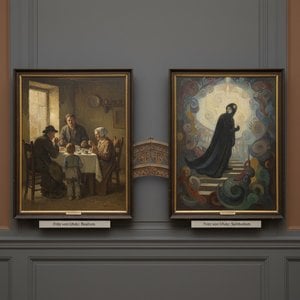
Explore the captivating world of Fritz von Uhde, a pivotal German painter bridging Realism & Symbolism. Discover his plein-air techniques, religious themes, and influence on modern art. Learn about this fascinating artist at WahooArt.
Karl Storch (I), Karl, the elder Storch, Karl Storch the Elder, Karl, der Ältere Storch, Karl Storch der Ältere
Kiek metų gyveno Karl Storch?
90 years (1864–1954)
Kada ir kur gimė Karl Storch?
1864, Bad Segeberg, Germany
Kokiam meno periodui priklausė Karl Storch?
19th Century
Ar Karl Storch kūriniai vis dar yra saugomi autorinės teisės?
Ne, šio autoriaus darbai priklauso viešajai domenui.
Kiek Karl Storch paveiklių rodoma ArtsDot.com?
2
Kas yra Karl Storch?
A Legacy of Precision and Strength
The name Karl Storch evokes a sense of profound physical discipline and the pursuit of excellence within the realm of athletic mastery. While often remembered through the lens of sporting history, his life represents a remarkable narrative of dedication that transcends the boundaries of mere competition. Born into a world where grit and determination were paramount, Storch emerged as a figure of significant importance in the mid-twentieth century, embodying th
Kada mirė Karl Storch?
1954
Iš kur yra Karl Storch?
Germany
Kurios Karl Storch kūriniai yra dažniausiai peržiūrimi?
„ši ši internetinė svetainė“ platformoje yra Statistika puslapis šiam kūrinys autoriui Karl Storch, kuriame pateikiama statistika apie Karl Storch kūrinius.