A life shaped by Kilkenny and Dublin
John Comerford grew up in the shadow of the Tholsel in Kilkenny. His father worked as a flax-dresser, a trade that kept the family close to the local rhythms of the town. The boy spent much of his early time looking at the paintings held within Kilkenny Castle and the collections in Carrick-on-Suire. These quiet hours of copying existing works provided a foundation far removed from formal academies. He eventually moved to Dublin to study at the art schools of the Dublin Society, where his skill with drawing was noted by instructors.
By 1790, he had earned a certificate for his ability to draw from the flat. A silver medal followed in 1791 for his work on figure-drawing. While his roots remained in the south-east of Ireland, his professional life moved between the streets of Dublin and the familiar corners of Kilkenny. He lived much of his later life in Dublin, at addresses such as Dame Street and Leinster Street, maintaining a practice that relied on the trust of the local gentry, clergy, and military officers.
The precision of the miniature
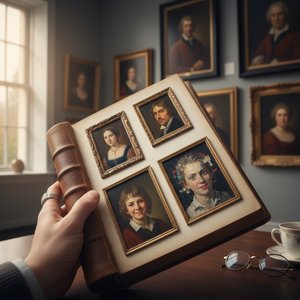
The work itself often required a steady hand and a focus on small, intimate surfaces. He worked frequently with watercolour on ivory, using loose brushstrokes to build form. In his portraits, he used brown shading with a subtle hint of blue in the darkest areas to create depth. While he began his career painting portraits in oil, he became most known for his miniatures. These small pieces captured faces with a quietness in colour and a careful finish, particularly in his depictions of men.
His technique was shaped by the presence of other artists in his orbit. He spent time living in the home of George Chinnery, whose influence can be seen in the later development of his style. He also drew comparisons to the way Gilbert Stuart approached portraiture. His output included:
- Portraits of family members and local figures like Dr Edward Walsh.
- Small portraits rendered in chalk or pencil.
- A series of eleven portraits of actors from the Kilkenny Private Theatre.
- Miniatures of the Misses Warren.
Recognition and later years
His name appeared on exhibition lists across several decades. He showed his work at the Royal Academy in London in 1804 and 1809, and was a regular presence at the Society of Artists in Ireland. In 1811, he took on the role of vice-president of the Society of Artists. His reputation allowed him to secure commissions from notable figures such as Daniel O'Connell and James Gandon. He also taught others, including John Doyle, who would later find fame with caricatures.
The end of his life came following an apoplectic seizure while visiting Gandon in Lucan. He died at his home on Blessington Street in Dublin. He left behind a significant fortune and a daughter, Mary, to whom he provided an annuity. Today, his small, detailed works are held in collections such as the National Gallery in Dublin and the Victoria and Albert Museum in London.
Klausimai ir atsakymai
Kuriame istoriniame laikotarpyje kūrė John Comerford?
John Comerford kūrė 19th Century laikotarpiu. Šis laikotarpis leidžia įvertinti kūrybinę veiklą istoriniame kontekste.
Kurių spalvų John Comerford naudojo dažniausiai?
John Comerford darbų spalvų profilis galima rasti puslapyje Paletės genomas.
Kaip rasti visas John Comerford kūrinius tam tikra technika?
John Comerford darbus pagal technikas galima peržiūrėti jo/jos puslapio Visi mediai skiltyje.
Kokia John Comerford kūryba yra populiari?
„ši ši internetinė svetainė“ platformoje yra Statistika puslapis šiam kūrinys autoriui John Comerford, kuriame pateikiama statistika apie John Comerford kūrinius.