Early Life and Artistic Beginnings
Ben Quilty, born in Sydney in 1973, is an artist whose work resonates with a raw emotional honesty that has captivated Australia and garnered international attention. His upbringing in the outer suburbs of north-western Sydney proved formative, shaping not only his artistic vision but also the very themes he would come to explore with such compelling force. Quilty’s youth was marked by a restless energy, a participation in the often self-destructive rituals of Australian masculinity—a world of drugs, alcohol, and risk-taking that he both inhabited and questioned. This early exposure instilled within him a deep fascination with identity, belonging, and the precariousness of life itself.
Quilty’s formal artistic education began at Sydney College of the Arts, where he earned a Bachelor of Visual Arts in Painting in 1994. However, his intellectual curiosity extended beyond the purely visual realm. He pursued further studies, obtaining a Certificate in Aboriginal Culture and History and later a Bachelor of Arts from Western Sydney University, encompassing visual communication, design, and women’s studies. This interdisciplinary approach proved crucial, broadening his understanding of societal structures and providing him with a critical lens through which to examine the complexities of Australian culture.
A Distinctive Style Emerges
The early 2000s witnessed the blossoming of Quilty's unique artistic voice. Winning the Brett Whiteley Travelling Art Scholarship in 2002 provided him with invaluable opportunities and increased his public profile. His paintings began to distinguish themselves through a distinctive style characterized by thickly impastoed canvases, vibrant colors, and broad brushstrokes that build up layers of texture and meaning. Early works often featured iconic Australian symbols—the Holden Torana, for example—representing the rituals of mateship and the search for identity within a specific cultural context. Later, paintings like Van Rorschach (2005) signaled a shift towards more abstract explorations, though even in these pieces, a sense of underlying narrative tension remained palpable.
Quilty’s technique is not merely about aesthetic effect; it's intrinsically linked to his subject matter. The physicality of the paint—its weight, its texture, its very application—mirrors the emotional weight of the themes he addresses. His canvases often feel bruised and scarred, reflecting the psychological interiors he seeks to portray. This expressive style allows him to convey a sense of vulnerability and unease that resonates deeply with viewers.
Official War Artist: Documenting Trauma
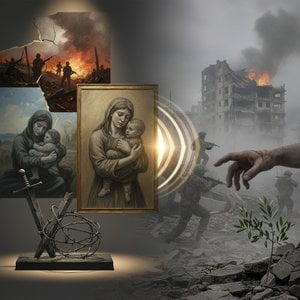
A pivotal moment in Quilty’s career arrived in 2011 when he was commissioned as an official war artist by the Australian War Memorial, tasked with documenting the experiences of Australian Defence Force personnel serving in Afghanistan. This experience profoundly impacted his artistic trajectory. Spending three weeks in Kabul, Kandahar, and Tarin Kowt exposed him to the realities of modern warfare—the trauma, the loss, and the moral ambiguities inherent in conflict.
The resulting series, After Afghanistan, challenged traditional representations of war art. Quilty eschewed heroic depictions of soldiers, instead focusing on portraits that revealed the psychological wounds carried by those who had served. His paintings are not about glorifying combat; they are about bearing witness to its human cost. The use of bruised and distorted forms, coupled with a somber palette, conveys a sense of profound emotional weight. This work stands as a powerful testament to the enduring impact of war on individuals and communities.
Themes and Historical Significance
Quilty’s artistic practice is characterized by a relentless engagement with contemporary social issues. He fearlessly tackles difficult subjects—the death penalty, asylum seekers, massacres of Indigenous Australians—using his art as a platform for critical commentary. His work often explores the complexities of Australian identity, challenging prevailing narratives and prompting viewers to confront uncomfortable truths.
Beyond his explicit political engagement, Quilty’s paintings delve into universal themes of masculinity, vulnerability, and the search for meaning in a chaotic world. He is not afraid to expose his own flaws and insecurities, creating a sense of intimacy and authenticity that draws viewers in. His work has been recognized with numerous awards—including the Archibald Prize in 2011 for his portrait of Margaret Olley and the Prudential Eye Award in 2014—solidifying his position as one of Australia’s most important living artists.
Quilty's significance lies not only in his technical skill but also in his willingness to confront difficult realities. He has expanded the boundaries of Australian art, challenging conventional notions of beauty and representation. His work serves as a powerful reminder of the importance of empathy, compassion, and critical engagement with the world around us.
Klausimai ir atsakymai
Kur galiu pamatyti Ben Quilty kūrybą 3D galerijoje?
Ben Quilty 3D galerija yra puslapis, kuriame kūriniai rodomi virtualioje trimensione galerijoje.
Kaip galiu stebėti Ben Quilty kūrybos eigą metmet metams?
Galite peržiūrėti Ben Quilty kūrybos laiko liniją: puslapyje Kūrybos chronologija kūriniai surikiuoti pagal jų sukūrimo datą.
Kuriame istoriniame laikotarpyje kūrė Ben Quilty?
Ben Quilty kūrė Contemporary laikotarpiu. Šis laikotarpis leidžia įvertinti kūrybinę veiklą istoriniame kontekste.