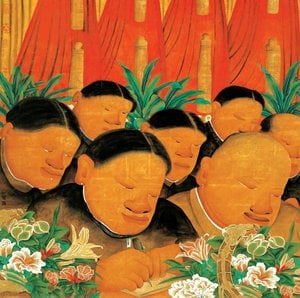
Šiame puslapyje rodomas meno kūrinys yra saugomas autorių teisių įstatymais, todėl neturime teisės legaliai kurti ar parduoti jo identiškos reprodukcijos. Ši apsauga užtikrinama remiantis tokiais tarptautiniais susitarimais kaip Bernės konvencija ir pagal nacionalines įstatymų nuostatas, įskaitant tas, kurias nurodo JAV autoriškos teisės įstatymas – 17-asis skyrius.
Šis metodas visiškai atitinka autorių teises, nes jame nėra saugomo kūrinio kopijavimo ar dubliavimo. Tai yra kūrybinė reinterpretacija – naujas paveikslas, kurį įkvėpė originalas, tačiau kuris nėra jo identiškas.
Muziejų lygio „giclée“ arba drobos spausdinimas: greita gamyba ir lankstios apdailos parinktys. ( Pirkti rankų darbo tapybą Perejti prie skaitmeninių vaizdų)





























Pasirinkite iš mūsų nustatytų dydžių, atitinkančių originalaus meno kūrinio proporcijas.

Įveskite jums reikiamą plotį ir aukštį, kad atvaizdas derėtų prie jūsų rėmo ar sienos. Spausdiną galima tik sumažinti, bet nepadidinti virš originalaus paveikslėlio dydžio, todėl keičiant proporcijas, dalis vaizdo prarandama. Prieš spausdinimą atsiųsime jums skaitmeninį maketą patvirtinimui. Šioje puslapio nuotraukoje matomas pjūvis nėra tikslus – jį rodo tik maketas.
Pristatymas visame pasaulyje () per 2 weeks, o ne įprastas 4/5 savaičių laikotarpis. (9 lapkritis)
Curtain, No.8
Reprodukcijos matmenys
In the quiet corridors of contemporary Chinese art, few works command attention with such rhythmic simplicity as Zhu Wei’s Curtain, No.8. At first glance, the viewer is met with a striking expanse of deep red, interrupted only by the disciplined cadence of white stripes. This is not merely a study of fabric or pattern; it is an immersive experience that pulls the observer into a space of profound stillness. The painting, measuring a monumental 160 x 200 cm, utilizes its large scale to envelop the room, making it an ideal centerpiece for those seeking to introduce a sense of dramatic elegance and contemplative depth into a sophisticated interior.
The artistry lies in the masterful tension between tradition and modernity. Executed on paper, Zhu Wei employs techniques that bridge the gap between classical Chinese ink traditions and a contemporary, almost minimalist aesthetic. The way the red pigment interacts with the surface creates a visual texture that suggests the heavy, tactile weight of velvet or thick silk, yet retains a certain ethereal lightness characteristic of fine paper works. Each stripe serves as a structural element, guiding the eye across the composition and creating a hypnotic, undulating movement that mimics the gentle sway of a curtain caught in a phantom breeze.
To understand Curtain, No.8, one must look through the lens of Zhu Wei’s unique position in the post-Tiananmen era of Chinese art. As an artist trained at the People’s Liberation Army Art Academy, his early exposure to propaganda art—characterized by bold colors and clear messaging—informs his ability to manipulate powerful symbols. In this work, the red curtain acts as a potent metaphor. Red is a color deeply embedded in the Chinese cultural consciousness, representing both vitality and the political landscape of the nation. By presenting the curtain as an abstract, patterned object, Zhu Wei invites us to consider what lies behind the veil—the boundary between the public spectacle and the private reality.
For the discerning collector or interior designer, this piece offers a rare opportunity to possess a work that is both visually arresting and intellectually stimulating. The painting does not demand attention through chaos, but rather through a curated, rhythmic order. It provides a sophisticated anchor for a gallery wall or a standalone statement in a minimalist lounge. Whether viewed as a study of geometric pattern or a subtle critique of social layers, Curtain, No.8 remains an evocative masterpiece that brings the nuanced history of modern China into the contemporary living space.
„Curtain, No.8“ yra wall art kūrinys.
Rekomenduojama erdvė kūriniui „Curtain, No.8“ – Džu Veis yra Living Room. Šią rekomendaciją, žinoma, galima pritaikyti prie jūsų interjero.
„Curtain, No.8“ kūryboje Bold nuotaika lydi Dramatic emociją.
Gimęs 1966 metais Pekinge, Kinijoje, Zhu Wei yra iškilmingas šiuolaikinis Kinijos menininkas, žinomas dėl savo subtilaus kritinio požiūrio į politiką ir visuomenę sparčiai besikeičiančioje modernios Kinijos aplinkoje. Jis yra vienas ryškiausių post-Tiananmen laikotarpio meno kūrėjų, demonstruojantis neįtikėtiną ištikimybę tradicinei Kinijos tapybai ir kartu teikiantis subtilių nuomonių komentarus apie jos istorinį kontekstą.
Zhu Wei užima kritinę vietą šiuolaikinėje Kinijos menėje. Kaip menininkas, iškilęs Tiananmenio aikštės įvykių šešėlyje, jo kūryba atspindi sudėtingą derybą tarp tradicijos ir modernumo, valstybės kontrolės ir individualios išraiškos. Subtilus politinių ir socialinių struktūrų kritika, pateikta klasikinės Kinijos tapybos priziūrine lente, suteikia unikalia perspektyvą sparčiai transformuojantis Kinijai. Jis įrodo, kad tradicinės meninės formos gali būti galingai pritaikytos šiuolaikiniams iššūkiams, taip užtvirtindamas savo palikimą kaip gyvo balsas pasaulinėje meno diskursijoje.

1966 - , Kinija

Discover the profound beauty of abstract art. Our expert guide explores geometric abstraction, Op Art, and Expressionism, offering connoisseurs deep insights into collecting and curating powerful, non-representational masterpieces for sophisticated interiors.

Explore the profound evolution of Neo-Abstract art. Discover how bold geometric forms, vibrant chromatic depth, and tactile textures redefine modern expression for the discerning collector seeking sophisticated, high-impact masterpieces for contemporary interiors.
 Peržiūrėti realaus dydžio版
 Pasidalinti
 Dalintis
 Išsamiau
 Vadovas

 Atsisiųsti
 Panašūs eksponatai
 Rentgeno spindulių nuotrauka
 Automatinė diorama
 问答
问答
 Statistika


 Skaityti daugiau









 Stiklo variantas prieinamas tik pasirinkus dydį iki 110 cm