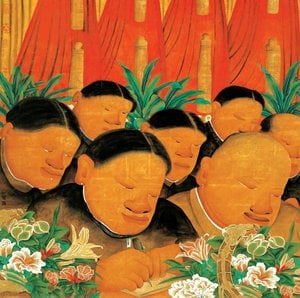
Šiame puslapyje rodomas meno kūrinys yra saugomas autorių teisių įstatymais, todėl neturime teisės legaliai kurti ar parduoti jo identiškos reprodukcijos. Ši apsauga užtikrinama remiantis tokiais tarptautiniais susitarimais kaip Bernės konvencija ir pagal nacionalines įstatymų nuostatas, įskaitant tas, kurias nurodo JAV autoriškos teisės įstatymas – 17-asis skyrius.
Šis metodas visiškai atitinka autorių teises, nes jame nėra saugomo kūrinio kopijavimo ar dubliavimo. Tai yra kūrybinė reinterpretacija – naujas paveikslas, kurį įkvėpė originalas, tačiau kuris nėra jo identiškas.
Muziejų lygio „giclée“ arba drobos spausdinimas: greita gamyba ir lankstios apdailos parinktys. ( Pirkti rankų darbo tapybą Perejti prie skaitmeninių vaizdų)





























Pasirinkite iš mūsų nustatytų dydžių, atitinkančių originalaus meno kūrinio proporcijas.

Įveskite jums reikiamą plotį ir aukštį, kad atvaizdas derėtų prie jūsų rėmo ar sienos. Spausdiną galima tik sumažinti, bet nepadidinti virš originalaus paveikslėlio dydžio, todėl keičiant proporcijas, dalis vaizdo prarandama. Prieš spausdinimą atsiųsime jums skaitmeninį maketą patvirtinimui. Šioje puslapio nuotraukoje matomas pjūvis nėra tikslus – jį rodo tik maketas.
Pristatymas visame pasaulyje () per 2 weeks, o ne įprastas 4/5 savaičių laikotarpis. (9 lapkritis)
China China
Reprodukcijos matmenys
To stand before a work by Zhu Wei is to encounter not merely a painted likeness, but a carefully curated moment in the vast, churning narrative of contemporary China. This piece, capturing a man radiating an almost palpable warmth from beneath a striking red jacket, immediately draws the viewer into its orbit. The subject’s smile, directed outward as if acknowledging your very presence across the museum expanse, is both inviting and deeply guarded. It suggests a complexity—a public persona layered over private depths—that has become a hallmark of modern Chinese portraiture. Zhu Wei, whose career spans the seismic shifts of post-Tiananmen art, uses this seemingly straightforward figure to engage in a subtle, yet profound, dialogue with history and identity.
Technically, the painting showcases a remarkable dexterity. While the subject matter feels immediate and contemporary, the underlying execution hints at deep roots in Chinese artistic tradition. Zhu Wei’s background, steeped in both formal academy training and the sometimes rigid structures of state-sanctioned art, allows him to navigate these currents with an almost effortless grace. The rendering of the white collar against the vibrant red jacket is a study in contrasts—the crisp formality meeting the passionate hue. It is this tension between polished technique and underlying critical spirit that elevates the work beyond mere portraiture; it becomes a cultural artifact itself.
The choice of color, particularly that commanding red, cannot be overstated. In Chinese culture, red symbolizes joy, celebration, good fortune, and vitality. Yet, when paired with the subject's knowing expression, it takes on a more nuanced meaning—perhaps resilience, or even defiance cloaked in gaiety. The man himself, positioned so centrally within this large format (63 x 90 cm), becomes an emblem of the modern Chinese experience: outwardly vibrant and engaging, yet carrying the weight of untold stories beneath that seemingly effortless smile. It invites contemplation on what it means to present oneself to the world while navigating profound societal change.
For the collector or designer seeking a piece with genuine narrative weight, this reproduction offers an unparalleled opportunity. Owning such a work is not simply adorning a wall; it is curating a conversation. It speaks of history, of artistic endurance, and of the enduring human capacity for complex emotion. The energy emanating from the canvas—that bright, engaging smile—has the power to revitalize any space, injecting it with an intellectual spark and a touch of vibrant, sophisticated mystery that only truly great contemporary art can provide.
Kūrinio „China China“ – Džu Veis kontrasto lygis yra Bold.
Džu Veis kūriniui „China China“ panaudojo Painting techniką. Ši technika apibrėžė originalaus kūrinio medžiaginę prigimtį.
„China China“ sujungia Contemporary Chinese Art stilių su Kinija, atspindėdama kūrėjo gimimo vietą.

Gimęs 1966 metais Pekinge, Kinijoje, Zhu Wei yra iškilmingas šiuolaikinis Kinijos menininkas, žinomas dėl savo subtilaus kritinio požiūrio į politiką ir visuomenę sparčiai besikeičiančioje modernios Kinijos aplinkoje. Jis yra vienas ryškiausių post-Tiananmen laikotarpio meno kūrėjų, demonstruojantis neįtikėtiną ištikimybę tradicinei Kinijos tapybai ir kartu teikiantis subtilių nuomonių komentarus apie jos istorinį kontekstą.
Zhu Wei užima kritinę vietą šiuolaikinėje Kinijos menėje. Kaip menininkas, iškilęs Tiananmenio aikštės įvykių šešėlyje, jo kūryba atspindi sudėtingą derybą tarp tradicijos ir modernumo, valstybės kontrolės ir individualios išraiškos. Subtilus politinių ir socialinių struktūrų kritika, pateikta klasikinės Kinijos tapybos priziūrine lente, suteikia unikalia perspektyvą sparčiai transformuojantis Kinijai. Jis įrodo, kad tradicinės meninės formos gali būti galingai pritaikytos šiuolaikiniams iššūkiams, taip užtvirtindamas savo palikimą kaip gyvo balsas pasaulinėje meno diskursijoje.

1966 - , Kinija
Embark on a profound journey through the soul of Chinese calligraphy. Explore the historical mastery of ink, brush, and script, from ancient Zhuanshu to elegant running script, and discover how this timeless art form reflects the enduring spirit of classical East Asian aesthetics.

Elevate your design projects with WahooArt's premium canvas prints and hand-painted reproductions. From Giclée excellence to bespoke oil commissions, we provide professional decorators with museum-quality, affordable art solutions delivered worldwide with a 100% satisfaction guarantee.
 Peržiūrėti realaus dydžio版
 Pasidalinti
 Dalintis
 Išsamiau
 Vadovas

 Atsisiųsti
 Panašūs eksponatai
 Rentgeno spindulių nuotrauka
 Automatinė diorama
 问答
问答
 Statistika


 Skaityti daugiau









 Stiklo variantas prieinamas tik pasirinkus dydį iki 110 cm