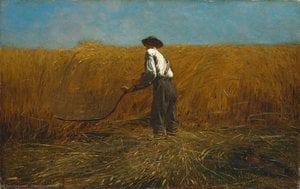
Vinslo Houmerio: Amerikos Dvasios Atspindžiai
Vinslas Houmeras, gimęs Bostone 1836 metais, nebuvo formavęsis tradicinių Europos meno akademijų, kuriomis buvo įtakoti daugelis jo to laikmečio kolegų. Jis iškilęs iš savito Amerikos patirties – įsišaknijusios praktiškume ir stebėjimuose. Jo kelionė neprasidėjo nuo didelių istorinių drobų, bet kaip komercinis iliustratorius vos būdamas dvylika metų Harper's Weekly. Šis ankstyvas mokymas buvo formatyvus, ugdant išskirtinį gebėjimą užfiksuoti scenas aiškumu ir detale – įgūdžiai, kurie taps jo brandaus darbo požymiais. Jis ne mokėsi perspektyvos Paryžiuje; jis mokėsi *matyti* Ameriką, jos žmones ir besivystančią istoriją. Busto gatvių šurmulys, kaimo Naujosios Anglijos gyvenimo tyli pagarba – tai buvo jo pirmieji objektai, atvaizduoti su tikslumu, gimusiomis iš būtinybės spaudos reikalavimams. Šis pagrindas leido jam pereiti prie tapybos, pradėjus nuo akvarelių, prieš galutinai priimdama aliejinių dažų ekspresyvųjį potencialą.
Nuo Idiliškų Vaizdų iki Gamtos Žiaurumų
Houmero ankstyvosios drobės dažnai vaizduodavo idiliškas scenas – vaikai žaidžiantys, ūkininkai prižiūrintys laukus, tylias buities akimirkas. Šie darbai, nors ir patrauklūs, numynė gilesnės meninės jautriosios dalies laukiantį atskleidimą. Katalizatoriumi šiai transformacijai neabejotinai tapo Amerikos pilietinis karas. Būdamas karo korespondentu Harper's Weekly, Houmeras pirmiausia patyrė konflikto brutalumą. Jis nesikonsentruodavo į herojiškas kovas ar dideles strategijas; jis dokumentavo kasdienes karių ir civilių gyvybes, kančios ir atsigavimo akimirkas chaose. Ši patirtis giliai pakeitė jo meninę viziją. Idiliški vaizdai pasitraukė į sudėtingesnius motyvus: su traumomis kovojantys veteranai, naują pasaulį tyrinėjantys išlaisvinti vergai ir atšiaurių kraštovaizdžių grožis, paliestas vargų. Jis pradėjo nagrinėti sunkumo, izoliacijos ir žmogaus santykio su gamta temas – temos, kurios dominuos jo galingiausiuose darbuose. Taip pat išsivystė ir stilius, tapęs drąsesnis ir tiesesnis, atspindintis žiaurų emocinį poveikį, ką jis buvo matęs.
Šviesos, Tekstūros ir Amerikos Kraštovaizdžio Meistriškumas
Vinslo Houmero meninis metodas iš karto atpažįstamas dėl savo tvirtumo ir tekstūros. Jis nebuvo suinteresuotas trumpalaikiais įspūdžiais; jis norėjo sukurti apčiuopiamo realumo pojūtį ant drobės. Jo aliejiniai paveikslai pasižymi tiesioginiu tapymo būdu – dažų sluoksniai dedami užtikrintais judesiais, sukuriant gylį ir šviesumą. Jis turėjo išskirtinį gebėjimą užfiksuoti šviesą, ar tai buvo saulės spindėjimas vandenyne arba tylus šeštadienio apšviestumas kaimo kraštovaizdyje. Šis meistriškumas pasireiškė ir akvarelėse, kuriose jis pasiekė nuostabius atmosferinius efektus ryškiomis spalvomis ir subtiliais plovimais.
Breezing Up (A Fair Wind), sukurtas 1876 metais, puikiai iliustruoja šį gebėjimą – tipiška amerikietiškos jūrinės gyvybės atvaizdas, kupinas energijos ir judesio.
The Gulf Stream, sukurtas dešimtmečius vėliau, yra galbūt jo ikoniskiausias darbas, galingas ir simbolinis žmogaus kovos su gamtos jėgomis vaizdavimas – metafora žmogaus kovai prieš įveikiamus sunkumus. Jis ne tik piešė tai, ką mato; jis perdavė jausmą, emocinę tiesą apie žmogaus būklę.
Palikimas, Sukurtas Amerikos Realizmo Pagrindu
Nors Houmeras gerbė Europos dailininkus, tokius kaip Barbizon mokyklos atstovai – žinomi dėl savo realistinių kaimo gyvenimo vaizdų – ir pripažino įtaką Courbet ir Millet, jis galiausiai sukūrė savarankišką, savotišką amerikietišką kelią. Jis atmetė vyraujantį akademijos konvenciją ir vietoj to susikoncentravo į Amerikos unikalųjį dvasią užfiksuoti. Jo palikimas slypi jo gebėjime pavaizduoti Ameriką sąžiningai ir autentiškai, be romantizavimo ar idealizavimo. Jis ne norėjo imituoti Europos stilius; jis norėjo sukurti meną, kuris būtų unikaliai amerikietiškias, atspindintis jos kraštovaizdžius, žmones ir iššūkius.
Innocence, jaudinantis vaikystės vaizdas, nupieštas gamtos fone, ir
Man of Science, demonstruojantys jo gebėjimą užfiksuoti žmogaus psichologiją, yra liudijimai šiam įsipareigojimui. Jo įtaka galima pamatyti vėlesnių amerikiečių dailininkų darbuose, kurie siekė pavaizduoti savo šalį panašiu tiesiogumu ir emociniu gyliu.
Pastovus Įspūdis: Houmero Istorinis Reikalas
Vinslo Houmero menas siūlo gilų langelį į XIX amžiaus Ameriką, suteikiantį neįkainojamą įžvalgą jo epochos socialinei, politinei ir kultūriniam kraštovaizdžiui. Jo paveikslai yra ne tik gražūs atvaizdai; tai yra galingi teiginiai apie žmogaus atsigėrimą, gamtos grožį ir galią bei amerikietiško patyrimo sudėtingumą. Jis mirė 1910 metais, palikęs produktyvų darbų korpusą, kuris iki šiol sužadina auditoriją. Jo gebėjimas užfiksuoti tautos esmę, besivystančią greitai keičiantis laikotarčiu – nuo pilietinio karo pasekmių iki naujosios šimtmečio aušros – užtikrina jo vietą kaip vieno iš svarbiausių ir ilgalaikiškiausių amerikiečių dailininkų. Jis ne tik piešė paveikslus; jis dokumentavo laiką, išsaugojo jį ateinančioms kartoms.
- Jo darbai iki šiol įkvepia šiuolaikinės dailininkės.
- Houmeras lieka esminis veiksnys lavinant Amerikos realizmą.



 Peržiūrėti realybėje
 Perejti prie spausdinimo
 Pasidalinti
 Dalintis
 Išsamiau

 Atsisiųsti
 Panašūs eksponatai
 Rentgeno nuotrauka
 Automatinė diorama
 Statistika


 Skaityti daugiau






































 Stiklo variantas prieinamas tik pasirinkus dydį iki 110 cm


![Indian Tobacco Shop Sign [reverse, Indian Facing Right] — Vinslou Homeris, Contemporary Realism](/media/artworks/images-thumb/74/22/7422432cafc295265ef3b7f7fa62d35d.jpg)