


Muziejų lygio „giclée“ arba drobos spausdinimas: greita gamyba ir lankstios apdailos parinktys. ( Pirkti rankų darbo tapybą Perejti prie skaitmeninių vaizdų)





























Pasirinkite iš mūsų nustatytų dydžių, atitinkančių originalaus meno kūrinio proporcijas.

Įveskite jums reikiamą plotį ir aukštį, kad atvaizdas derėtų prie jūsų rėmo ar sienos. Spausdiną galima tik sumažinti, bet nepadidinti virš originalaus paveikslėlio dydžio, todėl keičiant proporcijas, dalis vaizdo prarandama. Prieš spausdinimą atsiųsime jums skaitmeninį maketą patvirtinimui. Šioje puslapio nuotraukoje matomas pjūvis nėra tikslus – jį rodo tik maketas.
Pristatymas visame pasaulyje () per 2 weeks, o ne įprastas 4/5 savaičių laikotarpis. (8 lapkritis)
Highland Cattle
Reprodukcijos matmenys

William Luker, a British artist working primarily during the late 19th and early 20th centuries, remains a captivating figure within the landscape art tradition. Often overshadowed by his more prominent contemporaries, Luker’s meticulous detail and evocative use of light have secured him a devoted following amongst collectors and scholars alike. Born in London in 1867, he inherited a passion for painting from his father, William Luker Sr., a renowned artist celebrated for his depictions of rural England – a lineage that profoundly shaped Luker's artistic trajectory.
Luker’s early life was marked by familial challenges. His father’s struggles with depression and financial instability cast a long shadow over the family, influencing the young William to seek solace and creative expression through art. This period of hardship instilled in him a deep appreciation for the beauty of the natural world – a refuge from personal turmoil. He received his initial artistic training under his father, absorbing not only technical skills but also a particular sensibility towards capturing the serene essence of the English countryside.
Luker’s distinctive style is immediately recognizable through his masterful manipulation of light and color. He eschewed the dramatic, often brooding tones favored by some of his contemporaries, instead opting for a softer, more luminous palette. His paintings are characterized by an almost ethereal quality – as if bathed in the golden glow of late afternoon sunlight. This deliberate choice wasn’t merely aesthetic; it reflected Luker's desire to convey a sense of tranquility and harmony with nature.
His subjects typically centered around idyllic rural scenes: rolling hills dotted with sheep, meticulously rendered hunts in Scottish glens, and charming village life. However, Luker’s skill extended beyond simple representation. He possessed an uncanny ability to capture the fleeting effects of light on water, foliage, and stone – transforming ordinary landscapes into moments of breathtaking beauty. He frequently employed a technique of layering thin washes of color, building up depth and atmosphere with subtle gradations.
Among Luker’s most celebrated works is “Two Hunting Horses in a Landscape” (1852), a dynamic depiction of a Victorian hunting scene. The painting showcases his remarkable ability to convey movement and drama, capturing the energy of the horses and the intensity of the hunt with impressive detail. “A Halt in the Desert” (circa 1890) offers a contrasting study – a quiet, contemplative scene featuring a lone rider against a vast expanse of sand, demonstrating Luker’s versatility across different subject matter.
“Stag Hunt in Scotland” (1852), a particularly striking example of his work, exemplifies the artist's meticulous attention to detail and his ability to capture the rugged beauty of the Scottish Highlands. The painting is renowned for its dramatic lighting and the realistic portrayal of the animals and hunters. Luker’s artistic style evolved subtly throughout his career, reflecting both his technical mastery and his growing personal vision.
Despite not achieving widespread fame during his lifetime, William Luker's work has gained increasing recognition in recent decades. His paintings are now held in prestigious collections worldwide, and his influence can be seen in the works of later landscape artists. Luker’s legacy lies not only in his individual achievements but also in his embodiment of a particular aesthetic sensibility – a quiet reverence for nature and a profound understanding of light.
His dedication to capturing the subtle nuances of the English countryside, combined with his exceptional technical skill, ensures that William Luker remains a significant figure in Victorian art history. Further research into his life and work continues to reveal new insights into this talented and often overlooked artist.

1867 - 1909

Explore the life & work of James Giles (1801-1870), a master of Scottish landscape painting and favored artist of Queen Victoria. Discover his atmospheric realism & royal commissions.
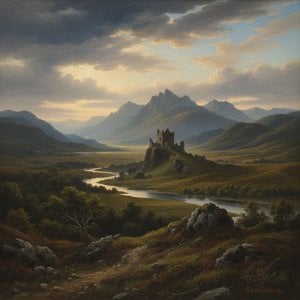
Explore the life & art of Alexander Nasmyth, a pivotal figure in Scottish Romantic landscape painting. Discover his iconic works, including portraits of Robert Burns, and learn about his lasting influence on national identity. Fine art reproductions available.
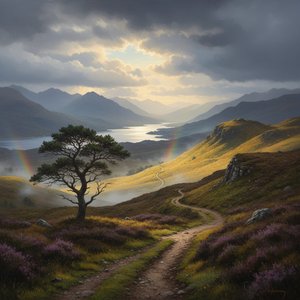
Explore the serene landscapes & majestic Highland cattle paintings of Louis Bosworth Hurt (1856-1929). Discover his mastery of atmospheric perspective and lasting legacy in British art. Learn more at WahooArt.

Atraskite 25 įspūdingiausius Džono Konsteblio paveikslus! Romantizmo meistro gamtos vaizdai, Dedham Vale peizažai ir meno istorijos šedevrai. Meno reprodukcijos jūsų interjerui – WahooArt.com

Explore the profound beauty of the Scottish Highlands through the lens of Romanticism. Discover the history, technique, and atmospheric mastery behind iconic landscape paintings from the Old Masters to museum-quality oil reproductions for collectors.
 Peržiūrėti realaus dydžio版
 Pasidalinti
 Dalintis
 Išsamiau
 Vadovas

 Atsisiųsti
 Panašūs eksponatai
 Rentgeno spindulių nuotrauka
 Automatinė diorama
 问答
问答
 Statistika
 Skaityti daugiau









 Stiklo variantas prieinamas tik pasirinkus dydį iki 110 cm


