A Glimpse into Eighteenth-Century Grandeur
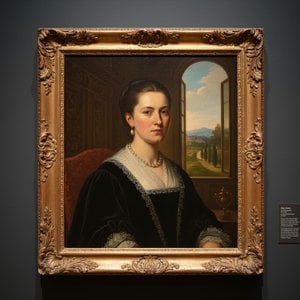
In the quiet, commanding presence of William Hogarth’s “George Arnold,” viewers are transported back to the structured elegance of 18th-century Britain. This captivating portrait presents an elderly gentleman in a three-quarter view, a composition that immediately establishes a sense of profound dignity and social importance. As one gazes upon the subject, his direct and steady eyes seem to invite a silent dialogue across the centuries, bridging the gap between the modern observer and the historical elite. The formal, seated pose is not merely a matter of convenience but a deliberate artistic choice intended to convey the weight of character and the stability of status.
The painting serves as a masterful window into the societal landscape of Hogarth’s era. While the artist is globally celebrated for his biting satirical series such as A Harlot’s Progress and A Rake’s Progress, this particular work reveals his exceptional prowess in classical portraiture. Here, there is no mockery, only a meticulous dedication to capturing the essence of a prominent individual. Through this piece, we encounter the refined atmosphere of a period defined by both burgeoning ambition and rigid social hierarchies, making it an exquisite centerpiece for any collection focused on historical realism.
Mastery of Light, Texture, and Symbolism
Technically, “George Arnold” is a triumph of the classical oil painting tradition. Hogarth employs a sophisticated layering of brushstrokes to achieve a remarkably smooth texture, lending a lifelike quality to the subject’s skin and the heavy fabrics of his attire. The use of directional lighting is particularly striking; it illuminates the man's face and upper body with a soft brilliance, while deep, intentional shadows wrap around the contours of his form to create a powerful sense of three-dimensionality. This interplay of light and dark—often referred to as chiaroscuro—is set against a dark, indistinct background, which serves to isolate the subject and focus all emotional energy upon his expression.
Every element of the subject's wardrobe acts as a silent narrator of his wealth and position. The rich blue coat, paired with an ornate waistcoat and delicate ruffled cuffs, speaks to the meticulous fashions of the 1700s. Even the powdered wig, a hallmark of the period’s upper class, functions as a potent symbol of social standing. For the discerning interior designer or collector, these details offer more than mere decoration; they provide a sense of structured elegance and historical depth. The painting does not just depict a man; it depicts an era of prestige, making it an ideal choice for creating a sophisticated, scholarly, or classically inspired atmosphere in any grand room.
An Emotional Resonance for the Modern Collector
Beyond the technical brilliance and the historical fascination, there is a profound emotional layer to this portrait that continues to resonate today. While the primary impression is one of composure and strength, a subtle hint of melancholy lingers within the subject's gaze—a reflection of the inevitable passage of time and the weight of a life lived through significant history. This complexity allows the artwork to transcend simple decoration, offering a contemplative presence that can anchor a room with both gravity and grace.
For those seeking to adorn their spaces with high-quality reproductions, “George Arnold” offers an unparalleled opportunity to possess a piece of British art history. Whether placed in a private study, a formal dining hall, or a curated gallery space, the painting’s ability to evoke both intimacy and grandeur makes it a timeless investment. It is a work that invites repeated viewing, revealing new nuances of texture, light, and human emotion with every encounter.
问答 (or more naturally for a website heading): Klausimai ir atsakymai
Kokia yra „George Arnold“ tema ir kokią atmosferą ji sukuria?
„George Arnold“, autorius – Viljamas Hogartas vaizdelioje atspindžiami portraiture, elderly man, 18th century, dignified, formal, classicism, social status, wealthy, sukurti Classic nuotaika. Tematika ir atmosfera kartu apibūdina šį kūrinį.
Ar „George Arnold“ galima įsigyti kaip aukščiausios kokybės spausdinį?
Šio kūrinio „George Arnold“, autorius – Viljamas Hogartas spausdinį galite užsakyti tiesiogiai ši ši puslapį: aukščiausios kokybės spausdinys ant medžio siuvinėjamų audinių arba archyvinio kanvas tipo popieriaus.
Ar galiu užsisakyti „George Arnold“ aliejinį reprodukciją?
„George Arnold“ galima įsigyti kaip rankomis dažyta aliejų reprodukcija ant lininio drobos. Užsakymą galite padaryti ši ši puslapį, pasirinkdami tinkamą dydį.
Kokia yra autorinės teisės situacijos priežastis kūriniam darbui „George Arnold“, autorius – Viljamas Hogartas?
Autorinės teisės statusas kūriniui „George Arnold“ – pripa принадле belongs to the public domain – jo autorinė teisė pasibaigusi – nustatomas remiantis to, kad paveikslas buvo sukurtas po to, kai menininkas mirė 1764 m.
Kokiam progui „George Arnold“, autorius – Viljamas Hogartas siūloma kaip dovana?
„George Arnold“, autorius – Viljamas Hogartas rekomenduojamas kaip dovana Retirement. Šio kūrinio reprodukcija gali būti priskirta kaip patogia siya ra regalo.
Kuriam menininkui priskiriamas kūrinys „George Arnold“?
„George Arnold“ priskiriamas Viljamas Hogartas.
Kokią vietą Viljamas Hogartas pasikartojančių temų tarėje užima „George Arnold“?
„George Arnold“ vaizduoja portraiture, elderly man, 18th century, dignified, formal, classicism, social status, wealthy, o įrašytos Viljamas Hogartas temos yra classical ideals, roman portraiture, 18th-century social hierarchy, wealth & status symbolism, hogarth's moral critiques, satirical observation of society, part of a series on human folly, detailed realism. Šių dviejų palikimų lyginimas parodo, kaip šis kūrinys susijęs su įprastais šio kūrybinio veiksmo objektais.



 Peržiūrėti realaus dydžio版
 Pirkti rankomis tapytą reprodukciją
 Siųsti
 Dalintis
 Išsamiau
 Vadovas

 Atsisiųsti
 Panašūs eksponatai
 Rentgeno spindulių nuotrauka
 Diaporama
 Statistika

 Rodyti daugiau






































 Stiklo variantas prieinamas tik pasirinkus dydį iki 110 cm