Peržiūrėti realybėjePeržiūrėti realybėje Peržiūrėti ARPeržiūrėti AR Pirkti rankomis tapytą paveikslą Pirkti rankomis tapytą paveiksląPirkti vaizdą Pirkti vaizdą PasidalintiPasidalinti
IšsamiauIšsamiau Pridėti į mėgstamiausius Pridėti į mėgstamiausius AtsisiųstiAtsisiųsti Panašūs eksponataiPanašūs eksponatai Rentgeno nuotraukaRentgeno nuotrauka Automatinė dioramaAutomatinė diorama

Jeunesse

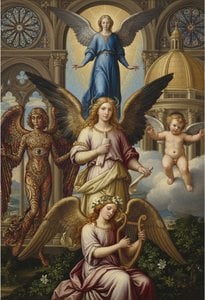
A serene Neoclassical masterpiece by William-Adolphe Bouguereau featuring a woman and two angels in a moment of pure peace, perfect for collectors seeking to own this exquisite 1893 oil on canvas reproduction.

Viljamas Adolfas Bouguereau buvo Prancūzijos akademinis dailininkas. Jo įmantrios žanrinės drobės iškvėpino mitologiją ir įkvepėjo klasikinius principus. Atraskite jo meistriškumą šiandien!

Giclée / Meno spausdinimas

Muziejų lygio „giclée“ arba drobos spausdinimas: greita gamyba ir lankstios apdailos parinktys. (Pirkti rankomis tapytą paveikslą Pirkti rankomis tapytą paveiksląPirkti vaizdą Pirkti vaizdą)

P118B $10
P118H $10
P118W $10
P438Z $10
P508JH $12
P508YH $12
P805H $10
P805Z $10
P919BZ $10
P919G $10
P919XJ $10
P959ZH $10
P968JZ $12
W106C $8
W218G $10
W218JH $8
W218Y $10
W307PJ $10
W316G $10
W316PJ $8
W316Y $10
W398PJ $8
W4111J $10
W500HY $15
W500JH $15
W692G $12
W849H $8
W940BG $15
W953PJ $8

Standartinis dydis
individualiame dydį
CM
INCH

Pasirinkite iš mūsų nustatytų dydžių, atitinkančių originalaus meno kūrinio proporcijas.

plotis
aukštis

Galite nurodyti savo matmenis, kad vaizdas atitiktų konkretų rėmą ar erdvę. Jei pasirinktas dydis nesutaps su originalaus paveikslėlio proporcijomis, mes arba apkirpsime kūrinį, arba išplėsime vaizdą naudojant veideliu atspindėtą arba vientisą šoną. Skaitmeninis maketas bus išsiųstas jums patvirtinti prieš pradedant gamybą.
Atkreipkite dėmesį, kad ekrane matomas vaizdinys neatspindi tikrojo apkirpimo ar išplėtimo. Tik maketas tiksliai parodytų galutinę kompoziciją.
Nors galima rinktis ir individualius dydžius, rekomenduojame pasirinkti vieną iš išanksti nustatytų matmenų, kad būtų išlaikytos originalios proporcijos.

Pristatymas visame pasaulyje () per 2 weeks, o ne įprastas 4/5 savaičių laikotarpis. (6 rugsėjis)

why_choose_icon
Nemokamas greitasis pristatymas visame pasaulyje
why_choose_icon
Aukštos kokybės lininis drobė
why_choose_icon
Pilnas siuntimo draudimas
why_choose_icon
Muitinės mokesčių grąžinimo garantija
why_choose_icon
Tikro spalvų atitikimo garantija
why_choose_icon
100 dienų grąžinimo politika (tik esant gamyklinėms defektams)
why_choose_icon
100% pinigų grąžinimo garantija
why_choose_icon
Nuolaida už kelias reprodukcijas

Visų darbų kaina

$ 68

reproduction

Jeunesse

Giclée / Meno spausdinimas

Reprodukcijos matmenys

-

Galutinė kaina

$ 68

Trumpos informacija

  • Medium: Oil on canvas
  • Artistic style: Academic realism, idealized forms
  • Movement: Neoclassicism, Academic art
  • Artist: William-Adolphe Bouguereau
  • Title: Jeunesse
  • Location: Macdonald Stewart Art Center
  • Subject or theme: Serenity, peace, and youth

Karo viktorina

Kiekviename klausime yra tik vienas teisingas atsakymas.

Klausimas 1:
What is the primary artistic style of William Adolphe Bouguereau's 'Jeunesse'?
Klausimas 2:
In the painting, what is the woman doing with the two angels?
Klausimas 3:
Which accessory worn by the woman adds an air of elegance to the composition?
Klausimas 4:
What medium was used for this masterpiece created in 1893?
Klausimas 5:
Which element in the background adds a touch of decorative flair to the scene?

A Vision of Eternal Serenity

In the realm of nineteenth-century Academic art, few works capture the ethereal intersection of the human and the divine as tenderly as William-Adolphe Bouguereau’s Jeunesse. Painted in 1893, this oil on canvas masterpiece serves as a profound meditation on innocence and the enduring spirit of youth. The composition centers on a woman of remarkable grace, her presence anchored by a luminous white dress and the delicate shimmer of a pearl necklace. She is not alone in her contemplation; flanking her are two celestial beings, angels whose gentle proximity suggests a shared secret or a whispered prayer. As she reaches up to hold the ears of these winged companions, a sense of profound intimacy emerges, drawing the viewer into a private moment of spiritual communion that transcends the boundaries of time.

The technical mastery displayed in Jeunesse is a testament to Bouguereau’s status as a titan of the French Academic school. His brushwork, though nearly invisible to the naked eye, achieves a level of hyper-realistic perfection that breathes life into the skin tones and the soft textures of the fabric. The artist employs a luminous color palette, where light does not merely strike the subjects but seems to emanate from within them. This technique creates a soft, pearlescent glow that enhances the painting's Neoclassical ideals of beauty and harmony. Every detail, from the subtle musculature of the angels to the decorative elegance of the vase in the background, is rendered with a precision that commands respect and invites prolonged study.

Symbolism and the Aesthetic Soul

Beyond its surface beauty, Jeunesse is rich with symbolic resonance. The title itself, meaning "Youth," hints at a state of being rather than merely an age. The interaction between the woman and the angels symbolizes the connection between the earthly realm and the spiritual world, suggesting that purity of heart allows for a direct encounter with the divine. The pearls around her neck serve as symbols of wisdom and purity, while the serene atmosphere of the scene acts as an emotional sanctuary for the observer. For the collector or interior designer, this piece offers more than mere decoration; it provides an atmospheric anchor that can infuse a room with a sense of peace, sophistication, and timelessness.

Integrating a high-quality reproduction of such a significant work into a modern living space allows for a dialogue between historical grandeur and contemporary elegance. Whether placed in a sunlit gallery or a quiet study, the painting’s ability to evoke emotion remains undiminished. It stands as a breathtaking tribute to the era of Bouguereau, reminding us that even in a fast-paced world, there is an eternal value in stillness, beauty, and the pursuit of the sublime.


Autoriaus biografija

William-Adolphe Bouguereau (1825–1905): A Titan of Academic Realism

William-Adolphe Bouguereau, born in La Rochelle, France, in 1825, stands as one of the most recognizable and revered figures within the landscape of French academic art. From his formative years immersed in the pastoral beauty of Vendée – a region profoundly shaped by Impressionist painters like Monet – Bouguereau embarked on an artistic journey characterized by unwavering devotion to classical principles and unparalleled technical prowess. His oeuvre transcends mere visual representation; it embodies a profound belief in the inherent dignity and sublimity of human form, meticulously rendered with breathtaking precision and infused with emotive resonance. He wasn’t merely attempting to depict what he observed; rather, he sought to capture what he considered to be fundamentally beautiful—a pursuit that cemented his place as a cornerstone of 19th-century artistic achievement.

Early Influences and Artistic Training

Bouguereau's formative years were marked by exposure to the artistic traditions of Vendée, where he absorbed the stylistic nuances of Impressionism alongside his burgeoning fascination with the grandeur of antiquity. However, it was his enrollment at the École des Beaux-Arts in Paris—under the tutelage of François-Edouard Picquenot—that truly catalyzed his artistic development. Here, he immersed himself in the teachings of Raphael and Titian, absorbing their mastery of anatomy, perspective, and color theory. These masters served as guiding beacons, shaping Bouguereau’s stylistic vision and instilling within him an unwavering commitment to replicating the luminous beauty and idealized form that defined Renaissance art. The École instilled a discipline and rigor that would permeate his entire artistic practice—a dedication to meticulous draftsmanship and anatomical accuracy that distinguishes his work from its contemporaries.

The Pursuit of Ideal Beauty: Bouguereau’s Artistic Style

Bouguereau's distinctive artistic style is undeniably rooted in academic realism, yet it transcends mere imitation. He possessed an extraordinary aptitude for capturing the subtleties of human anatomy—the delicate curvature of a shoulder, the subtle blush of skin—with astonishing accuracy. Simultaneously, he demonstrated a masterful command of light and composition, skillfully orchestrating visual elements to evoke emotion and narrative depth. Unlike Impressionists who prioritized fleeting impressions of color and atmosphere, Bouguereau painstakingly reconstructed idealized forms with painstaking detail, striving for a perfection that resonated with the aesthetic sensibilities of his era. His canvases are populated by figures rendered with breathtaking realism—yet they possess an ethereal quality that elevates them beyond mere depiction. Consider *The Birth of Venus*, where Bouguereau transforms Botticelli’s mythological allegory into a luminous celebration of feminine grace and beauty—a testament to his ability to infuse classical themes with emotive resonance.

Major Achievements and Recognition

Throughout his illustrious career, Bouguereau achieved unparalleled acclaim within the Parisian Salon—receiving numerous awards and commissions that solidified his reputation as one of France’s foremost artistic luminaries. His paintings graced the homes of royalty and aristocracy alike, demonstrating his enduring popularity among discerning collectors. However, Bouguereau's unwavering adherence to traditional artistic values—a rejection of Impressionism’s radical experimentation—encountered resistance from avant-garde circles in the early 20th century. Despite this initial setback, Bouguereau’s legacy endured—recognized anew by art historians and critics who championed his technical brilliance and artistic integrity. Today, his works are housed in prestigious museums worldwide—including the Musée d’Orsay and The J. Paul Getty Museum—ensuring that his contribution to French art history will continue to inspire awe and admiration for generations to come. His influence can be discerned in contemporary figurative painting—where artists strive to emulate Bouguereau's mastery of form and light—a testament to the enduring power of classical ideals.

A Lasting Impression: Bouguereau’s Enduring Appeal

William-Adolphe Bouguereau’s artistic vision transcended mere stylistic convention; it embodied a profound belief in the inherent beauty and dignity of human form—a conviction that continues to captivate audiences today. His meticulous draftsmanship, anatomical accuracy, and emotive expression—combined with his unwavering devotion to classical principles—established him as a titan of academic realism—a figure whose influence reverberates throughout the annals of art history. He remains a pivotal artist of the 19th century—representing the zenith of artistic achievement and offering an enduring testament to the transformative power of beauty.
Viljamas Adolfas Bogušėjus

Viljamas Adolfas Bogušėjus

1825 - 1905 , Prancūzija

Trumpa informacija

  • Artistic Movement Or Style: Akademinis Realizmas
  • Artists Or Movements Influenced By This Artist: ['Žanras']
  • Artists Who Influenced This Artist:
    • Rafaelas
    • Titas
  • Date Of Birth: 1825
  • Date Of Death: 1905
  • Full Name: William-Adolphe Bouguereau
  • Nationality: Prancūzijoje
  • Notable Artworks:
    • Šešėlių Šuo
    • Mielasis Už Basą
  • Place Of Birth: La Rochelle, Prancūzija
Tyrinėkite meno kūrinius, suskirstytus pagal temas, stilius ir savybes.