Autoriaus biografija
Vilemo de Kuningo: Abstraktaus ekspresionizmo jėga
Willemas de Kooningas, vardu žinomas kaip vienas reikšmingiausių abstrakčiojo ekspresionizmo atstovų, gimė 1904 m. balandžio 24 d. Roterdame, Nyderlanduose. Jo ankstyvieji metai buvo pažymėti tėvų skyrybomis, įvykiu, kuris galbūt įskiepijo jam nuolatinį nerimą ir ieškojimo jausmą, vėliau atsispindėsiusį jo kūriniuose. Palikęs formalų mokslą būdamas dvylikos metų, Vilemas dirbo komercinės dailės įmonėje, sukaupęs techninius įgūdžius, tačiau tuo pat metu jautėsi vis stipriau traukiamas nuo tradicinių ribų. Vakariniai užsiėmimai Roterdamo vaizduojamųjų menų ir technikų akademijoje suteikė papildomo pagrindo, tačiau jo tikras troškimas – drąsesnės, ekspresyvesnės kalbos – galiausiai paskatino jį 1926 m. keliauti į Ameriką. Jo atvykimas nebuvo lengvas; jis garsiai slapstėsi ant laivo, simbolizuodamas nepriklausomo žmogaus siekiantį naujų horizontų. Niujorkas tapo jo prieglauda, o miesto pulsujanti, kartais šiurpi energija giliai paveikė jo besivystančią stilistiką. Jis dirbo įvairius darbus – namų dažytojas, staliaus padėjėjas – visada atkakliai siekdamas savo meno viziją, į savo kūrybą įdraudamas miesto pulsą.
Nuo miesto vaizdų iki abstraktaus protrūkio
De Kooningo ankstyvieji paveikslai atspindėjo jo tiesioginę aplinką: Niujorko miesto peizažus ir portretus, užfiksavusius miesto dinamiką. Tačiau tai buvo tik žingsniai į gilesnę formos ir emocijų ekspediciją. Esminis momentas atėjo su susidūrimu su Aršile Gorkiu, kurio įtaka pasirodė esanti transformuojanti. Gorkis skatino de Kooningo eksperimentus su abstrakcija, ugdydamas norą panaikinti tradicinį vaizdavimą siekiant kažko gilesnio. 1930-ųjų metais de Kooningas dirbo socialinio realizmo ir sienų projektų programoje per Federalinę meno projektavimo administraciją (WPA), laikotarčiu, kuris tobulino jo įgūdžius, tačiau taip pat atskleidė grynai reprezentacinei menai ribas. Jis vis labiau buvo traukiamas į Stuart Daviso ir John Graham darbą, menininkus, kurie savo ruožtu stūmė ribas. Šių įtakų susidūrimas palaipsniui nuvedė jį nuo tiesioginio vaizdavimo link vis abstrakčiau besikeičiančio žodyno. Tai nebuvo staigus poslinkis, o lėtas degimas – sąmoningas nustatytų normų panaikinimas, paremtas intelektualiu smalsumu ir atkakliu tiesos meninės paieškos siekiu.
„Moterys“ ciklas: reikšmingas pasiekimas
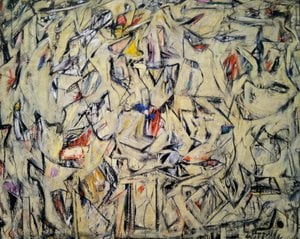
Antrojo pasaulinio karo pabaigoje de Kooningas tapo pagrindiniu besivystančios abstraktaus ekspresionizmo srovės figūra. Šis laikotarpis pažymėjo lūžį, susiklostantį į jo ikoninius „Moterys“ (1950–1953) ciklus. Šie paveikslai – įskaitant monumentalųjį *Moteris I* – nėra tiesiog moteriškos figūros atvaizdai; tai visceralūs motyvų, seksualumo ir žmogaus emocijų sudėtingumų tyrimai. Pasižymintis agresyviais dažymo gestais, fragmentiškomis formomis ir įtaką darančiu spalvų derinimu, „Moterys“ ciklas iššūkavo tradiciniams grožio ir vaizdavimo supratimams. Jie buvo kontroversiški, net šokiruoja kai kuriems, tačiau jų jėga slypi būtent atsisakant atitikti normas. De Kooningas neketino kurti idealizuotų paveikslų; jis siekė užfiksuoti savo subjektų žalią, neprižiūrimą esmę. Be „Moterys“ ciklo, tokie darbai kaip *Stiklininkas* ir *Iškasena* toliau parodė jo dinamišką požiūrį į tapybą, parodydama meistrišką tekstūros, spalvos ir kompozicijos valdymą. Jis nebijojo chaoso ar dviprasmiškumo; priešingai, jis priėmė juos kaip integralias savo meninės kalbos dalis.
Besivystantys peizažai ir nuolatinis palikimas
1960-ųjų metais de Kooningo stilius patyrė dar vieną reikšmingą transformaciją. Nors abstrakcija išliko pagrindiniu jo darbo aspektu, peizažo elementai ėmė vaidinti svarbesnį vaidmenį, dažnai atvaizduojami ryškesne palete ir laisvesniu, sklandesniu dažymo stiliumi. Jis visą gyvenimą toliau eksperimentavo, tyrė skirtingas technikas ir medžiagas, niekada nebuvo patenkintas savo lauravimais. Vėlesni jo darbai parodė nepaprastą gebėjimą save atnaujinti, išlikdami ištikimi savo pagrindiniams meniniams principams. Vilemo de Kooningo istorinė reikšmė neabejotina. Jis padėjo įtvirtinti Niujorką kaip pasaulinį meno centrą, nesulaikęs Europos tradicijų dominavimo ir atidaręs kelią ateinančioms kartoms menininkų. Jo darbai ir toliau sukelia nuostabą ir diskusijas, primindami abstrakcijos galią perteikti gilius emocinius tiesos momentus. Vilemas de Kooningas mirė 1997 m., palikęs didelį ir įtakingą kūrinį, kuris yra liudijimas jo neprilygstančiai atsisakymo meninės naujovės įsipareigojimo ir nuolatinio jo palikimo kaip vieno svarbiausių 20-ojo amžiaus amerikiečių menininkų. Jo poveikis išlieka iki šiol.



 Peržiūrėti realaus dydžio版
 Perjungti į spausdinimą
 Siųsti
 Dalintis
 Išsamiau
 Vadovas

 Atsisiųsti
 Panašūs eksponatai
 Rentgeno spindulių nuotrauka
 Diaporama
 Statistika


 Rodyti daugiau






































 Stiklo variantas prieinamas tik pasirinkus dydį iki 110 cm