Gaukite spausdinimui paruoštą failą, kurio kokybė gerokai viršija internetinę peržiūrą. Kiekvienas mūsų parduodamas skaitmeninis vaizdas yra ištrauktas iš aukštos raiškos pagrindinio failo mūsų duomenų bazėje — paprastai jis siekia nuo 5 000 iki 15 000 pikselių plotio — todėl galite drąsiai spausdinti didelius formatus, apkirpti vaizdą ar reprodukcija užtikrins visas smulkias detales.
Mūsų studijoje nė viena kopija nelieka neapdorota. Skaitmeninio vaizdo ekspertas, lygiu su originaliu paveikslu, patikrina spalvas ir, jei reikia, jas koreguoja, o tada profesionaliais retušavimo įrankiais padidina aiškumą bei detales — visada išlaikydamas ištikimybę autoriaus teptuko traukoms ir stiliui. Rezultatas – vaizdas, kuris atrodo kaip tikras paveikslas, o ne kaip su filtrais apdorotas skenavimas.
Patvirtinate prieš užsakymo pabaigą: mūsų ekspertas per 72 valandas el. laišku atsiųsta vaizdą jūsų peržiūrai. Nepasitenkinate rezultatu? Paprašykite patobulinimų ar pataisymų arba prašykite pinigų grąžinimo, jei kokybė neatitinka jūsų lūkesčių.
Ši kokybė yra patikima leidybos įstaigoms, dizaino studijoms, galerijoms ir spaudos įmonėms.
Atsisiųskite didelės raiškos failą asmeniniam naudojimui, spausdinimui ir kūrybiniams projektams. ( Perjungti į spausdinamus版作品 Pirkti rankų darbo tapybą)
Pasirinkę WahooArt.com, jūs ne tik gaunate paveikslėlį – jūs gaunate profesionaliai patobudintą skaitmeninį kūrinį, sukurtą itin tikniai ir užtikrinantį pasitenkinimą. Štai viską, kas automatiškai pritékia jūsų užsakymui:
Jūsų aukštos raiškos skaitmeninis vaizdo failas bus išsiųstas el. paštu per 72 valandas nuo užsakymo – jis bus paruoštas naudoti be jokių papildomų veiksmų.
Jūsų meno kūrinys profesionaliai optimizuojamas naudojant pažangius dirbtinio intelekto įrankius ir rankinį redagavimą, užtikrinant maksimalią detalę, aiškumą ir spalvų tikslumą.
Atsitiktinai ištrytikote ar praradote savo failą? Nebijokite – bet kuriuo metu atsiųsime jį jums vėl nemokamai.
Mėgaukitės savo meno kūrynu be jokių muitinės mokesčių, įkainų ar pristatymo išlaidų – skaitiniai failai visada yra neapmokestinami.
Naudodami profesionalią įrangą ir spalvų valdymo sistemas, užtikriname, kad jūsų skaitmeninis vaizdas kuo tiksliau atspindėtų originalias spalvas.
Jei nebuvosite patenkinti įsigyto skaitmeninio vaizdo, mes jį tališkai koreguosime arba grąžinsime 100% sumą per 100 dienų – be jokių klausimų.
Nesitenkinate? Gaukite visą sumokėtą sumą per 100 dienų nuo skaitmeninio failo gavimo – be jokių papildomų klausimų.
Pirkti 3 nuotraukas – 10% nuolaida – Pirkti 5 – 15% nuolaida – Pirkti 10 ir daugiau – 20% nuolaida. Puikiai tinka kūrybiniams projektams, galerijoms bei agentūroms.
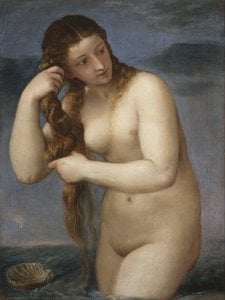
| Title: | Philipp II, as Prince |
| Artist: | Titian |
| Date: | 1551 |
| Medium: | Oil on Canvas |
| Dimensions: | 111 x 193 cm |
| Current Location: | Prado Museum |
Savo Elegant nuotaika „Philipp II, as Prince“ siūloma Living Room erdvei.
Rekomenduojamas „Philipp II, as Prince“ spausdinimo dydis – Large. Taip pat galima rinktis kitus dydžius, išlaikant tą patį proporciją.
„Philipp II, as Prince“ – Tizianas priklauso Baroque stiliui. Ši dailės kryptis suteikia kūriniui stilistinį kontekstą.

In the rugged, mountainous reaches of Pieve di Cadore, a boy named Tiziano Vecellio began a life that would eventually reshape the very language of oil on canvas. Born around 1490, he was the son of Gregorio Vecellio, a man of the military, and a woman named Lucia. The family lived in a region where the dramatic peaks of the Venetian Alps cast long, shifting shadows across the land, a landscape that perhaps whispered the secrets of light to a young mind. Recognizing the spark of talent in her sons, the family looked toward the great city of Venice, arranging for young Tiziano and his brother Francesco to enter the workshops of the masters. This move from the quiet mountains to the bustling, salt-scented canals of Venice changed everything.
His early years were spent absorbing the atmosphere of a city that pulsed with trade and color. He first learned his craft under Sebastiano Zuccato, a mosaicist, before moving into the circles of Gentile Bellini and his own brother, Giovanni. Yet, it was his time spent alongside Giorgione that truly defined his path. Together, they worked on the exterior frescoes for the Fondaco dei Tedeschi, a busy trading post for German merchants. In those early days, his brush sought a certain lyricism, a way to capture the air itself through subtle tones and a gentle, poetic touch.
As the years passed, the soft, ethereal qualities of his youth gave way to something much more muscular and dramatic. He moved away from the quietude of his early training to embrace a bolder approach to color. His brushwork became a tool of immense power, shifting from smooth, blended surfaces to loose, expressive marks that seemed to pulse with life. He learned to layer thin glazes of pigment upon underpaintings, a technique that allowed him to achieve a luminosity that few could replicate. This was not merely about depicting a subject, but about capturing the weight of velvet, the glow of skin, and the very atmosphere surrounding a figure.
His subjects were as varied as the people who walked the streets of Venice. He became a master of the portrait, capturing the psychological depth of his sitters, from the physical likeness of a man to the hidden character within. His mythological scenes and religious compositions were imbued with a sensuality and a tension that drew viewers in. In works like Venus of Urbino, he redefined how the human form was presented, using color to create a sense of presence that felt almost tactile. He was a man who understood that light does not just fall upon an object; it interacts with it, creating a drama of shadow and brilliance.
The fame of Tiziano Vecellio eventually reached the highest courts of Europe. He became a favorite of powerful men, serving as a painter to Emperor Charles V, King Philip II of Spain, and Pope Paul III. This high-level patronage allowed him to work on a monumental scale, creating massive canvases that filled the halls of palaces and the altars of great churches. He possessed a rare diplomatic finesse, adapting his style to suit the tastes of different royal courts while never losing the distinctive voice that made him a titan of his age.
When he passed away in Venice in 1576, he left behind a legacy that would ripple through the centuries. His influence was felt by those who followed, from the heavy brushwork of Rubens to the dramatic light of Rembrandt and the bold strokes of Delacroix. He acted as a bridge between the High Renaissance and the coming Baroque era, proving that color could be just as expressive as line. His paintings remain in the great collections of the world, from the Prado in Madrid to the National Gallery in London, serving as a permanent record of a man who mastered the art of seeing.

1490 - 1576 , Italija
 Peržiūrėti realaus dydžio版
 Pasidalinti
 Dalintis
 Išsamiau
 Vadovas

 Atsisiųsti
 Panašūs eksponatai
 Rentgeno spindulių nuotrauka
 Automatinė diorama
 问答
问答
 Statistika

 Skaityti daugiau