Autoriaus biografija
A Life Interwoven with Observation: The World of Sylvia Plimack Mangold
Sylvia Plimack Mangold, born in New York City in 1938, is an American artist whose work quietly yet profoundly explores the spaces we inhabit and the landscapes that shape us. Her career, spanning decades, has been marked by a dedication to representational painting—not as mere imitation of reality, but as a deeply considered meditation on perception, memory, and the subtle poetry of everyday life. Mangold’s path wasn't one of immediate artistic renown; instead, it was a gradual unfolding, nurtured by keen observation and a commitment to honing her craft. While she later gained recognition for her distinctive interiors and landscapes, her early artistic development benefited from studies at various institutions, including the Cooper Union and the Yale University School of Art, where she received a BFA in 1960 and an MFA in 1962. This formal training provided a foundation, but it was Mangold’s inherent sensitivity to light, color, and form that truly defined her artistic voice. She is also known as the mother of film director James Mangold and musician Andrew Mangold.
The Quiet Revolution of Interior Spaces
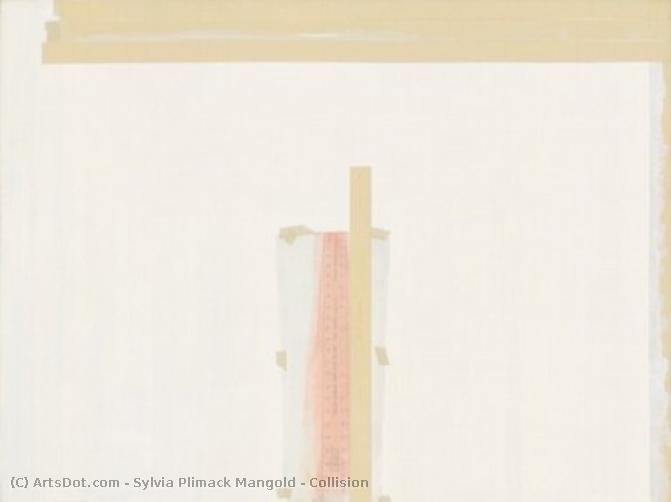
Mangold's early work often focused on interiors—not grand salons or opulent rooms, but rather the commonplace spaces of domestic life: kitchens, bedrooms, living areas. These weren’t scenes populated with figures; instead, they were studies in absence, imbued with a sense of quietude and introspection. She wasn’t interested in depicting *what* was in a room so much as *how* the room felt—the quality of light filtering through a window, the way shadows played across surfaces, the subtle textures that spoke to the passage of time and the lives lived within those walls. This approach distinguished her from many of her contemporaries who were embracing abstraction or Pop Art’s bold imagery. Mangold's interiors offered a counter-narrative—a celebration of stillness and the emotional resonance of ordinary places. Her technique, characterized by meticulous detail and a restrained palette, further emphasized this sense of quiet contemplation. She often employed a grid system, not as a rigid structure but as a means of organizing space and drawing attention to the interplay of lines and forms.
Expanding Horizons: Landscapes and the Notion of Place
Over time, Mangold’s focus expanded to include landscapes—specifically, the rural environments surrounding her homes in New York and Connecticut. Like her interiors, these weren't sweeping vistas or dramatic scenes; instead, they were intimate portrayals of fields, forests, and waterways. She approached landscape with the same analytical eye she brought to interior spaces, breaking down complex forms into their constituent elements and reconstructing them on canvas with a remarkable degree of precision. Her landscapes often incorporate elements of mapping—not in the traditional sense, but as a way of representing her own experience of place, her movements through space, and her evolving relationship with the natural world. The grid system she employed in her interiors also found its way into her landscape paintings, serving to emphasize the underlying structure of the land and the interconnectedness of different elements.
Influences and Artistic Lineage
While Mangold’s work is distinctly her own, it exists within a broader artistic lineage. She has cited the influence of artists like Edward Hopper, whose paintings capture a similar sense of American solitude and introspection. The precision and realism of painters such as Andrew Wyeth also resonate in her work, though Mangold's approach is less overtly narrative and more focused on formal concerns. Furthermore, the emphasis on observation and meticulous detail can be seen as a continuation of the traditions of 17th-century Dutch genre painting. However, Mangold’s work transcends simple categorization; it represents a unique synthesis of these influences, filtered through her own sensibility and artistic vision. Her paintings are not merely representations of reality but rather carefully constructed interpretations—a testament to the power of observation and the subjective nature of perception.
Legacy and Historical Significance
Sylvia Plimack Mangold’s contribution to contemporary art lies in her unwavering commitment to representational painting at a time when abstraction dominated the art world. She demonstrated that it was possible to create compelling, emotionally resonant work without resorting to grand gestures or overt symbolism. Her paintings offer a quiet but powerful critique of consumer culture and the relentless pace of modern life—a reminder to slow down, observe our surroundings, and appreciate the beauty of everyday moments. Her influence can be seen in the work of many contemporary painters who share her interest in realism, introspection, and the subtle poetry of ordinary places. Mangold’s legacy is one of quiet perseverance, meticulous craftsmanship, and a profound respect for the power of observation—a testament to the enduring relevance of representational painting in the 21st century.


 Peržiūrėti realaus dydžio版
 Pirkti rankų darbo tapybą
 Pasidalinti
 Dalintis
 Išsamiau
 Vadovas

 Atsisiųsti
 Panašūs eksponatai
 Rentgeno spindulių nuotrauka
 Automatinė diorama
 Q&A
Q&A Statistika

 Skaityti daugiau






































 Stiklo variantas prieinamas tik pasirinkus dydį iki 110 cm


