Peržiūrėti realaus dydžio版 Peržiūrėti AR realybėje Pirkti rankomis tapytą reprodukciją Perejti prie skaitmeninių vaizdų Siųsti
Išsamiau Gidas Pridėti į mėgstamiausius Atsisiųsti Panašūs eksponatai Rentgeno spindulių nuotrauka Diaporama Statistika

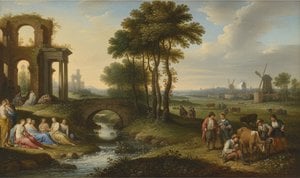
A wooded ridge

Discover "A Wooded Ridge" by Sir Anthony van Dyck – a stunning 1630s landscape painting capturing nature's beauty with rich detail and masterful technique. Explore the artistry of this Baroque masterpiece.

Šarūnės meistro darbą „Anthony van Dyck“ žinoma dėl elegantiškų portretų Europiečių aristokratijai ir Čarlo I valdymo. Šviežios spalvos, įmantrios detalės ir aukštas meistriškumas. Užsakykite savo istoriją šiandien!

Giclée / Meno spausdinimas

Muziejų lygio „giclée“ arba drobos spausdinimas: greita gamyba ir lankstios apdailos parinktys. ( Pirkti rankomis tapytą reprodukciją Perejti prie skaitmeninių vaizdų)

P118B $10
P118H $10
P118W $10
P438Z $10
P508JH $12
P508YH $12
P805H $10
P805Z $10
P919BZ $10
P919G $10
P919XJ $10
P959ZH $10
P968JZ $12
W106C $8
W218G $10
W218JH $8
W218Y $10
W307PJ $10
W316G $10
W316PJ $8
W316Y $10
W398PJ $8
W4111J $10
W500HY $15
W500JH $15
W692G $12
W849H $8
W940BG $15
W953PJ $8

Standartinis
individualaus dydžio
CM
INCH

Pasirinkite iš mūsų nustatytų dydžių, atitinkančių originalaus meno kūrinio proporcijas.

plotis
aukštis

Galite nurodyti savo matmenis, kad vaizdas atitiktų konkretų rėmą ar erdvę. Jei pasirinktas dydis nesutaps su originalaus paveikslėlio proporcijomis, mes arba apkirpsime kūrinį, arba išplėsime vaizdą naudojant veideliu atspindėtą arba vientisą šoną. Skaitmeninis maketas bus išsiųstas jums patvirtinti prieš pradedant gamybą.
Atkreipkite dėmesį, kad ekrane matomas vaizdinys neatspindi tikrojo apkirpimo ar išplėtimo. Tik maketas tiksliai parodytų galutinę kompoziciją.
Nors galima rinktis ir individualius dydžius, rekomenduojame pasirinkti vieną iš išanksti nustatytų matmenų, kad būtų išlaikytos originalios proporcijos.

Pristatymas visame pasaulyje () per 2 weeks, o ne įprastas 4/5 savaičių laikotarpis. (23 rugsėjis)

why_choose_icon
Nemokamas greitasis pristatymas visame pasaulyje
why_choose_icon
Aukštos kokybės lininis drobė
why_choose_icon
Pilnas siuntimo draudimas
why_choose_icon
Muitinės mokesčių grąžinimo garantija
why_choose_icon
Tikro spalvų atitikimo garantija
why_choose_icon
100 dienų grąžinimo politika (tik esant įtaigoms)
why_choose_icon
100% pinigų grąžinimo garantija
why_choose_icon
Nuolaida dideliems užsakymams

Bendroji kaina

$ 68

reproduction

A wooded ridge

Giclée / Meno spausdinimas

Reprodukcijos dydis

-

Visų pasirinktų variantų kaina

$ 68

Pagrindinė informacija

  • Influences: Rubens
  • Subject: Landscape painting
  • Style: Elegant portraiture
  • Dimensions: 29 x 20 cm
  • Movement: Baroque
  • Location: Art Gallery of SA
  • Notable elements: Blurred trees, depth

Karo viktorina

Kiekviename klausime yra tik vienas teisingas atsakymas.

Klausimas 1:
What is the primary subject depicted in Sir Anthony van Dyck’s ‘A Wooded Ridge’?
Klausimas 2:
In what year was ‘A Wooded Ridge’ painted?
Klausimas 3:
Which of the following best describes Van Dyck’s artistic style as evident in this painting?
Klausimas 4:
Sir Anthony van Dyck was primarily known for his work as:
Klausimas 5:
The painting ‘A Wooded Ridge’ is considered a significant example of Van Dyck's work during his time in:

A Woodland Reverie: Van Dyck’s “A Wooded Ridge”

Sir Anthony van Dyck's "A Wooded Ridge," painted around 1630, isn’t merely a landscape; it’s an invitation into a hushed and contemplative realm. This evocative piece, rendered in delicate pen and brown ink on paper, captures a fleeting moment of autumnal beauty within the Flemish countryside – a scene imbued with both serene tranquility and a subtle undercurrent of melancholy. Van Dyck, already establishing his distinctive style as he navigated the courts of Europe, demonstrates here a masterful command of atmospheric perspective and a profound understanding of how light interacts with foliage, creating an illusion of depth that draws the viewer into the heart of the forest.

The composition is deceptively simple. A gently undulating ridge dominates the midground, its trees – primarily birches and oaks – rendered in varying shades of brown and ochre. Van Dyck employs a technique known as ‘grisaille,’ utilizing monochrome tones to establish the forms and spatial relationships before adding subtle washes of color. This careful layering builds a remarkable sense of volume and texture; you can almost feel the rough bark beneath your fingertips, and smell the damp earth after a rain.

The Court Painter’s Palette: Context and Influences

Understanding “A Wooded Ridge” requires acknowledging Van Dyck's unique position within the artistic landscape of his time. Initially apprenticed to Peter Paul Rubens at the prestigious Antwerp workshop, he absorbed much of Rubens’ dynamic energy and rich color palette. However, Van Dyck quickly developed a refined elegance and restraint that distinguished him from his mentor. This piece exemplifies this shift – it lacks the exuberant drama of some of Rubens' works but possesses a quiet sophistication and an almost melancholic beauty.

Crucially, “A Wooded Ridge” was created during a period when Van Dyck was establishing himself as a court painter for Charles I of England. This move to London profoundly influenced his style, leading him to prioritize portraiture while retaining a deep appreciation for landscape painting. The influence of the English countryside – with its muted light and atmospheric haze – can be detected in this work, subtly shaping his approach to color and composition.

Symbolism and Emotional Resonance

While seemingly a straightforward depiction of nature, “A Wooded Ridge” is rich in symbolic potential. The ridge itself could represent the journey of life, with its ups and downs, while the trees symbolize resilience and endurance. The muted palette evokes a sense of introspection and contemplation – a feeling of being lost in thought amidst the vastness of nature. There’s an undeniable sadness woven into the scene; perhaps reflecting Van Dyck's own premature death at the age of 42.

The use of light is particularly significant. It filters through the trees, creating dappled patterns on the ground and highlighting the textures of the foliage. This interplay of light and shadow not only adds depth to the composition but also contributes to the overall mood – a sense of quiet beauty tinged with melancholy. The distant horizon suggests an infinite expanse, inviting the viewer to lose themselves in the contemplation of nature’s grandeur.

A Timeless Masterpiece: Reproduction and Beyond

Reproductions of “A Wooded Ridge” offer a remarkable opportunity to bring this exquisite landscape into your home or office. The delicate detail and atmospheric depth captured by Van Dyck are faithfully reproduced, allowing you to appreciate the nuances of his technique and the emotional resonance of the scene. Consider framing the artwork in a simple, elegant frame – one that complements its understated beauty without overpowering it.

Whether displayed as a focal point or incorporated into a larger collection, “A Wooded Ridge” remains a testament to Van Dyck’s artistic genius and his ability to capture the essence of nature with remarkable sensitivity. It's more than just a painting; it’s an invitation to pause, reflect, and connect with the timeless beauty of the natural world.


Autoriaus biografija

A Flemish Master at the Courts of Europe

Sir Anthony van Dyck, born in Antwerp on March 22, 1599, emerged as one of the most celebrated and influential portraitists of the Baroque era. His life, though tragically cut short at just forty-two years old, was a whirlwind of artistic exploration and prestigious commissions that took him from his native Flanders to Italy and ultimately to the heart of the English court. From an early age, van Dyck displayed remarkable talent, entering Hendrick van Balen’s workshop as a young apprentice and quickly absorbing the prevailing styles of the time. However, it was his association with Peter Paul Rubens – not merely as a student but as a collaborator – that truly shaped his artistic foundation. He learned from Rubens' dynamic compositions, rich color palettes, and masterful handling of light and shadow, yet van Dyck soon began to forge his own distinct path, one characterized by an elegance and refinement that would become his signature.

Early Influences and Artistic Training

Rubens’ influence was profound; he instilled in van Dyck a belief in dramatic expression and the importance of capturing emotion alongside physical likeness. This approach contrasted sharply with earlier portrait conventions, prioritizing psychological depth over mere representation. Van Dyck's apprenticeship under Rubens honed his skills in oil painting and etching—techniques he would master with unparalleled precision. He diligently studied Rubens’ monumental canvases, absorbing his compositional strategies and experimenting with innovative color harmonies. These formative years established the groundwork for van Dyck’s distinctive artistic style, characterized by a luminous palette and masterful rendering of texture.

Italian Sojourn and Style Development

Around 1621, Van Dyck embarked on a transformative journey to Italy—primarily Genoa—where he gained patronage from wealthy aristocratic families. During this period, he cultivated the refined style for which he would become renowned: graceful poses, luxurious fabrics, and an almost palpable sense of nobility. Unlike Rubens’ energetic brushstrokes, van Dyck's Italian portraits exuded composure, capturing not just physical likeness but also inner character and social standing. He skillfully employed chiaroscuro—the dramatic interplay of light and shadow—to sculpt figures with remarkable realism and to heighten their emotional impact. This technique became a hallmark of his oeuvre, distinguishing him from many of his contemporaries. His artistic explorations in Italy solidified his reputation as a visionary innovator, pushing the boundaries of portraiture while upholding the highest standards of aesthetic excellence.

The King's Painter: Van Dyck in England

In 1632, Van Dyck received an invitation that would forever alter his career trajectory—a summons from Charles I of England to become the court painter. This appointment marked a turning point, not only for van Dyck but also for English portraiture. He arrived in London with considerable renown and swiftly became indispensable to the king, tasked with creating images that projected an aura of power, majesty, and divine right. Van Dyck’s portraits of Charles I are particularly noteworthy; he moved away from stiff conventions, portraying the king as a dynamic leader—a man brimming with charisma and intellect. He employed innovative techniques—dramatic lighting, sweeping gestures, and carefully chosen backgrounds—to create images that were both visually stunning and politically charged. His influence extended beyond the royal family, shaping the visual culture of the English aristocracy for generations to come.

Legacy and Enduring Influence

Van Dyck’s untimely death in December 9, 1641, robbed the art world of a prodigious talent—yet his legacy endures to this day. His impact on English portraiture is immeasurable; he established a standard of elegance and sophistication that subsequent artists would strive to emulate. He was a master of both oil painting and etching—constantly experimenting with new techniques. His portraits are characterized by their graceful poses, luxurious fabrics, and subtle psychological insights. He skillfully employed chiaroscuro—the dramatic interplay of light and shadow—to sculpt figures with remarkable realism and to heighten their emotional impact. Beyond his technical prowess, van Dyck possessed an exceptional ability to capture the essence of his sitters—their personality, their social standing, and their aspirations. His works continue to captivate audiences with their beauty, elegance, and enduring psychological depth. The Balbi Children, Charles I in Three Positions, and countless other masterpieces stand as testaments to his genius, ensuring that Sir Anthony van Dyck remains one of the most celebrated artists of the Baroque period. His influence can still be seen today in fashion, photography, and contemporary portraiture—a testament to the timeless appeal of his art.
Šarūnės Meistras

Šarūnės Meistras

1599 - 1641 , Belgija

Trumpa informacija apie kūrėją

  • Artistic Movement Or Style: Baroque
  • Artists Or Movements Influenced By This Artist: ['English portrait painting']
  • Artists Who Influenced This Artist: ['Peter Paul Rubens']
  • Date Of Birth: March 22, 1599
  • Date Of Death: December 9, 1641
  • Full Name: Sir Anthony van Dyck
  • Nationality: Flemish
  • Notable Artworks:
    • Portrait of a woman and child
    • Equestrian portrait of Charles I
    • Lord John Stuart & brother
  • Place Of Birth: Antwerp, Belgium
Tyrinėkite meno kūrinius, suskirstytus pagal temas, stilius ir savybes.