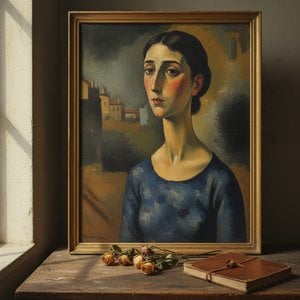
Self-Portrait with White Cap (1935), autoriaus Max Kaus, meistro rankomis sumalatyta aliejų technika reprodukcija
Peržiūrėti realaus dydžio版 Peržiūrėti AR realybėje Perjungti į spausdinamus版作品 Perejti prie skaitmeninių vaizdų Pasidalinti
Išsamiau Vadovas Pridėti į mėgstamiausius Atsisiųsti Panašūs eksponatai Rentgeno spindulių nuotrauka Automatinė diorama 问答 Prezentacija Statistika

Self-Portrait with White Cap Rankiniu būdu dažyta aliejaus reprodukcija

A contemplative oil portrait by Max Ernst from 1935 features expressive textures. Explore this soulful masterpiece today.

A German expressionist painter known for his landscapes and portraits. Discover the evocative works of Max Kaus today.

Šiame puslapyje rodomas meno kūrinys yra saugomas autorių teisių įstatymais, todėl neturime teisės legaliai kurti ar parduoti jo identiškos reprodukcijos. Ši apsauga užtikrinama remiantis tokiais tarptautiniais susitarimais kaip Bernės konvencija ir pagal nacionalines įstatymų nuostatas, įskaitant tas, kurias nurodo JAV autoriškos teisės įstatymas – 17-asis skyrius.

Kaip pagarbią ir teisėtą alternatyvą, mes siūlome pagal užsakymą rankomis dažytus paveikslus, įkvėptus originalo. Mūsų įgudę ir profesionalūs menininkai kruopščiai tiria originalo stilių, nuotaiką ir meninę esmę, kad sukurtų naują, unikalią kūrinį, kuris sukelia tą paties jausmą – išlikdamas tuo tarciau originaliu, savarankišku kūrybiniu darbu.

Šis metodas visiškai atitinka autorių teises, nes jame nėra saugomo kūrinio kopijavimo ar dubliavimo. Tai yra kūrybinė reinterpretacija – naujas paveikslas, kurį įkvėpė originalas, tačiau kuris nėra jo identiškas.

Rankų darbo aliejinės reprodukcijos

Rankiniu būdu tapytas aliejus ant droblio jūsų pageidaujamame dydį ir rėmuose – tai mūsų menininkų pagal užsakymą sukurtas darbas. ( Perjungti į spausdinamus版作品 Perejti prie skaitmeninių vaizdų)


Corner sample of the P118B picture frame: lieto polistirolo detalės, 5 cm wide and 3 cm thick
P118B €10
Corner sample of the P118H picture frame: lieto polistirolo detalės, 5 cm wide and 3 cm thick
P118H €10
Corner sample of the P118W picture frame: lieto polistirolo detalės, 5 cm wide and 3 cm thick
P118W €10
Corner sample of the P438Z picture frame: lieto polistirolo detalės, 5.5 cm wide and 3.5 cm thick
P438Z €10
Corner sample of the P508JH picture frame: lieto polistirolo detalės, 7 cm wide and 3.5 cm thick
P508JH €12
Corner sample of the P508YH picture frame: lieto polistirolo detalės, 7 cm wide and 3.5 cm thick
P508YH €12
Corner sample of the P805H picture frame: lieto polistirolo detalės, 5 cm wide and 3.5 cm thick
P805H €10
Corner sample of the P805Z picture frame: lieto polistirolo detalės, 5 cm wide and 3.5 cm thick
P805Z €10
Corner sample of the P919BZ picture frame: lieto polistirolo detalės, 7 cm wide and 3.5 cm thick
P919BZ €10
Corner sample of the P919G picture frame: lieto polistirolo detalės, 7 cm wide and 3.5 cm thick
P919G €10
Corner sample of the P919XJ picture frame: lieto polistirolo detalės, 7 cm wide and 3.5 cm thick
P919XJ €10
Corner sample of the P959ZH picture frame: lieto polistirolo detalės, 5 cm wide and 3 cm thick
P959ZH €10
Corner sample of the P968JZ picture frame: lieto polistirolo detalės, 6 cm wide and 4 cm thick
P968JZ €12
Corner sample of the W106C picture frame: solidus medžio

**Improved version:**
solidus medis, 5 cm wide and 3 cm thick
W106C €8
Corner sample of the W218G picture frame: solidus medžio

**Improved version:**
solidus medis, 5 cm wide and 3 cm thick
W218G €10
Corner sample of the W218JH picture frame: solidus medžio

**Improved version:**
solidus medis, 5 cm wide and 3 cm thick
W218JH €8
Corner sample of the W218Y picture frame: solidus medžio

**Improved version:**
solidus medis, 5 cm wide and 3 cm thick
W218Y €10
Corner sample of the W307PJ picture frame: solidus medžio

**Improved version:**
solidus medis, 6 cm wide and 3 cm thick
W307PJ €10
Corner sample of the W316G picture frame: solidus medžio

**Improved version:**
solidus medis, 6 cm wide and 3 cm thick
W316G €10
Corner sample of the W316PJ picture frame: solidus medžio

**Improved version:**
solidus medis, 6 cm wide and 3 cm thick
W316PJ €8
Corner sample of the W316Y picture frame: solidus medžio

**Improved version:**
solidus medis, 6 cm wide and 3 cm thick
W316Y €10
Corner sample of the W398PJ picture frame: solidus medžio

**Improved version:**
solidus medis, 5 cm wide and 3 cm thick
W398PJ €8
Corner sample of the W4111J picture frame: solidus medžio

**Improved version:**
solidus medis, 6.5 cm wide and 3.5 cm thick
W4111J €10
Corner sample of the W500HY picture frame: solidus medžio

**Improved version:**
solidus medis, 7 cm wide and 5 cm thick
W500HY €15
Corner sample of the W500JH picture frame: solidus medžio

**Improved version:**
solidus medis, 7 cm wide and 5 cm thick
W500JH €15
Corner sample of the W692G picture frame: solidus medžio

**Improved version:**
solidus medis, 8 cm wide and 4 cm thick
W692G €12
Corner sample of the W849H picture frame: solidus medžio

**Improved version:**
solidus medis, 5 cm wide and 3 cm thick
W849H €8
Corner sample of the W940BG picture frame: solidus medžio

**Improved version:**
solidus medis, 7.5 cm wide and 4.5 cm thick
W940BG €15
Corner sample of the W953PJ picture frame: solidus medžio

**Improved version:**
solidus medis, 6 cm wide and 3.5 cm thick
W953PJ €8

Standartinis dydis
pagal užsakymą
CM
INCH

Pasirinkite iš mūsų nustatytų dydžių, atitinkančių originalaus meno kūrinio proporcijas.

plotis
aukštis

Įveskite jums reikiamą plotį ir aukštį, kad paveikslas atitiktų jūsų rėmą ar sieną. Kadangi šis darbas yra rankinio darbo, siekiant išgauti kitokios formos dydį, paveikslas gali būti šiek tiek didesnis (nuo kraštų bus palikta daugiau erdvės) arba mažesnis – pasirinkite jums patogiausią variantą. Prieš pradedant tapyti, atsiųsime jums skaitmeninį maketą patvirtinimui. Šioje puslapio nuotraukoje matomas vaizdas nėra galutinis rezultatas – jį parodys tik sukurtas maketas.

Ką galima pakeisti (pavyzdžiai): Pakeisti veidą į kliento nuotrauką; Pridėti augintinį (pvz., pakeisti katę šunimi); Įtraukti paslėptą žinutę fone; Pakeisti fono kraštovaizdį ar elementus.
Gavus užsakymą, WahooArt.com komanda susisieks su klientu el. paštu dėl instrukcijų ir pateiks maketo pavyzdį

Pristatymas visame pasaulyje () per 3–4 savaites, o ne įprastai – per 5 savaites. (21 lapkritis). Kokybė lieka nepakeičiama.

Nemokamas greitasis pristatymas visame pasaulyje
Aukštos kokybės lininis drobė
Pilnas siuntimo draudimas
Muitinės mokesčių grąžinimo garantija
Tikro spalvų atitikimo garantija
100 dienų grąžinimo politika (tik esant įtaigoms)
100% pinigų grąžinimo garantija
Nuolaida dideliems užsakymams

Visos kainos suma

€ 243

Self-Portrait with White Cap

Reprodukcijos technika

Reprodukcijos matmenys

-

Bendroji kaina

€ 243

Trumpa informacija

  • Notable elements or techniques: Impasto, textured brushwork
  • Medium: Oil
  • Artistic style: Late Impressionism or early Expressionism
  • Artist: Max Ernst

Karo viktorina

Kiekviename klausime yra tik vienas teisingas atsakymas.

Klausimas 1:
What is the subject of this oil portrait?
Klausimas 2:
Which artist painted 'Self-Portrait with White Cap'?
Klausimas 3:
What color is the background in this painting?
Klausimas 4:
In what year was this artwork created?
Klausimas 5:
What is the man holding in his right hand?

A Moment of Quiet Introspection

Step closer and observe the man before us. In this 1935 oil portrait, we encounter an elderly figure caught in a moment of profound stillness. He is positioned slightly off-center, his presence felt through a medium close-up that brings us face-to-face with his weathered features. A dark hat sits low upon his brow, and his gaze, framed by spectacles, suggests a mind turned inward. There is a certain dignity in his composure, even as he holds a thin cigarette, the rising wisps of smoke adding a vertical movement to an otherwise stationary scene. The background remains a pale, desaturated greenish-beige, providing a muted stage that allows the darker tones of his suit and the textures of his white beard to emerge with clarity.

The Language of Texture and Light

The artist has moved away from precise, clinical lines in favor of a more painterly approach. You can see the physical weight of the paint here; thick, impasto strokes create a tactile surface, particularly where light catches the highlights of the face and the drifting smoke. This heavy application of pigment gives the portrait an almost sculptural quality. The lighting is soft, appearing to descend from the upper left to cast gentle shadows that define the contours of the man's cheek and the structure of his clothing. Through these earthy tones—deep browns, blacks, and grays—the work achieves a sense of weight and character. It is a study in light manipulation, where the focus remains on the emotional gravity of the subject rather than mere anatomical accuracy.

Klausimai ir atsakymai

Ar „Self-Portrait with White Cap“ spalvos atrodo ryškios ar švelnios?

Šiame paveikslėlyje „„Self-Portrait with White Cap“ – Max Kaus“ spalvų intensyvumas yra Balanced.

Kokį Max Kaus kūrybos etapą atitinka „Self-Portrait with White Cap“ data, nurodyta kaip 1935?

Atsižvelgiant į 1935 datą, kūrinys „Self-Portrait with White Cap“ priskiriamas Max Kaus Surrealist Period laikotarpiui.

Kokia yra „Self-Portrait with White Cap“ – Max Kaus technika ir kūrybos data?

„Self-Portrait with White Cap“ sukurtas 1935 m., naudojant Oil On Canvas.


Autoriaus biografija

The Life and Art of Max Kaus

Max Kaus was a German painter, printmaker, graphic artist, and lithographer. Born in Berlin, Germany, his early training took place at the Study Institute of the Decorative Arts Museum in Berlin between 1908 and 1913. During the First World War, he served as a medical orderly and ambulance driver in western Flanders. It was during this time in Ostend that he learned to make lithograph prints, utilizing a printing press constructed from timber recovered from a destroyed railway station. Upon returning to Berlin in 1918, he acquired his own lithography equipment, which became a foundation for much of his subsequent artistic output.

His career saw significant shifts in subject matter and style. While he was widely recognized for his landscape works—drawing inspiration from travels within Germany, Austria, and northern Italy—he also worked extensively on portraiture. His post-war output was characterized by a shift where form began to dominate content. His later creative years included several distinct categories of work:

Academic Influence and Legacy

Beyond his personal practice, Kaus was an influential teacher. He held a professorship teaching landscape art at the Kunstgewerbe- und Handwerkerschule in Berlin, and later served as a professor and head of the department for "Freie Kunst" at the Hochschule für Bildende Künste in Berlin. He also served as the deputy director at the academy.

Kaus was a member of the German Artists' Association, serving on its executive board and as deputy chair. His surviving works are catalogued and indexed, with his literary estate held at the German National Arts Archive in Nuremberg.

Max Kaus

Max Kaus

1891 - 1977 , Germany

Trumpa informacija

  • Artistic Movement Or Style: Expressionism
  • Artists Or Movements Influenced By This Artist: ['Sabine Sieler']
  • Artists Who Influenced This Artist:
    • Erich Heckel
    • Ernst Ludwig Kirchner
  • Full Name: Max Kaus
  • Nationality: German
  • Notable Artworks: ['Portrait of a woman in the mirror']
  • Place Of Birth: Berlin, Germany
  • Date Of Birth: 1891
  • Date Of Death: 1977