Ankstyvojo Renesanso Žavesys: Sandro Botičelis
Sandro Botičelis, arba Alesandras di Mariano Filipepi – italų dailininko pavardė, kuri iki šiol kviečia prisiminti ankstyvojo Renesanso Florencijos grožį ir poeziją. Gimęs maždaug 1445 metais, šiame mieste, kuris buvo meno ir kultūros epicentras, Botičelis įėjo į istoriją sukūręs ikoninius kūrinius, kurių „Veneros gimimas“ ir „Pavasaris“ (arba „Primavera“) yra neatsiejami nuo Renesanso idealų. Jo gyvenimas buvo giliai susijęs su Florencijos miesto dvasia; jis niekada nepaliko savo rajono Ognissanti, kas bylojo apie stiprius šeimos ryšius ir klestinčią kūrybinę aplinką. Tėvas Mariano Filipepi, pradžioje aukso dirblys, o vėliau odos apdirbėjas, suteikė jam ankstyvąjį susidūrimą su amatu ir atidumu – savybėmis, kurios giliai paveikė Botičelio meninę raidą. Nors pranešimai rodė mokymąsi aukso dirbimo, jis netrukus rado savo pašaukimą Fra Filippo Lippi pamokslų centre. Šis apmokymas buvo kertinis akmuo, panardinant jį į Florencijos mokyklos techniką ir estetiką, taip pat susiejant su įtakingais mecenatais, tokiais kaip Medici šeima.
Stilius, Apibūdinamas Elegancija ir Mitologija
Botičelio meninis stilius yra iškart atpažįstamas dėl lyrinio grožio, pasižymėjusio elegantiška linijumu, tekantimis kontūrais ir subtiliu spalvų vartojimu. Jis meistriškai užpildė tarpą tarp vėlyvosios Gotikos tradicijų ir besivystančios Renesanso estetikos, įsisavindamas tokių meistrų kaip Fra Angelico ir Paolo Uccello įtakas, tačiau sukūręs unikalų asmeninį vizualumą. Jo figūrėlės turi eterinį kokybę, dažnai vaizduojamos su pailgėjusiomis proporcijomis ir maloningais pozomis, kurios perteikia tiek ramybę, tiek subtilų melancholiją. Vienas iš jo darbų apibūdinamųjų bruožų yra klasikinės mitologijos dažnas įtraukimas – atspindys Renesanso Florencijos plėtojamų humanizmo interesų. Jis ne tik iliustravo šiuos senovinius pasakojimus; jis suteikė jiems naujų reikšmių sluoksnių, tyrinėdamas meilės, grožio ir dvasinio ilgesio temas. Botičelis dažnai naudojo sidabro piešimo metodą kaip pagrindą savo drobėms, o tai prisidėjo prie apšviestumo ir subtilios detalizacijos, matomos jo baigiamuose darbuose. Temperos dažų naudojimas leido tiksliai atkurti ir ryškias spalvas, o vėlesni eksperimentai su aliejiniais dažais išplėtė jo raiškos galimybes.
Ikoniniai Šedevrai ir Meninė Raida
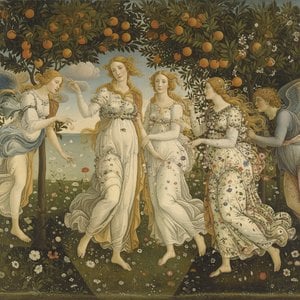
Botičelio palikimas remiasi kelių ikoninių paveikslų pagrindu, kurie amžius po amžiaus toliau žavi publiką. „Veneros gimimas“, baigtas maždaug 1486 metais, yra galbūt jo garsiausias darbas – alegorinis Dievos motinos atvaizdas, kylantis iš jūrų kiaulės lukšto, įkūnijantis Renesanso grožio ir harmonijos idealus. Jo malonėjančios kompozicijos, subtilios spalvų paletės ir kvietiančios simbolikos dėka tai tapo amžina epochos simboliu. Ne mažiau garsus yra „Pavasaris“, sukurtas maždaug 1482 metais – sudėtingas ir paslaptingas paveikslas, šlovinantis pavasarį ir meilę, kuriame gausu simbolinių figūrų, atsižvelgiant į klasikinės mitologijos elementus. Šie darbai parodo Botičelio kompozicijos meistriškumą, jo gebėjimą sukurti atmosferinį gilumį bei gilią supratimą apie žmogaus emocijas.
Jo meninė kelionė išsivystė atskirose fazėse. 1470-ųjų pradžioje jis sutelkdavo dėmesį į religines temas, tobulindamas savo techninius įgūdžius ir sukurdamas reputaciją dėl puikaus atlikimo. 1480-ieji buvo jo kūrybinės jėgos piko metai, kurių metu buvo sukurti garsiausi mitologiniai paveikslai. Tačiau 1490-ųjų pabaigoje jo stilyje įvyko poslinkis, paveiktas Girolamo Savonarolos karštų pamokymų – dominikonų kunigo, kuris pasmerkė tai, ką jis laikė Florencijos moraliniu irikalbėjimu. Šiuo laikotarpiu atsirado asketiškesni ir emocingesni darbai, atspindintys augantį dvasinį intensyvumą.
Palikimas ir Perdarymas
Po jo mirties 1510 metais Botičelio reputacija palaipsniui prarado populiarumą. Dėl to beveik trys amžiai jo darbai buvo pamiršti, užstojami Aukštosios Renesanso meistrų, tokių kaip Leonardo da Vinci ir Michelangelo, pasiekimų. Tačiau vėlyvojo 19-ojo amžiaus pabaigoje įvyko nuostabus perdarymas su Pre-Rafaelitų brolijos pakilimu – anglų menininkų grupės, kurie atmetė akademinius prietarimus ir ieškojo įkvėpimo ankstyvosios italų Renesanso menu. Jie buvo pakerėti Botičelio linijaus elegancija, ryškiomis spalvomis ir poetiniu pojūčiu, pripažindami jį kaip giminaitą.
Šis atnaujintas įvertinimas sukėlė platų jo darbų peržiūrėjimą, nustatęs jį kaip vieną svarbiausių Ankstyvosios Renesanso menininkų. Šiandien Botičelis šveniamas dėl savo unikalios meninės vizijos, meistriškos technikos ir nesibaigianio gebėjimo sužadinti grožį, emocijas ir dvasinį apmąstymą. Jo įtaka galima pamatyti paskesnėse kartose menininkų, kurie bandė atkurti tą pačią elegancijos ir malonumo jausmą savo darbuose. Jis išlieka Florencijos meno pasiekimų simboliu ir Renesanso humanizmo liudijimu.
Pagrindiniai Darbai
- „Veneros gimimas“ (apie 1486 m.): Ikoninis vaizdas, įkūnijantis Renesanso grožio idealus.
- „Pavasaris“ (apie 1482 m.): Sudėtingas alegorinis paveikslas, šlovinantis pavasarį ir meilę.
- „Magų garbinimas“ (1475–1476): Parodo ankstyvąjį kompozicijos ir perspektyvos meistriškumą.
- „Mistikinis Gailestis“ (1501): Atspindi dvasinių temų poslinkį jo vėlesnėje karjeroje.



 Peržiūrėti realaus dydžio版
 Perjungti į spausdinimą
 Siųsti
 Dalintis
 Išsamiau
 Vadovas

 Atsisiųsti
 Panašūs eksponatai
 Rentgeno spindulių nuotrauka
 Diaporama
 Statistika

 Rodyti daugiau






































 Stiklo variantas prieinamas tik pasirinkus dydį iki 110 cm