

Šiame puslapyje rodomas meno kūrinys yra saugomas autorių teisių įstatymais, todėl neturime teisės legaliai kurti ar parduoti jo identiškos reprodukcijos. Ši apsauga užtikrinama remiantis tokiais tarptautiniais susitarimais kaip Bernės konvencija ir pagal nacionalines įstatymų nuostatas, įskaitant tas, kurias nurodo JAV autoriškos teisės įstatymas – 17-asis skyrius.
Šis metodas visiškai atitinka autorių teises, nes jame nėra saugomo kūrinio kopijavimo ar dubliavimo. Tai yra kūrybinė reinterpretacija – naujas paveikslas, kurį įkvėpė originalas, tačiau kuris nėra jo identiškas.
Muziejų lygio „giclée“ arba drobos spausdinimas: greita gamyba ir lankstios apdailos parinktys. ( Pirkti rankų darbo tapybą Perejti prie skaitmeninių vaizdų)
Pasirinkite iš mūsų nustatytų dydžių, atitinkančių originalaus meno kūrinio proporcijas.

Įveskite jums reikiamą plotį ir aukštį, kad atvaizdas derėtų prie jūsų rėmo ar sienos. Spausdiną galima tik sumažinti, bet nepadidinti virš originalaus paveikslėlio dydžio, todėl keičiant proporcijas, dalis vaizdo prarandama. Prieš spausdinimą atsiųsime jums skaitmeninį maketą patvirtinimui. Šioje puslapio nuotraukoje matomas pjūvis nėra tikslus – jį rodo tik maketas.
Pristatymas visame pasaulyje () per 2 weeks, o ne įprastas 4/5 savaičių laikotarpis. (10 lapkritis)
Invisibile
Reprodukcijos matmenys
In 1947, Salvatore Ferragamo introduced "Invisibile," a design that challenged the structural conventions of mid-century footwear. The work, also known as the Invisible Sandal, emerged from the Italian designer's pursuit of anatomical innovation and material experimentation. It features a distinctive under-cut wedge heel, a sculptural form known as the F-heel.
The construction of "Invisibile" by Salvatore Ferragamo relied on the use of transparent nylon monofilament. This material was threaded through the insole to create the upper, a technique that dematerialized the traditional silhouette of the shoe. This specific approach to construction earned the designer the Neiman Marcus Award for Distinguished Services in 1947.
The design relies on a striking interplay between solid structure and transparency. Sleek black leather straps provide a dark, grounded foundation, while silver straps introduce a sense of sophistication through subtle metallic contrast. This interplay is heightened by the use of a continuous length of nylon monofilament. This thread passes through holes in the insole to construct the upper, creating a visual effect that dematerializes the shoe's structure.
The silhouette is defined by a distinctive F-shaped wooden wedge heel. This under-cut sole, inspired by the stern of an ocean liner, provides a sculptural, architectural quality to the footwear. The dimensions of the piece are 14cm in height, 8.5cm in width, and 23.5cm in length.
The construction of the sandal relies on a specialized use of nylon monofilament. A continuous length of this transparent nylon fishing line passes through holes in the insole, creating the upper structure. This technique allows the material to appear nearly invisible, dematerializing the traditional silhouette of the shoe. The upper is further composed of leather, specifically utilizing suede and calfskin to provide substance to the design.
The foundation of the footwear is an under-cut wedge heel, often referred to as the F-heel. This component is carved from wood and takes an undulating shape inspired by the stern of an ocean liner. The integration of rigid wooden elements with the flexible, translucent nylon creates a structural contrast between the solid base and the lightweight upper.
Created during World War II and the immediate post-war period, the design reflects the anxieties of an era defined by scarcity and uncertainty. The use of metallic leather was a deliberate choice to dematerialize the remaining structure of the shoe, creating an illusion of lightness. This approach represented a bold departure from traditional leather construction, utilizing unconventional materials to navigate the limitations of the time.
The work marks a milestone in the history of fashion. By integrating transparent nylon monofilament with sculptural forms, the design challenged established manufacturing practices. It transformed footwear from a purely functional object into a study of structural innovation and material experimentation.
Examples of this design are held in several prominent international institutions. The Brooklyn Museum Costume Collection at The Metropolitan Museum of Art possesses a pair, which was a gift of Mrs. R. L. Gilpatric in 1960. This specific acquisition is part of the Brooklyn Museum Costume Collection.
Other versions of the sandal are preserved in specialized collections. The Victoria and Albert Museum in London holds a pair, while the Kyoto Costume Institute in Kyoto maintains a version of the footwear. These holdings reflect the global presence of Ferragamo's mid-century innovations.
Ferragamo’s output spans various sculptural and functional forms, ranging from early prototypes to later experimental designs. His early career included the creation of the Prototipo di décolleté, dating to about 1929. This period of experimentation continued into the late 1930s with the Prototipo di sandalo in 1938.
The artist's later repertoire includes the 1952 Sandal, which emphasizes high-level craftsmanship. Beyond traditional footwear, his creative scope extended to sculptural objects, such as the Pollicino, a shoe sculpture characterized by Pop Art influences.
„Invisibile“ vaizduoja leather sandals, silver straps, shoemaking, hollywood glamour, italian design, sculptural shoes, salvatore ferragamo, o įrašytos Salvatore Ferragamo temos yra italian craftsmanship, hollywood style, luxury footwear, sculptural design, ferragamo legacy. Šių dviejų lyginimas parodo, kaip šis kūrinys susijęs su įprastais šio kūrybinio veiksmo objektais.
„Invisibile“ – Salvatore Ferragamo šviesos intensyvumas yra Luminous. Šviesos intensyvumas apibūdina, kiek šviesos, kaip atrodo, atspindi spalvos.
„Invisibile“ Peržiūra interjere puslapio funkcija leidžia peržiūrėti kūrinį prieš užsakant.


1898 - 1960 , इटالیا
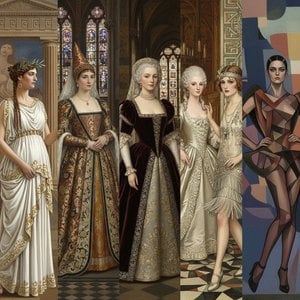
Explore the breathtaking intersection of fine art and high fashion. Discover how iconic masterpieces from Art Deco to Impressionism have shaped the world of luxury couture and timeless design in this curated visual journey.

Discover the exquisite world of fashion illustration art. From Art Deco elegance to bespoke oil reproductions, explore how timeless sartorial beauty transforms luxury interiors through masterfully crafted canvas works and curated historical masterpieces.

Explore the profound beauty of the Italian Renaissance. From Raphael's divine frescoes to Michelangelo's anatomical mastery, discover how this era of classical grandeur and humanistic ideals continues to inspire the world's most sophisticated art collectors and designers.

Discover the unparalleled elegance of Art Deco through the lens of Erté. Explore a masterclass in linear precision, theatrical costume design, and high-fashion illustration that continues to define modern luxury and sophisticated interior aesthetics.

Embark on a visual journey through the evolution of fashion photography. Discover how masters like Gianfranco Ferré blended geometry, surrealism, and texture to redefine high-fashion art for collectors and connoisseurs of luxury imagery.
 Pasidalinti
 Dalintis
 Išsamiau
 Vadovas

 Atsisiųsti
 Panašūs eksponatai
 Automatinė diorama
 问答
问答
 Statistika


 Skaityti daugiau






































 Stiklo variantas prieinamas tik pasirinkus dydį iki 110 cm


