Įsigykite aukštos skiriamosios raiškos, patobulintą skaitmeninį vaizdą, gerokai pranašesnį už internetinę peržiūrą.
Kiekvieną failą mūsų specialistai kruopščiai paruošia naudojant pažangias technologijas ir profesionalų rankinį retušavimą. Užtikriname, kad kiekvienas vaizdas pasižymėtų išskirtiniu aiškumu, tikslia spalvų atspalviu ir smulkiomis detalėmis.
Baigiamas failas el. paštu pristatomas per 72 valandas; jis optimizuotas nedelsiant naudojimui profesionalioje, redakcinėje ir spausdinimo aplinkoje. Tai ta pati kokybė, kuria pasitiki aukščiausios klasės dizaino studijos, leidyklos ir galerijos.
Atsisiųskite didelės raiškos failą asmeniniam naudojimui, spausdinimui ir kūrybiniams projektams. ( Pirkti spaudinį Pirkti rankomis tapytą paveikslą)
Pasirinkę WahooArt.com, jūs ne tik gaunate paveikslėlį – jūs gaunate profesionaliai patobudintą skaitmeninį kūrinį, sukurtą itin tikniai ir užtikrinantį pasitenkinimą. Štai viską, kas automatiškai pritékia jūsų užsakymui:

Jūsų aukštos raiškos skaitmeninis vaizdo failas bus išsiųstas jums el. paštu per 72 valaudas nuo užsakymo – paruoštas naudojimui be jokių papildomų veiksmų.

Jūsų meno kūrinys profesionaliai optimizuojamas naudojant pažangius dirbtinio intelekto įrankius ir rankinį redagavimą, užtikrinant maksimalią detalę, aiškumą ir spalvų tikslumą.

Atsitiktinai ištrytikote ar praradote savo failą? Nebijokite – bet kuriuo metu atsiųsime jį jums vėl nemokamai.

Mėgaukitės savo meno kūriniu akimirka – skaitiniai failai visada yra neapmokestinami, todėl nereikės mokėti muitinės, mokesčių ar pristatymo mokesčių.

Naudodami profesionalią įrangą ir spalvų valdymo sistemas, užtikriname, kad jūsų skaitmeninis vaizdas kuo tiksliau atspindėtų originalias spalvas.

Jei nebuvate patenkinti savo skaitinio vaizdo, per 100 dienų jį pertaisysime arba grąkinsime 100% sumą – be jokių klausimų.

Nepat 만족inti? Gaukite visą sumokėtą sumą per 100 dienų nuo skaitmeninio failo gavimo – be jokių papildomų klausimų.

Pirkti 3 nuotraukas – pasiūla 10% - Pirkti 5 – pasiūla 15% - Pirkti 10 ir daugiau – pasiūla 20%. Puikiai tinka kūrybiniams projektams, galerijoms bei agentūroms.
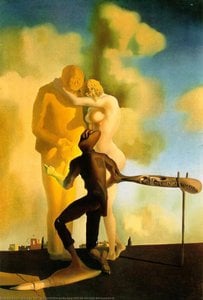
Salvador Dalí's "Phosphene," painted in 1979, isn’t merely a visual composition; it’s an intensely personal exploration of perception and memory. This captivating work, rendered in oil on canvas, plunges the viewer into a swirling vortex of yellow and blue spirals punctuated by strategically placed circles – a deliberate orchestration designed to evoke the unsettling yet strangely beautiful experience of phosphenes, those fleeting flashes of light perceived without external illumination.
The genesis of this piece lies within Dalí’s lifelong fascination with dreams, psychology, and the subconscious. He famously collaborated closely with Sigmund Freud, seeking to translate the hidden landscapes of the mind into tangible imagery. “Phosphene” directly reflects this approach, mirroring the disorienting and fragmented nature of dream states. The swirling forms, reminiscent of nebulae or perhaps even the chaotic energy of a brain in activity, suggest a world unbound by logic, where familiar shapes dissolve and recombine in unpredictable ways. The circles, acting as anchors within the chaos, could represent moments of clarity or isolated memories struggling to surface.
Dalí’s technical mastery is immediately apparent. The painting showcases his signature meticulous detail – a hallmark of his surrealist style. Each spiral is rendered with painstaking precision, the concentric circles perfectly defined, creating an illusion of depth and movement despite the overall dreamlike quality. The color palette—a vibrant interplay of yellows and blues—is both striking and emotionally resonant. Yellow often symbolizes enlightenment, joy, or even madness, while blue frequently represents introspection, melancholy, or the infinite. The juxtaposition creates a compelling tension, mirroring the complex emotional landscape explored within the artwork.
Noticeably, Dalí employs a technique that blends realism with abstraction. While the forms are recognizable – spirals and circles – they’re presented in an exaggerated scale and arrangement, pushing them beyond the realm of ordinary representation. This deliberate distortion contributes to the painting's unsettling yet alluring effect, inviting viewers to question their own perceptions of reality.
The very title, “Phosphene,” immediately anchors the work within a specific sensory experience – the fleeting flashes of light that can occur when eyes are closed or after experiencing intense stimulation. Dalí’s choice of this term suggests a deeper meditation on memory, perception, and the fragility of consciousness. Some art historians interpret the spirals as representing the cyclical nature of time and thought, while others see them as visual metaphors for the labyrinthine pathways of the subconscious mind.
The placement of circles within the design is particularly intriguing. They could symbolize moments of recognition or connection—isolated islands of clarity amidst a sea of disorientation. Considering Dalí’s personal history – marked by loss and displacement – it's not surprising that “Phosphene” explores themes of duality, replacement, and the struggle to maintain a sense of self in the face of overwhelming experience.
“Phosphene” remains a powerfully evocative work, demonstrating Dalí’s unparalleled ability to translate the intangible into visual form. It's more than just a painting; it’s an invitation to delve into the depths of the human psyche and contemplate the subjective nature of reality. Reproductions of this piece offer a remarkable opportunity to bring this surrealist masterpiece into any interior space, sparking conversation and inviting viewers to lose themselves in its mesmerizing patterns and profound symbolism.


1904 - 1989 , Ispanija

 Peržiūrėti realybėje
 Pasidalinti
 Dalintis
 Išsamiau

 Atsisiųsti
 Panašūs eksponatai
 Rentgeno nuotrauka
 Automatinė diorama

 Skaityti daugiau