x
Peržiūrėti realybėjePeržiūrėti realybėje Peržiūrėti ARPeržiūrėti AR Pirkti spaudinį Pirkti spaudinįPirkti vaizdą Pirkti vaizdą PasidalintiPasidalinti
IšsamiauIšsamiau Pridėti į mėgstamiausius Pridėti į mėgstamiausius AtsisiųstiAtsisiųsti Panašūs eksponataiPanašūs eksponatai Rentgeno nuotraukaRentgeno nuotrauka Automatinė dioramaAutomatinė diorama

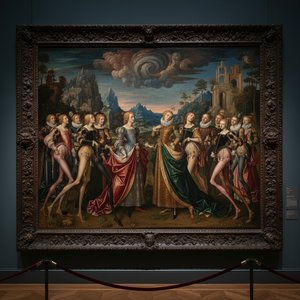
Who comes?

Experience the luminous intimacy of Rupert Bunny's Who comes?, a masterpiece of Edwardian elegance featuring shimmering drapery and sunlit grace that invites you to bring this serene moment into your private collection.

Explore the luminous works of Rupert Charles Wulsten Bunny (1864-1947), an Australian painter celebrated in Paris. Discover his sumptuous colorist style, idyllic scenes of women & water, symbolism, and aestheticism. View paintings like 'Endormies' on

Rankų darbo aliejinės reprodukcijos

Rankiniu būdu tapytas aliejus ant droblio jūsų pageidaujamame dydį ir rėmuose – mūsų menininkų darbas pagal užsakymą. (Pirkti spaudinį Pirkti spaudinįPirkti vaizdą Pirkti vaizdą)

P118B $10
P118H $10
P118W $10
P438Z $10
P508JH $12
P508YH $12
P805H $10
P805Z $10
P919BZ $10
P919G $10
P919XJ $10
P959ZH $10
P968JZ $12
W106C $8
W218G $10
W218JH $8
W218Y $10
W307PJ $10
W316G $10
W316PJ $8
W316Y $10
W398PJ $8
W4111J $10
W500HY $15
W500JH $15
W692G $12
W849H $8
W940BG $15
W953PJ $8

Standartinis dydis
individualiame dydį
CM
INCH

Pasirinkite iš mūsų nustatytų dydžių, atitinkančių originalaus meno kūrinio proporcijas.

plotis
aukštis

Galite įvesti savo matmenis, kad jie atitiktų konkretų rėmą ar erdvę. Jei pasirinktas dydis neatitinka originalaus paveikslėlio proporcijų, mes arba apkropsime meno kūrinį, arba papildysime tapybą rankomis dažytい elementais. Prieš pradėdami gamybą, jūsų patvirtinimui atsiųsime skaitmeninį maketą.
Atkreipkite dėmesį, kad ekrane rodomas vaizdas neatspindi tikrojo apkarpymo ar papildymo. Tik maketas tiksliai parodys galutinę kompoziciją.
Nors galima rinktis ir individualius dydžius, rekomenduojame pasirinkti matmenis iš nustatytos sąrašo, kad būtų išlaikytos originalios proporcijos.

Ką galima pakeisti (pavyzdžiai): Pakeisti veidą į kliento nuotrauką; Pridėti augintinį (pvz., pakeisti katę šunimi); Įtraukti paslėptą žinutę fone; Pakeisti fono kraštovaizdį ar elementus.
Gavus užsakymą, WahooArt.com komanda susisieks su klientu el. paštu dėl instrukcijų ir pateiks maketo pavyzdį.

Pristatymas visame pasaulyje () per 3–4 savaites, o ne įprastai – per 5 savaites. (30 rugpjūtis). Kokybė lieka nepakeičiama.

why_choose_icon
Nemokamas greitasis pristatymas visame pasaulyje
why_choose_icon
Aukštos kokybės lininis drobė
why_choose_icon
Pilnas siuntimo draudimas
why_choose_icon
Muitinės mokesčių grąžinimo garantija
why_choose_icon
Tikro spalvų atitikimo garantija
why_choose_icon
60 dienų grąžinimo politika (tik esant gamyklinėms defektams)
why_choose_icon
100% pinigų grąžinimo garantija
why_choose_icon
Nuolaida už kelias reprodukcijas

Visų darbų kaina

$ 272

reproduction

Who comes?

Reprodukcijos technika

Reprodukcijos matmenys

-

Galutinė kaina

$ 272

Who comes? is one of a series of works called ‘Days and Nights in August’, painted by Rupert Bunny between 1907 and 1911, which evoke a mood of intimacy and luxurious leisure; of perfume, poetry and distant music. The colours in Who comes? are few – white, black, brown, red, yellow – and they have been orchestrated so that small colour accents are played off against a basic theme. Warm sunlight, filtering through a boldly striped blind, colours the upper part of the picture, whereas in the half-light below the blind the flounced skirts shimmer translucently.Bunny’s chief model, posing for both figures in this painting, was his wife Jeanne. She was ‘a beautiful French woman and her husband delighted to paint her in the long, flounced and flowing dresses of the period. Once he said, with faint distaste: “When short skirts came in I no longer wanted to paint women”’.1The drapery has been painted in a way that has little relation to the bodies beneath. One reviewer in 1911 explained Bunny’s preference for loose drapery as a way of capturing or complementing the indefiniteness of nature, ‘leaving forms and outlines in a state of indecision and flux’.2 In contrast to the geometry of the striped blind, Bunny’s rendering of filmy cloth breaks the shapes so that the attention goes not to outlines and large areas but to surfaces and small accents. The effect is sensuous. Bunny was portraying a luxurious domesticity which, in the fashion terms of the day, was well represented by the tea-gown: ‘It gives a man a sort of luxurious feel of being an Oriental Pasha, as he lies in his chair, smoking the ever-present cigarette, to see himself surrounded by graceful houris clad in gauze and gorgeous draperies shimmering’.3Marcel Proust wrote at length on the same theme in A la recherche du temps perdu (1913–27) and, like Bunny, he lamented the passing of this excessively feminine style with the coming of the First World War.Mary Eagle41 Lucy Swanton, ‘Memoir of Rupert Bunny’, typescript, [Sydney]: Newcastle Region Art Gallery, 1968.2 Melbourne Argus, 24 July 1911, p.7.3 ‘Lamia’ in London Country Life, 28 September 1907.4 Mary Eagle, The Art of Rupert Bunny, Canberra: Australian National Gallery, 1991, p.64.Text © National Gallery of Australia, Canberra 2010From: Anne Gray (ed), Australian art in the National Gallery of Australia, National Gallery of Australia, Canberra, 2002

Autoriaus biografija

early life and training

rupert charles wulsten bunny, an australian painter, was born in st kilda, victoria, in 1864. he received a traditional and academic education in the arts under calderon and laurens. this foundation would later serve him well in his successful career as an expatriate artist in fin-de-siècle paris.

achievements and accolades

bunny's artistic prowess was recognized early, with an honourable mention at the paris salon of 1890 for his painting tritons. he further solidified his reputation by winning a bronze medal at the paris exposition universelle in 1900 for burial of st catherine of alexandria. the french state acquired 13 of his works, including those now housed in the musée du luxembourg and regional collections.

artistic style and themes

bunny was a 'sumptuous colourist and splendidly erudite painter of ideal themes,' as described by art critics. his work often featured groups of female figures, relaxing, dreaming, or dressing/undressing by expanses of water, showcasing his unique blend of symbolism and aestheticism.
  • notable works:
  • endormies (national gallery of victoria, melbourne, australia)
  • sea idyll (national gallery of victoria, melbourne, australia)
  • pastoral (national gallery of australia, canberra, australia)

legacy and online presence

today, bunny's works can be found in various museums and online platforms. for those interested in exploring more of his art, [https://WahooArt.com/@/rupert-charles-wulsten-bunny](https://WahooArt.com/@/rupert-charles-wulsten-bunny) provides an extensive collection of his paintings, including endormies, sea idyll, and pastoral. these works are also available for purchase as museum-quality reproductions through /en/art/show/art-8xyffg-en/

conclusion

rupert charles wulsten bunny, an australian painter from st kilda, victoria, left an indelible mark on the art world with his sumptuous and erudite style. his legacy continues to inspire through his works, now easily accessible via [https://WahooArt.com](https://WahooArt.com).
rupert charles wulsten bunny

rupert charles wulsten bunny

1864 - 1947 , Australia

Trumpa informacija

  • Artistic Movement Or Style: Symbolism
  • Artists Who Influenced This Artist:
    • Calderon
    • Laurens
  • Date Of Birth: September 29, 1864
  • Date Of Death: May 25, 1947
  • Full Name: Rupert Charles Wulsten Bunny
  • Nationality: Australian
  • Notable Artworks:
    • Endormies
    • Sea idyll
    • Pastoral
  • Place Of Birth: St Kilda, Australia
Tyrinėkite meno kūrinius, suskirstytus pagal temas, stilius ir savybes.