Šiame puslapyje rodomas meno kūrinys yra saugomas autorių teisių įstatymais, todėl neturime teisės legaliai kurti ar parduoti jo identiškos reprodukcijos. Ši apsauga užtikrinama remiantis tokiais tarptautiniais susitarimais kaip Bernės konvencija ir pagal nacionalines įstatymų nuostatas, įskaitant tas, kurias nurodo JAV autoriškos teisės įstatymas – 17-asis skyrius.
Šis metodas visiškai atitinka autorių teises, nes jame nėra kūrinio kopijavimo ar dubliavimo. Tai yra kūrybinė reinterpretacija – naujas paveikslas, kurį įkvėpė originalas, tačiau kuris nėra jo identiškas.
Muziejų lygio „giclée“ arba drobos spausdinimas: greita gamyba ir lankstios apdailos parinktys. ( Pirkti rankomis tapytą reprodukciją
Perejti prie skaitmeninių vaizdų)
Pasirinkite iš mūsų nustatytų dydžių, atitinkančių originalaus meno kūrinio proporcijas.
Galite nurodyti savo matmenis, kad vaizdas atitiktų konkretų rėmą ar erdvę. Jei pasirinktas dydis nesutaps su originalaus paveikslėlio proporcijomis, mes arba apkirpsime kūrinį, arba išplėsime vaizdą naudojant veideliu atspindėtą arba vientisą šoną. Skaitmeninis maketas bus išsiųstas jums patvirtinti prieš pradedant gamybą.
Atkreipkite dėmesį, kad ekrane matomas vaizdinys neatspindi tikrojo apkirpimo ar išplėtimo. Tik maketas tiksliai parodytų galutinę kompoziciją.
Nors galima rinktis ir individualius dydžius, rekomenduojame pasirinkti vieną iš išanksti nustatytų matmenų, kad būtų išlaikytos originalios proporcijos.
Pristatymas visame pasaulyje () per 2 weeks, o ne įprastas 4/5 savaičių laikotarpis. (10 spalis)
Bathroom

Reprodukcijos dydis
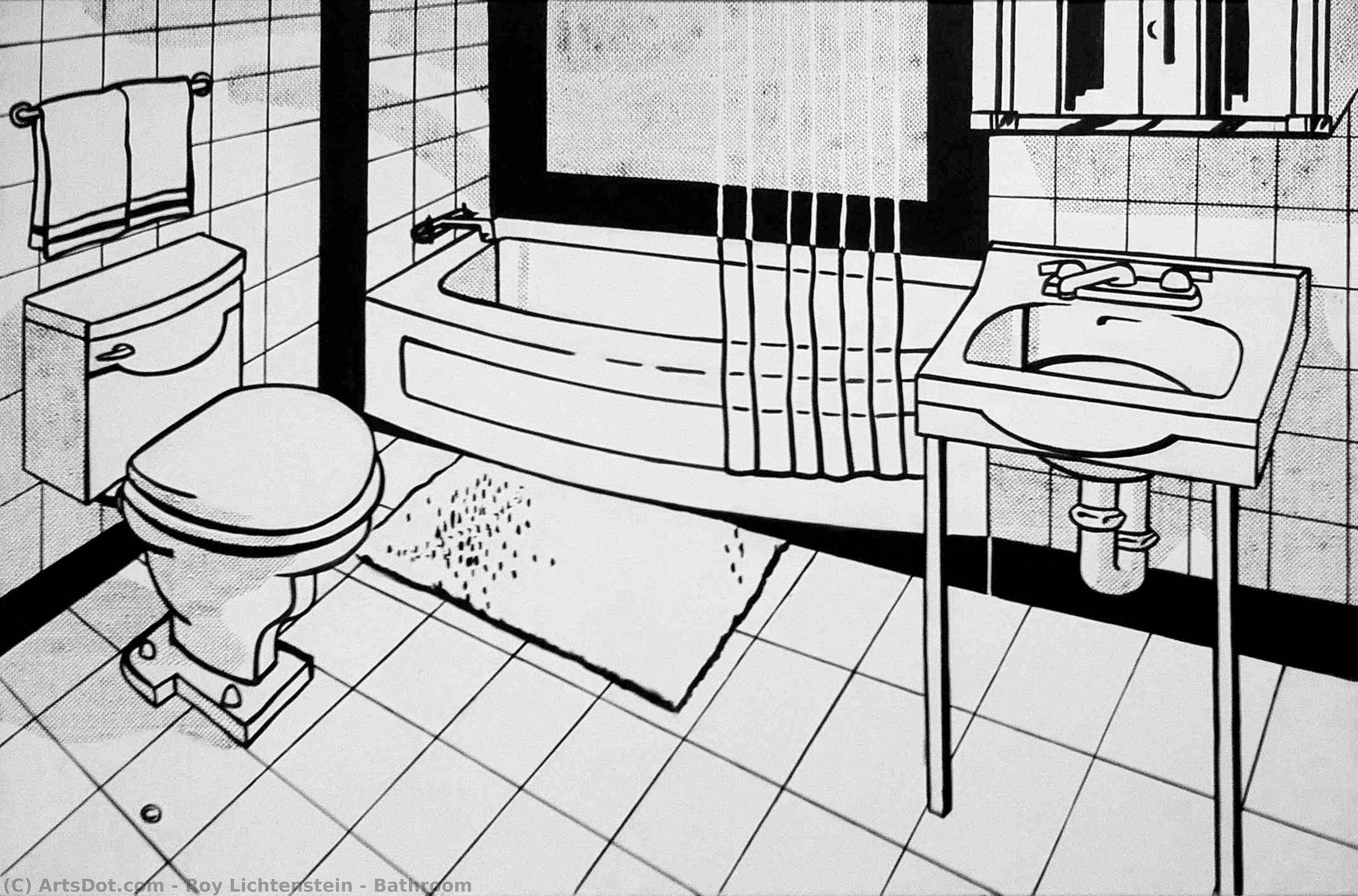
In the vast landscape of twentieth-century art, few works possess the immediate, graphic punch of Roy Lichtenstein’s 1961 masterpiece, "Bathroom." At first glance, the viewer is presented with a scene of profound mundanity—a simple, monochromatic interior featuring the essential fixtures of domestic life. Yet, beneath this seemingly banal surface lies a revolutionary interrogation of what constitutes "fine art." Lichtenstein does not merely depict a bathroom; he reconstructates it through the lens of mass media, transforming a private, utilitarian space into a striking icon of the Pop Art movement. This piece serves as an arresting testament to the era's fascination with elevating the commonplace into the realm of high artistic contemplation.
The brilliance of "Bathroom" lies in its seamless fusion of high culture and low-brow aesthetics. By adopting the visual language of comic strips and commercial advertisements, Lichtenstein disrupts the traditional boundaries of painting. The composition is rendered with a calculated, almost schematic clarity, utilizing an elevated perspective that looks down into the space as if observing a single panel from a larger, unseen narrative. There is no attempt at lush realism here; instead, we find a world defined by bold, thick outlines and flat, tonal areas that prioritize graphic impact over atmospheric depth. For the collector or interior designer, this creates a piece that is both intellectually stimulating and visually commanding, capable of anchoring a modern space with its clean, architectural energy.
To truly appreciate "Bathroom," one must look closer at the meticulous craftsmanship hidden within its mechanical appearance. While the work mimics the industrial look of a printing press, it is actually a triumph of manual precision. Lichtenstein famously employed the Ben-Day dot technique—a method of using small, closely spaced dots to create shading and texture. In "Bathroom," these halftone patterns are painstakingly applied to suggest the tactile quality of a bath mat or the rhythmic pattern of tiled walls. This deliberate use of dotting creates an illusion of depth and texture that defies the inherent flatness of the medium, inviting the eye to linger on the subtle gradations of gray and black.
The monochromatic palette is a masterstroke of restraint. By stripping away color, Lichtenstein forces the viewer to focus entirely on form, line, and contrast. The interplay between the stark black outlines and the varying shades of gray creates a rhythmic movement across the canvas, guiding the gaze from the geometric precision of the sink to the patterned surfaces of the floor. This lack of color emphasizes the work's connection to the newsprint and pulp magazines of the postwar era, reinforcing its identity as an art object born from the pulse of popular culture. It is this tension between the mechanical aesthetic and the hand-crafted execution that gives the reproduction a sense of profound, lasting quality.
Beyond its striking visual appeal, "Bathroom" carries a weight of historical significance that resonates with the spirit of the 1960s. Emerging from the shadow of World War II, the Pop Art movement sought to reject the intense, subjective emotionalism of Abstract Expressionism in favor of something more accessible and objective. Lichtenstein’s choice of subject matter—the domestic, the repetitive, and the mass-produced—serves as a subtle commentary on the rise of consumerism and the standardization of modern life. The bathroom, a site of private ritual, is here transformed into a public statement about the beauty found in the industrial and the everyday.
For those seeking to bring a piece of art history into their homes or galleries, "Bathroom" offers more than just decoration; it offers an invitation to reconsider our visual environment. It evokes a sense of nostalgia for the mid-century era while maintaining a timeless, avant-garde edge. The emotional impact is not one of heavy sentimentality, but rather a crisp, intellectual engagement—a playful yet profound recognition that art can be found in the most unexpected corners of our daily existence. Owning a high-quality reproduction of this work means possessing a fragment of the revolution that forever changed how we perceive the world around us.
„Bathroom“, autorius – Royas Lichtenšteinas pasižymi Monochromatic spalvų intensyvumu.
Kūrinį „Bathroom“ sukūrė Royas Lichtenšteinas. Darbas katalogizuojamas Royas Lichtenšteinas vardu.
Galimybę atsisiųsti „Bathroom“ galima rasti šio kūrinio Atsisiųsti puslapį, kuriame siūloma aukštos raiškos skaitmeninio vaizdo atsisiuntimas.
„Bathroom“, sukurta 1961 m., priklauso Royas Lichtenšteinas kūrybinio karjeros laikotarpio Early Pop Art.
Dominuojantis „Bathroom“, autorius – Royas Lichtenšteinas spalvos tonas yra Blue-Violet to Rose. Šis tonas yra pagrindinė paletės spalva.
„Bathroom“, autorius – Royas Lichtenšteinas kūrybos metai – 1961.
Kai 1961 m. buvo sukurta „Bathroom“, Royas Lichtenšteinas – gimęs 1923 m. – buvo 38 metų amžiaus.
1923 - 1997 , JAV