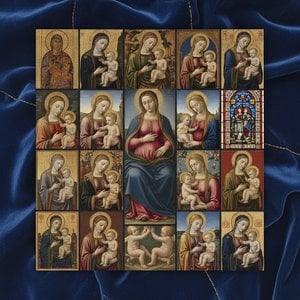
The Sistine Madonna: A Renaissance Masterpiece
Domenico Ghirlandaio, Raphael's teacher and mentor, was brought in to decorate the Santa Maria del Popolo church and its chapels in Rome. Both paintings by Raphael, Julius II and the Madonna were hung on pillars during feast days or high holy days.
As a means of indicating Julius' appreciation of the Madonna, which resulted in the pairing of paintings, Julius commissioned another Madonna painting, the Sistine Madonna, in the last year of his life where his adoration is shown by the Pope kneeling at the feet of the Virgin.
Historical Context and Creation
Commissioned by Pope Julius II around 1512-1514, the Sistine Madonna stands as a testament to the High Renaissance's artistic zenith. It was created for the church of San Sisto in Piacenza, Italy, but later moved to Dresden, Germany, where it resided until World War II. The painting was evacuated during the war and is now housed in the Gemäldegalerie Alte Meister in Dresden.
The Sistine Chapel itself, adorned with Michelangelo's iconic frescoes, served as a backdrop for Raphael’s artistic development. His exposure to Michelangelo's monumental style undoubtedly influenced his approach to composition and figure representation. The painting reflects the humanist ideals prevalent during the Renaissance, emphasizing human dignity and beauty.
Composition, Technique, and Symbolism
The Sistine Madonna is renowned for its innovative composition and masterful use of oil paint. Raphael employed a pyramidal structure, with the Virgin Mary at the apex, creating a sense of stability and grandeur. The figures are rendered with remarkable realism and anatomical accuracy, showcasing Raphael's exceptional skill as a draftsman.
The painting is rich in symbolism. The cherubs flanking the Madonna’s skirts have become iconic images, representing innocence and divine presence. Their playful gestures and expressions add a touch of humanity to the sacred scene. The curtain drawn back behind the Virgin alludes to the revelation of the divine.
I The inclusion of Pope Julius II kneeling at the Madonna’s feet symbolizes the Church's devotion to the Virgin Mary and its recognition of her importance as intercessor between humanity and God. The Sistine Chapel itself, named after Pope Sixtus IV who commissioned Michelangelo's frescoes, further reinforces the painting's connection to papal authority.
Emotional Impact and Legacy
The Sistine Madonna evokes a profound sense of awe and reverence. The Virgin Mary’s serene expression and gentle gaze inspire feelings of peace and tranquility. The cherubs’ playful antics add a touch of warmth and humanity to the sacred scene, making it accessible to viewers of all ages.
B The painting's legacy extends far beyond its artistic merit. It has become an enduring symbol of faith, hope, and divine grace. Reproductions of the Sistine Madonna adorn countless homes and churches around the world, serving as a constant reminder of the power of art to inspire and uplift.
I The painting's influence can be seen in numerous subsequent works of art, demonstrating its lasting impact on Western artistic tradition. It remains one of the most beloved and admired paintings in the world, captivating viewers with its beauty, symbolism, and emotional depth.
Reproductions and Interior Design
High-quality reproductions of the Sistine Madonna offer a unique opportunity to bring this Renaissance masterpiece into your home or office. Whether you choose a canvas print, framed poster, or tapestry, a reproduction of the Sistine Madonna can add a touch of elegance and sophistication to any space.
B Consider incorporating reproductions of the Sistine Madonna into interior design schemes inspired by Renaissance art. Pair them with antique furniture, rich fabrics, and warm lighting to create an atmosphere of timeless beauty and refinement. A reproduction of the Sistine Madonna can serve as a focal point in a living room, bedroom, or study, inspiring contemplation and appreciation for artistic excellence.
I For collectors seeking investment-grade art reproductions, consider limited-edition prints authorized by the Gemäldegalerie Alte Meister. These high-quality reproductions are accompanied by certificates of authenticity, ensuring their value and provenance.